
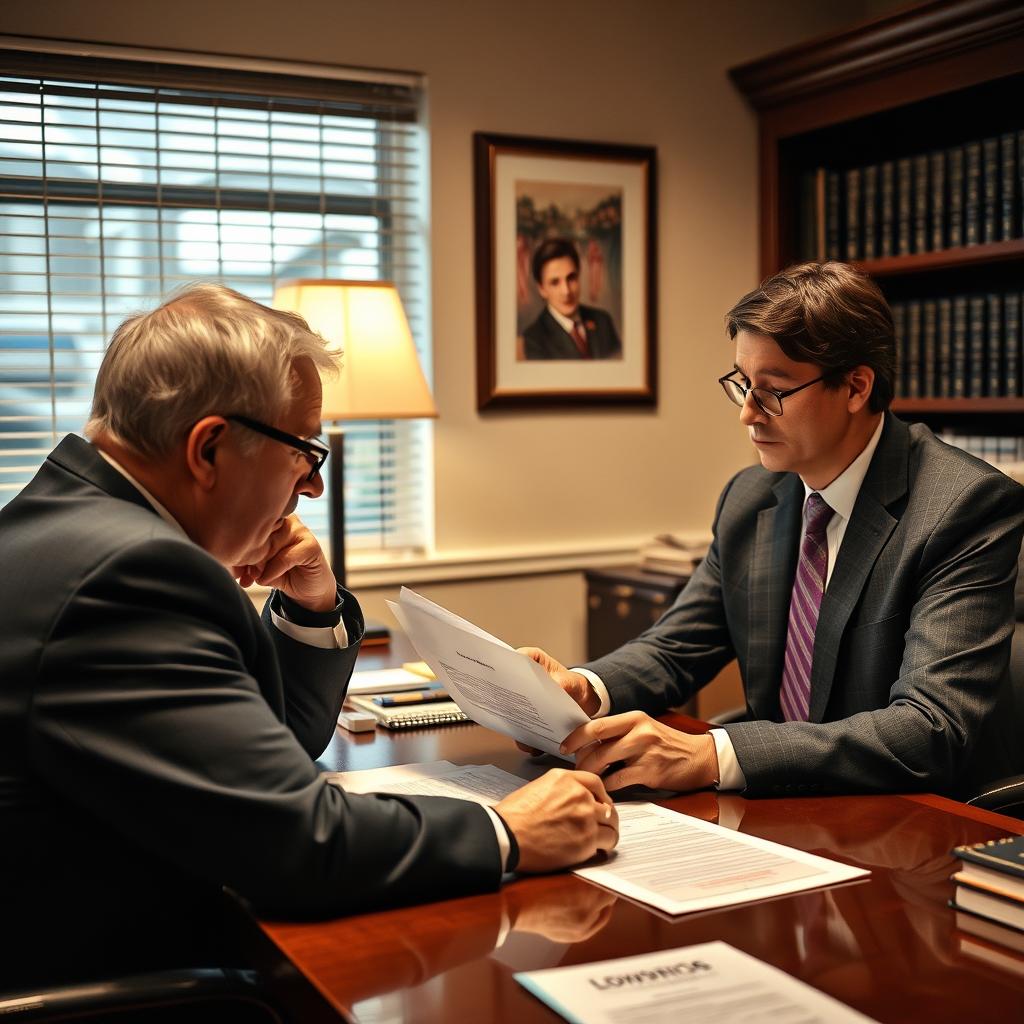
Witness Tampering lawyer York County, VA
Federal witness tampering charges carry severe consequences, including substantial prison time and lasting damage to your reputation and livelihood. If you are under investigation or have been charged with witness tampering in York County, Virginia, understanding the federal legal process and your rights is critical. At Law Offices Of SRIS, P.C., Mr. Sris and his Of Counsel team bring extensive combined legal experience to federal criminal defense matters, including allegations of obstruction, witness tampering, and related offenses. The firm, founded in 1997 by Mr. Sris, a former prosecutor, concentrates on representing individuals facing charges in the U.S. District Court for the Eastern District of Virginia, the federal court that exercises jurisdiction over York County. Federal prosecutors pursue these cases actively, and a conviction can alter the course of your life. To request a consultation, call (888) 437-7747. Law Offices Of SRIS, P.C. – Advocacy Without Borders.
What Witness Tampering Means in York County
Witness tampering, as charged under federal law, involves conduct intended to influence, intimidate, or impede a witness, victim, or informant in connection with an official proceeding. Federal statutes—principally 18 U.S.C. § 1503, 1512, and 1513—cover a broad range of behavior, from direct threats and physical force to more subtle forms of persuasion or communication designed to corruptly alter testimony or evidence. Because these offenses strike at the integrity of the justice system, the United States Attorney’s Office for the Eastern District of Virginia, which prosecutes cases in York County, treats them with significant seriousness.
Although York County has its own state-level courts—such as the York County General District Court—federal witness tampering charges are heard in the U.S. District Court for the Eastern District of Virginia. The Newport News division, located at 2400 W Avenue, Newport News, VA 23607, is the division that typically handles federal matters arising in York County, Yorktown, Grafton, Tabb, and Seaford. Federal agents from the FBI, DEA, or other investigative agencies often lead these investigations, and a grand jury indictment is required for felony charges. The procedural path is distinct from state court, governed by the Federal Rules of Criminal Procedure and the U.S. Sentencing Guidelines. An attorney with extensive experience in federal practice is essential to navigate the demands of pretrial detention hearings, discovery, motion practice, and sentencing.
How Mr. Sris and His Of Counsel Handle Witness Tampering Cases
Defending against federal witness tampering allegations requires a thorough understanding of the statutes, the evidence the government intends to present, and the strategic options available at each stage. Mr. Sris and his Of Counsel begin by conducting an exhaustive review of the government’s case—examining grand jury transcripts, witness statements, search warrants, electronic communications, and any other materials gathered during the investigation. A central question often involves whether the defendant’s conduct actually meets the statutory elements of corruption, intimidation, or obstruction, or whether the communication was protected speech, a misunderstanding, or an innocent interaction.
The defense strategy may challenge the admissibility of evidence obtained through questionable searches or interrogations, scrutinize the credibility of cooperating witnesses, and evaluate whether the prosecution can prove the required corrupt intent beyond a reasonable doubt. In many instances, early intervention by experienced counsel can shape the direction of the investigation before an indictment is returned. When a case proceeds to trial, Mr. Sris and his Of Counsel prepare meticulously, cross-examining witnesses and presenting a defense tailored to the unique factual circumstances. Throughout the process, the team works to protect the client’s rights and pursue the most favorable resolution achievable under the law. Every witness tampering matter is approached with the recognition that the outcome will have profound personal and professional consequences.
About Mr. Sris and His Of Counsel Team
Mr. Sris, Owner and Founder of Law Offices Of SRIS, P.C., has practiced as a federal criminal defense attorney since founding the firm in 1997. His background as a former prosecutor gives him a distinct perspective on how the government builds its cases, a perspective he applies to every client’s defense. Mr. Sris is admitted to practice in Virginia, Maryland, the District of Columbia, New Jersey, and New York, and he has represented individuals in federal district courts across multiple jurisdictions.
Mr. Sris leads a team of Of Counsel attorneys—none of whom are employees, but rather independent attorneys who work collaboratively under the supervision of Mr. Sris. The team’s combined legal experience spans decades, and the firm has documented case results across a wide range of federal and state matters since its founding. Results may vary. When you retain the firm, you benefit from a collaborative approach that draws on the entire team’s insight, all focused on building a well-prepared defense.
Frequently Asked Questions
What are the potential penalties for federal witness tampering?
Federal witness tampering carries maximum penalties ranging from 10 to 20 years in prison, depending on the specific statute charged and whether force or a threat of force was involved. Under 18 U.S.C. § 1503, obstruction of justice is punishable by up to 10 years—or up to 20 years if the offense involves the killing or attempted killing of a juror or officer. Section 1512, which includes tampering with a witness, victim, or informant, allows for penalties of up to 20 years for certain forms of intimidation or retaliation. Sentencing under the U.S. Sentencing Guidelines takes into account the nature of the offense, the defendant’s criminal history, and any aggravating or mitigating factors. Results may vary.
How does a Virginia lawyer defend against witness tampering charges?
Defense strategies for witness tampering in federal court often involve challenging the government’s proof of corrupt intent, contesting the sufficiency of the evidence, and examining whether the defendant’s statements or actions constitute protected activity under the First Amendment. An experienced lawyer will also scrutinize the means by which evidence was gathered—for example, whether search warrants were properly supported or whether Miranda rights were violated. In some cases, negotiations with the U.S. Attorney’s Office can lead to a reduction or dismissal of charges. The defense approach depends entirely on the specific facts of the case and the applicable federal statutes.
What should I do if I am facing witness tampering charges in Virginia?
If you are facing witness tampering charges, contact an experienced federal criminal defense attorney immediately and refrain from discussing the matter with anyone except your lawyer. Do not speak with federal agents or investigators without counsel present, and preserve any documents, messages, or other records that may be relevant to your defense. The timeline in federal cases moves quickly, and early legal intervention can be critical as the government builds its case. A prompt, confidential consultation allows your attorney to assess the situation and advise you on the steps that best protect your rights.
Can I be charged with witness tampering if the witness is involved in a state court proceeding?
Yes, you can face federal witness tampering charges even if the underlying proceeding is taking place in state court, as long as the conduct affects a federal interest or involves the use of facilities of interstate commerce. Federal statutes reach actions that obstruct, influence, or impede any official proceeding, and this includes state court matters when the alleged conduct crosses jurisdictional lines—for example, using a telephone, email, or travel across state lines. Federal prosecutors commonly charge witness tampering in connection with state-level investigations when they can establish a federal nexus.
How is witness tampering different from obstruction of justice?
Witness tampering is a specific form of obstruction of justice that targets the conduct directed toward a witness, victim, or informant, while general obstruction encompasses a broader range of interference with judicial or official proceedings. Federal obstruction statutes such as 18 U.S.C. § 1503 cover corrupt endeavors to influence, intimidate, or impede jurors, officers, or the due administration of justice. Witness tampering provisions under §§ 1512 and 1513 specifically address threats, intimidation, or retaliation against witnesses and informants. Depending on the facts, a single course of conduct may be charged under multiple provisions.
Do I need a lawyer for federal witness tampering cases in Virginia?
Yes, retaining an experienced federal criminal defense lawyer is strongly recommended given the complexity of federal procedure, the severity of possible penalties, and the resources the government dedicates to these prosecutions. Federal cases follow different rules than state cases, including the Federal Rules of Evidence, the Speedy Trial Act, and the application of the U.S. Sentencing Guidelines. Without counsel who understands these rules, you may face significant disadvantages at every stage, from the initial appearance through trial and sentencing. For a consultation, reach Mr. Sris and his Of Counsel at (888) 437-7747.
Also serving: Federal Criminal Lawyer James City County | Federal Criminal Lawyer Williamsburg | Federal Criminal Lawyer Fairfax County
Attorney advertising. Prior results do not guarantee a similar outcome.
Results may vary.
Case results depend on a variety of factors unique to each case.