
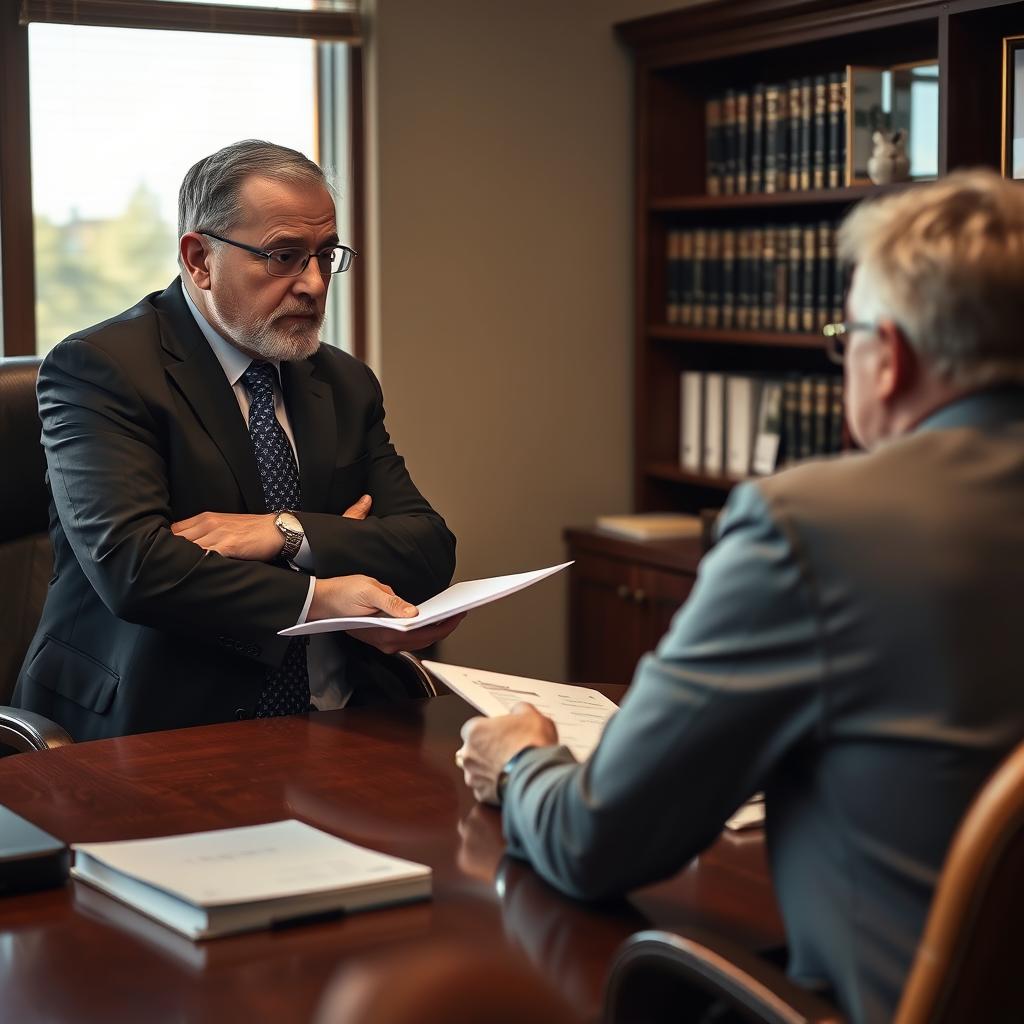
Transportation for Illegal Sexual Activity lawyer Louisa County, VA
A federal accusation of transportation for illegal sexual activity under 18 U.S.C. § 2421—commonly referred to as the Mann Act—carries the full weight of the United States government. The U.S. Attorney’s Office prosecutes these cases actively in the U.S. District Court for the Western District of Virginia, the federal court that serves Louisa County. A conviction can lead to years of imprisonment, substantial fines, mandatory sex‑offender registration, and a term of supervised release that lasts for years or even decades. Federal investigations begin long before an arrest; even a target letter or a grand‑jury subpoena requires an immediate, strategic response. For residents of Louisa, Mineral, Zion Crossroads, and the surrounding communities, retaining a lawyer who understands how the Western District operates is essential. Mr. Sris and his Of Counsel team have handled federal criminal matters across Virginia for years and are prepared to evaluate the government’s case, challenge the evidence, and work toward the most favorable resolution available. To request a consultation about a transportation‑for‑illegal‑sexual‑activity charge or investigation in Louisa County, reach Law Offices Of SRIS, P.C. at (888) 437‑7747. Law Offices Of SRIS, P.C. – Advocacy Without Borders.
What Transportation for Illegal Sexual Activity Charges Mean in Louisa County
When a person is accused of transporting someone across state lines—or even using a phone, the internet, or any facility of interstate commerce—with the intent that the individual engage in prostitution or any criminal sexual activity, federal jurisdiction attaches under 18 U.S.C. § 2421. Louisa County, part of the Charlottesville Division of the U.S. District Court for the Western District of Virginia, becomes the venue when the charge is filed there or when the alleged conduct touched the county. Federal cases are not heard in the Louisa County General District Court; they proceed on a separate, more demanding track governed by the Federal Rules of Criminal Procedure and the U.S. Sentencing Guidelines.
Because the Western District’s main courthouse is in Roanoke, with divisional courthouses in Charlottesville, Abingdon, Lynchburg, Harrisonburg, and Big Stone Gap, a Louisa County resident may be required to appear in Charlottesville or another division. The investigating agency is typically the Federal Bureau of Investigation, often working with Immigration and Customs Enforcement or state law‑enforcement task forces. Federal prosecutors pursue these cases vigorously, often basing their investigation on electronic records, undercover communications, or testimony from cooperating witnesses. Before any trial, a grand jury must return an indictment, and a detention hearing determines whether the accused will remain in custody pending trial. Throughout the process, the defendant benefits from counsel who is familiar with the Western District’s magistrates, district judges, and the practices of the U.S. Attorney’s Office for this region. Our Richmond location represents clients at U.S. District Court proceedings in the Western District and is available to meet by appointment at (888) 437‑7747.
How Mr. Sris and His Of Counsel Handle Federal Transportation for Illegal Sexual Activity Cases
From the moment a client learns of an investigation, Mr. Sris and his Of Counsel team work to preserve the person’s rights. Early engagement can make a critical difference: it allows the defense to request preservation of evidence, advocate against pretrial detention, and sometimes persuade the government not to seek an indictment. Once a charge is filed, the focus shifts to the discovery process and a searching review of all evidence the government intends to use at trial. The team examines whether statements were lawfully obtained, whether electronic evidence was gathered in compliance with the Fourth Amendment, and whether any exculpatory material is being withheld. Motions to suppress or to dismiss are filed when the facts support them.
Federal sentencing, if a case results in a conviction, presents its own complexities. The U.S. Sentencing Guidelines provide a range of imprisonment based on offense characteristics, the defendant’s criminal history, and adjustments for acceptance of responsibility. Mr. Sris, a former prosecutor, understands how the government calculates those guideline ranges and which arguments are most effective at the sentencing hearing. Throughout the case, the defense team also explores the possibility of a favorable plea agreement, often seeking to resolve the matter on terms that will limit the long‑term consequences of a conviction. No one can guarantee a particular outcome, but careful preparation and thorough familiarity with the Western District of Virginia position the client to achieve the favorable outcomes under the specific circumstances.
About Mr. Sris and His Of Counsel Team
Mr. Sris, Owner and Founder of Law Offices Of SRIS, P.C., founded the firm in 1997 after working as a prosecutor. He is admitted to practice in Virginia, Maryland, the District of Columbia, New Jersey, and New York—a five‑jurisdiction practice that spans much of the mid‑Atlantic. His background as a former prosecutor gives him a working knowledge of how federal investigations and prosecutions are built, and his legislative involvement includes testifying before the Virginia House Courts of Justice Committee in support of 2019 HB 635 (chief patron Del. David Bulova).
In every federal criminal matter, Mr. Sris is supported by an Of Counsel team that collectively brings substantial courtroom experience. These attorneys, engaged through Excella, include lawyers who have handled trials and motions in federal district courts across Virginia. Together, Mr. Sris and his Of Counsel bring extensive combined legal experience; they focus on identifying the weaknesses in the government’s case and presenting the client’s side at each stage of the proceeding. Results may vary. For a consultation, reach Law Offices Of SRIS, P.C. at (888) 437‑7747.
Frequently Asked Questions
What is the statute for transportation for illegal sexual activity?
The federal crime of transporting an individual for illegal sexual activity is set out in 18 U.S.C. § 2421, often called the Mann Act. The statute makes it a felony to knowingly transport any person in interstate or foreign commerce, or to travel or use any means of interstate commerce, with the intent that the person engage in prostitution or any sexual activity for which a person can be charged with a criminal offense. A conviction under § 2421 exposes a defendant to a federal prison sentence, a fine, and mandatory sex‑offender registration. The prison term and collateral consequences depend heavily on the specific facts of the case and the defendant’s criminal history.
How does a Virginia lawyer defend against transportation for illegal sexual activity charges?
Defense strategies in transportation for illegal sexual activity cases include challenging the sufficiency of the government’s evidence, attacking unconstitutional searches or seizures, and contesting the interstate‑commerce element. An experienced attorney will scrutinize the manner in which electronic communications, witness statements, and physical evidence were obtained. If law enforcement exceeded its authority—for example, by conducting a warrantless search or obtaining records without a proper subpoena—the defense may move to suppress that evidence. In some cases, negotiating with the U.S. Attorney’s Office to accept a plea to a lesser charge that avoids mandatory sex‑offender registration is a primary objective. Each defense is tailored to the unique facts of the case.
What should I do if I am facing transportation for illegal sexual activity charges in Virginia?
If you are facing a federal transportation‑for‑illegal‑sexual‑activity charge, the single most important step is to contact an attorney immediately and refrain from discussing the facts with anyone else. Do not speak with investigators without counsel present, do not post about the situation on social media, and do not attempt to contact any alleged victim. Preserve all documents, electronic records, and communications that may be relevant, but do not delete or alter them. The statute of limitations and procedural deadlines under federal law move quickly; early representation is critical to protect your rights. You may request a consultation with Mr. Sris and his Of Counsel team by calling (888) 437‑7747.
What are the penalties for transportation for illegal sexual activity in Virginia?
A conviction under 18 U.S.C. § 2421 carries substantial penalties, including a term of imprisonment that can range from several years to decades, depending on the conduct and the defendant’s prior record. Federal law also mandates registration as a sex offender in the jurisdiction where the defendant lives, works, or goes to school; this registration requirement often lasts for life. Additionally, the court may impose a fine, a lengthy term of supervised release, and restitution if the victim suffered financial loss. The exact sentence is determined by the U.S. Sentencing Guidelines and the discretion of the district judge, making it imperative to have counsel who can argue for a variance or downward departure where appropriate.
Do I need a lawyer if I am under investigation for a federal sex crime in Louisa County?
Yes; if you are the subject of a federal investigation—even before an arrest or indictment—you need a lawyer immediately. Federal agents may have already interviewed witnesses, obtained search warrants for electronic records, and presented evidence to a grand jury. An attorney can communicate with the investigating agency on your behalf, press for disclosure of the nature and scope of the inquiry, and attempt to forestall an indictment. Anything you tell agents without counsel present can be used against you. The earlier defense counsel becomes involved, the more opportunities exist to shape the outcome favorably.
Additional pages that may be helpful:
Federal Criminal Lawyer Fairfax County, VA |
Federal Criminal Lawyer Prince William County, VA |
Federal Criminal Lawyer Manassas, VA |
Federal Criminal Lawyer Falls Church, VA
Authoritative primary sources:
U.S. District Court for the Western District of Virginia |
U.S. Attorney’s Office, Western District of Virginia |
Virginia Code Title 18.2, Chapter 4 (Crimes Involving Morals and Decency)
Attorney advertising. Prior results do not guarantee a similar outcome.
Case results depend on a variety of factors unique to each case.
Results may vary.