
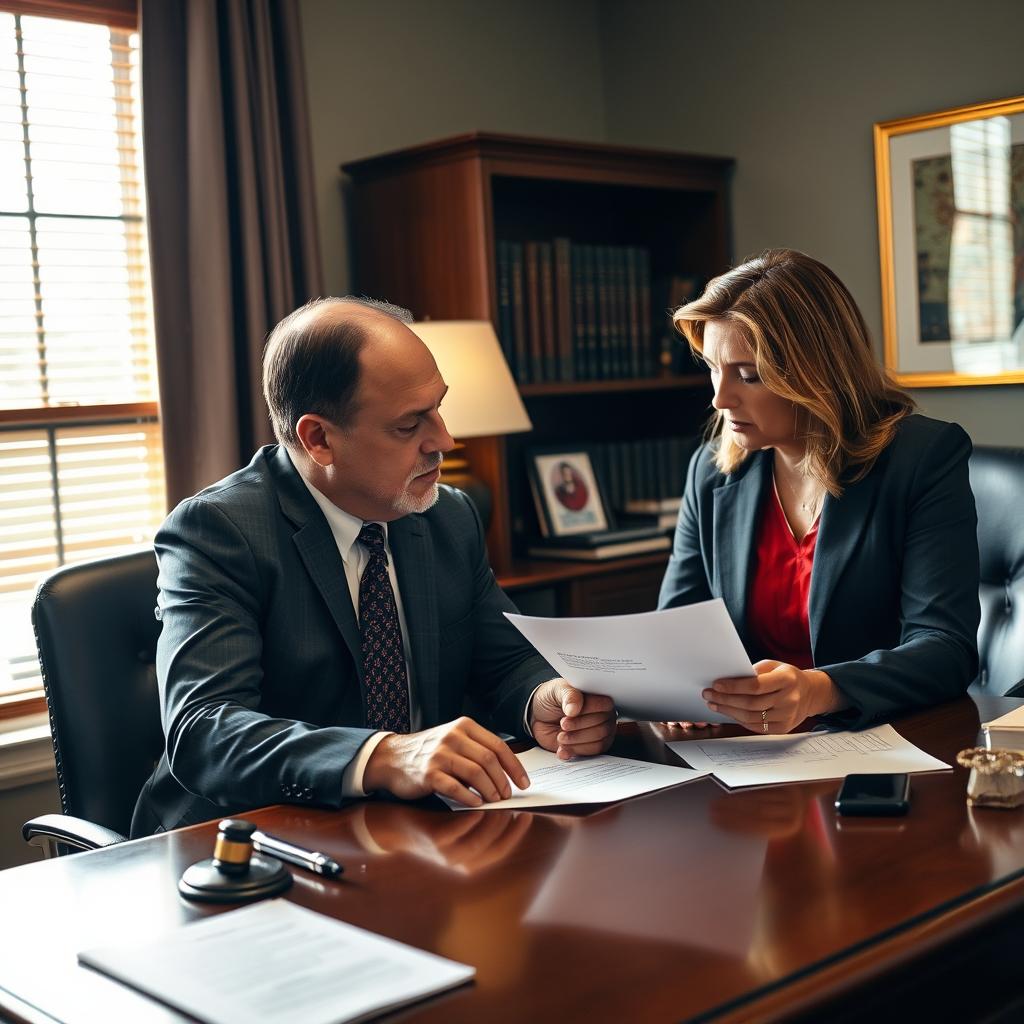
Subornation of Perjury lawyer Chesterfield County, VA
Federal subornation of perjury charges are prosecuted actively by the United States Attorney’s Office for the Eastern District of Virginia. If you are facing allegations that you encouraged or induced another person to lie under oath during a federal proceeding, the consequences can reshape your future. Subornation of perjury strikes at the integrity of the justice system itself, and federal investigators and prosecutors devote substantial resources to these cases. Mr. Sris and his Of Counsel at Law Offices Of SRIS, P.C. bring extensive combined legal experience to defending individuals in Chesterfield County and throughout Virginia who are accused of obstruction-related offenses. Federal sentencing guidelines, mandatory minimum considerations, and the absence of parole demand a defense strategy that is built from the earliest stage of an investigation. Whether you have been contacted by federal agents, received a target letter, or have already been indicted, prompt legal guidance is critical. Reach our firm at (888) 437-7747 to request a consultation and discuss your situation with Mr. Sris and his Of Counsel. Law Offices Of SRIS, P.C. – Advocacy Without Borders.
What Subornation of Perjury Means in Chesterfield County, Virginia
Subornation of perjury, charged under 18 U.S.C. § 1622, is the act of procuring another person to commit perjury—that is, to knowingly make a material false statement while under oath in a federal proceeding. The underlying perjury is defined in 18 U.S.C. § 1621, and related false-declaration charges often arise under 18 U.S.C. § 1623. In Chesterfield County, federal criminal matters are heard in the U.S. District Court for the Eastern District of Virginia. The Richmond Division, located at 701 East Broad Street, Richmond, Virginia, handles cases originating from Chesterfield and surrounding localities. Because Chesterfield County lies within the Richmond metropolitan area, residents here are subject to the same vigorous federal prosecution standards applied throughout the Eastern District of Virginia, a district known for its fast-moving docket and high rate of convictions.
Federal investigators—often from the FBI, DEA, IRS‑CI, or ATF—may become involved when an alleged false statement relates to a federal grand jury proceeding, a criminal trial, a deposition, or even an affidavit filed in a federal matter. Subornation of perjury frequently arises alongside other obstruction-of-justice charges under 18 U.S.C. § 1503 and witness-tampering statutes. The penalties can range from five to twenty years of imprisonment, depending on the specific offense and the defendant’s criminal history, and substantial fines may also be imposed. Moreover, because there is no parole in the federal system, anyone convicted faces a mandatory percentage of that sentence, with only limited good-time credits available. The Eastern District of Virginia’s procedures demand that counsel be thoroughly familiar with the Speedy Trial Act, the discovery rules under the Federal Rules of Criminal Procedure, and the U.S. Sentencing Guidelines as interpreted post-Booker. Mr. Sris and his Of Counsel navigate these procedural and substantive complexities for clients throughout Chesterfield County.
How Mr. Sris and His Of Counsel Handle Subornation of Perjury Cases
Defending a federal subornation of perjury charge requires a disciplined, proactive approach from the moment federal interest becomes apparent. Mr. Sris and his Of Counsel begin by conducting a thorough factual investigation independent of the government’s case. Federal grand jury indictments are required for felonies, but many obstruction investigations start with interviews, subpoenas, or search warrants before a formal charge is filed. Our attorneys work to identify whether any statement attributed to the defendant actually constitutes perjury—requiring materiality, falsity, and an intentional act—and whether the government can prove the defendant’s role in procuring another person’s false testimony. Materiality, which asks whether the statement could have influenced the proceeding, often becomes a central point of scrutiny.
Throughout the pretrial phase, Mr. Sris and his Of Counsel examine every element of the government’s evidence, file appropriate motions to suppress or for discovery, and engage in discussions with the U.S. Attorney’s Office about possible resolutions. The U.S. Sentencing Guidelines provide a framework for calculating an advisory range, but numerous factors—such as acceptance of responsibility, substantial assistance, and challenges to the offense level—can materially affect the sentence. In cases where trial is necessary, Mr. Sris and his Of Counsel are experienced in cross-examining cooperating witnesses, exposing inconsistencies, and presenting a defense that holds the prosecution to its burden of proof beyond a reasonable doubt. Every decision is made with the understanding that a federal conviction for subornation of perjury carries long-term consequences beyond imprisonment, including professional licensure repercussions and supervised release.
About Mr. Sris and His Of Counsel Team
Mr. Sris, Owner and Founder of Law Offices Of SRIS, P.C., has practiced in the federal courts of Virginia since 1997. A former prosecutor, he understands the methods federal agents and Assistant U.S. Attorneys use to build obstruction-of-justice cases, and he applies that insight when crafting a defense strategy for every client. Mr. Sris is admitted to practice in Virginia, Maryland, the District of Columbia, New Jersey, and New York, and he has represented individuals in the Eastern District of Virginia across a wide range of federal criminal matters. His approach emphasizes careful preparation, rigorous motion practice, and a readiness to take a case to trial when that serves the client’s interests. Mr. Sris testified before the Virginia House Courts of Justice Committee in support of 2019 HB 635 (chief patron Del. David Bulova).
Mr. Sris’s Of Counsel team includes attorneys with deep federal litigation backgrounds who assist in complex subornation, perjury, and obstruction cases. Together, Mr. Sris and his Of Counsel bring extensive combined legal experience. Results may vary. The firm’s Richmond Location at 7400 Beaufont Springs Drive, Suite 300, Room 395, Richmond, VA 23225 serves clients throughout Chesterfield County by appointment. The team’s familiarity with the Eastern District of Virginia’s procedural rhythms, the preferences of its magistrate and district judges, and the local U.S. Attorney’s office practices provides clients with a distinct strategic advantage during every stage of a federal prosecution.
Frequently Asked Questions
What is subornation of perjury under federal law?
Under 18 U.S.C. § 1622, subornation of perjury occurs when someone procures another person to commit perjury—that is, to knowingly make a material false statement while under oath in a federal proceeding. Perjury itself is defined in 18 U.S.C. § 1621, and a related false-declaration statute, 18 U.S.C. § 1623, also applies in many cases. To convict, the government must prove the defendant induced or persuaded the witness to lie, and that the witness actually testified falsely about a material matter. Penalties can include imprisonment of up to five years for each count, though enhancements and concurrent obstruction charges may increase exposure substantially.
How do federal sentencing guidelines apply to subornation of perjury charges?
Federal sentencing for subornation of perjury follows the U.S. Sentencing Guidelines, which calculate an advisory range based on the offense level and the defendant’s criminal history category. While the guidelines are advisory after United States v. Booker, they continue to heavily influence the sentence imposed. Acceptance of responsibility, substantial assistance to the government, and safety‑valve provisions can reduce the range in some circumstances. Mandatory minimum statutes, if triggered by related obstruction or witness-intimidation charges, override certain downward departures. The judge retains discretion to consider factors under 18 U.S.C. § 3553(a), including the nature of the offense and the defendant’s personal circumstances.
What should I do if I am contacted by federal agents about a perjury investigation in Chesterfield County?
If you are contacted by federal agents—such as FBI, DEA, or IRS‑CI investigators—regarding a possible perjury or subornation investigation, you should politely decline to answer questions and immediately request to speak with an attorney. Anything you say to a federal agent can be used against you and may also support an additional false‑statement charge under 18 U.S.C. § 1001. Do not destroy documents, delete messages, or attempt to contact potential witnesses, as such actions can lead to obstruction-of-justice charges. Contact Law Offices Of SRIS, P.C. at (888) 437-7747 so that Mr. Sris and his Of Counsel can advise you before any further communication with the government.
How does a federal subornation of perjury case proceed in the Eastern District of Virginia?
A federal subornation of perjury case in the Eastern District of Virginia typically begins with an investigation, followed by an indictment by a federal grand jury, an initial appearance, a detention hearing, and then pretrial proceedings including discovery and motions. Under the Speedy Trial Act, trial must commence within 70 days of the indictment, but numerous excludable events can extend that timeline. The government’s discovery obligations under Brady v. Maryland require the prosecution to disclose exculpatory evidence. Cases in the Eastern District move relatively quickly compared to other federal jurisdictions, making early engagement of experienced counsel critical. Mr. Sris and his Of Counsel are familiar with the local rules and practices of the Richmond Division and can guide clients through each step.
Can I face both state and federal charges for the same false statement?
Yes, it is possible to face both state and federal charges if a false statement was made in a proceeding that falls under both jurisdictions, but double jeopardy protections apply once a conviction is entered. Subornation of perjury is primarily a federal offense when the false testimony occurs in a federal proceeding. However, Virginia state law also criminalizes perjury and related offenses under the Code of Virginia. If a matter is investigated by both state and federal authorities, the U.S. Attorney’s Office and the Commonwealth’s Attorney’s office typically coordinate. Because the penalties and procedural rules differ significantly between the two systems, it is essential to have counsel who understands both federal and state practice.
What are possible defenses against a subornation of perjury charge?
Common defenses in federal subornation cases include challenging the materiality of the statement, demonstrating that the defendant did not knowingly procure false testimony, or showing that the underlying witness statement was not, in fact, false. The government must prove that the defendant acted with corrupt intent—that is, that they knowingly and willfully induced or persuaded the witness to lie. If the alleged false statement was merely a mistake, a difference in recollection, or a matter of opinion, it may not rise to the level of perjury. Additionally, procedural defenses such as violations of the Speedy Trial Act or improper grand jury proceedings can lead to dismissal or suppression of evidence. Mr. Sris and his Of Counsel evaluate every possible factual and legal defense in each case they handle.
Helpful Resources
U.S. District Court – Eastern District of Virginia |
18 U.S.C. § 1622 – Subornation of Perjury (Cornell LII) |
Virginia Judicial System
Federal Criminal Lawyer Henrico County |
Federal Criminal Lawyer Hanover County |
Federal Criminal Lawyer Fairfax County
Attorney advertising. Prior results do not guarantee a similar outcome. Results may vary. Law Offices Of SRIS, P.C. is a professional corporation practicing in Virginia, Maryland, the District of Columbia, New Jersey, and New York. Mr. Sris is the attorney responsible for this advertising. No legal advice is provided on this website; contact our firm to schedule a consultation by appointment. © 1997–2026 Law Offices Of SRIS, P.C.
Case results depend on a variety of factors unique to each case.