
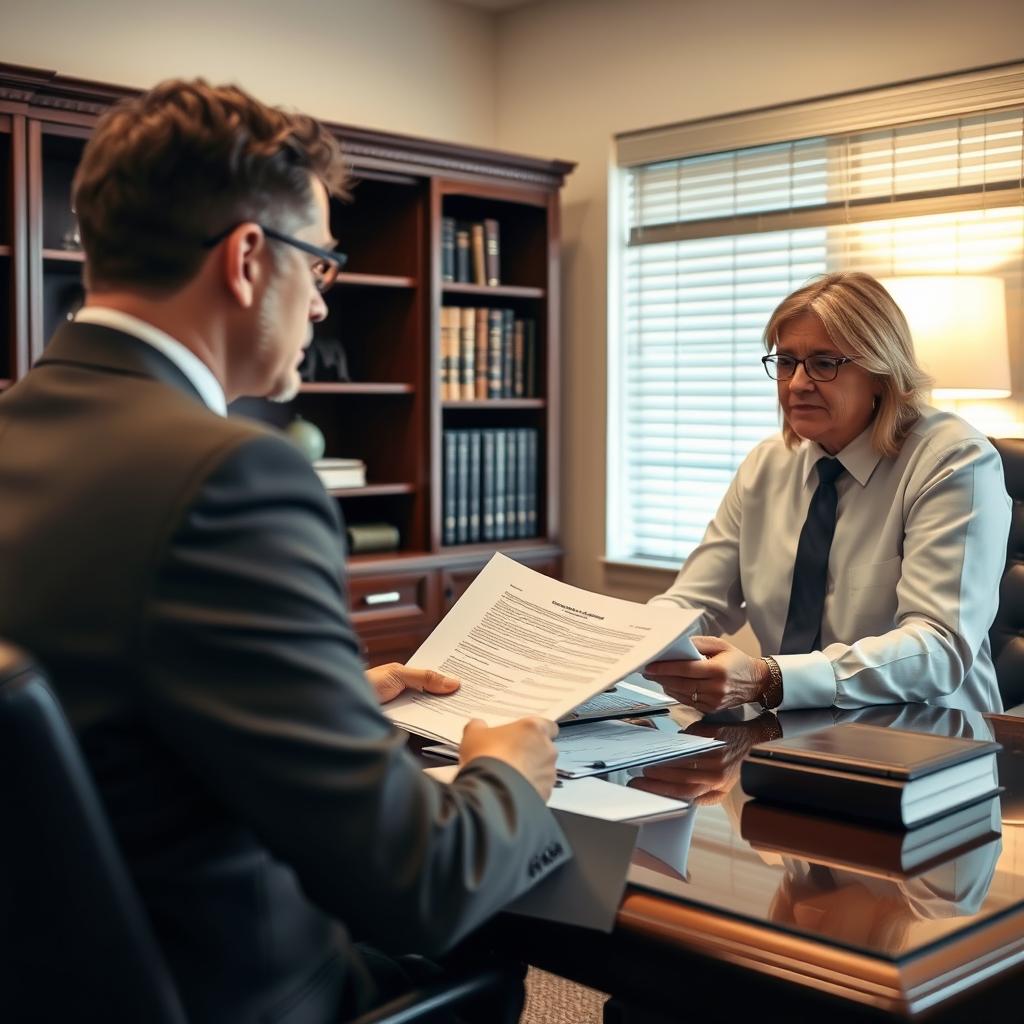
Retaliating Against a Witness lawyer Louisa County, VA
If you are facing a federal investigation in Louisa County for allegedly threatening, intimidating, or retaliating against a witness under 18 U.S.C. § 1513, the terrain shifts quickly. Federal prosecutors draw cases from the U.S. Attorney’s Office for the Western District of Virginia, and the charges are investigated by the FBI—not local law enforcement. The federal system applies the U.S. Sentencing Guidelines; there is no parole. A conviction can permanently alter your life. Law Offices Of SRIS, P.C. represents people in Louisa County who are confronting these high-stakes federal obstruction charges. Mr. Sris, a former prosecutor, leads a team that has handled federal criminal defense since 1997. For a consultation, call (888) 437-7747. By appointment only; our Richmond location serves clients across Louisa, Mineral, Zion Crossroads, and throughout the 16th Judicial District. Law Offices Of SRIS, P.C. – Advocacy Without Borders.
What Federal Retaliating Against a Witness Charges Mean in Louisa County
Federal retaliating against a witness is a serious obstruction-of-justice offense prosecuted under 18 U.S.C. § 1513. The government must prove that you knowingly harmed or threatened another person with the intent to prevent that person’s attendance or testimony in an official proceeding, or to retaliate for lawful testimony. Because the alleged conduct touches the integrity of a federal matter, the case stays in federal court. In Louisa County, that means the U.S. District Court for the Western District of Virginia—specifically the Charlottesville Division, which covers Louisa County and the surrounding area.
Unlike state court matters that may be initiated in Louisa County General District Court, a federal witness-retaliation case is handled entirely by the U.S. Attorney’s Office and federal law enforcement. The investigation is conducted by agencies such as the FBI, and the grand jury is convened in the federal system. The procedural differences are significant: federal detention hearings operate under the Bail Reform Act, discovery is governed by the Federal Rules of Criminal Procedure, and sentencing follows the advisory Sentencing Guidelines with mandatory minimums in some circumstances. Mr. Sris and his Of Counsel appear in the Charlottesville Division of the Western District of Virginia and understand how federal prosecutors build these obstruction cases. Because the alleged conduct often involves communications—texts, calls, social media messages—the evidence is frequently electronic, and the defense requires a careful examination of digital discovery, witness statements, and the context of the interactions.
The U.S. District Court for the Western District of Virginia, Charlottesville Division, is currently presided over by Hon. Claiborne H. Stokes Jr. Federal criminal motions and hearings are calendared according to the court’s schedule; counsel should verify upcoming dates directly with the clerk. Matters are typically heard at 255 West Main Street, Charlottesville, Virginia 22902.
How Mr. Sris and His Of Counsel Handle Retaliating Against a Witness Cases
Every federal witness-retaliation charge begins with a review of the factual timeline and the government’s theory of intent. Mr. Sris, a former prosecutor, works with his Of Counsel to prepare a defense strategy tailored to the Western District of Virginia. The team examines the charged communication, the relationship between the defendant and the witness, whether an official proceeding actually existed, and whether the government can establish the requisite specific intent under § 1513.
The procedural path includes an initial appearance before a U.S. Magistrate Judge, a detention hearing, and—if indicted—arraignment and discovery. Mr. Sris and his Of Counsel file pretrial motions to challenge the sufficiency of the indictment, suppress evidence obtained in violation of the Fourth Amendment, or exclude communications protected by the Fifth Amendment. In many retaliation cases, the distinction between protected speech and criminal threat becomes the critical line. If the government’s case is weak, the team negotiates for a dismissal or a reduction; if trial is necessary, Mr. Sris and his Of Counsel are prepared to cross-examine government witnesses and present a defense that challenges every element of the offense. Throughout the process, the firm focuses on the client’s objectives while maintaining realistic assessments of the government’s evidence. All representation is by appointment; call (888) 437-7747 to speak with Mr. Sris.
About Mr. Sris and His Of Counsel Team
Mr. Sris, Owner and Founder of Law Offices Of SRIS, P.C., has practiced federal criminal defense in Virginia since 1997. He is a former prosecutor, which gives him insight into how the U.S. Attorney’s Office evaluates and presents witness-intimidation cases. Mr. Sris is admitted in Virginia, Maryland, the District of Columbia, New Jersey, and New York. He testified before the Virginia House Courts of Justice Committee in support of 2019 HB 635 (chief patron Del. David Bulova).
Mr. Sris is joined by Of Counsel attorneys who contribute extensive combined legal experience. The Of Counsel team includes practitioners with backgrounds in criminal litigation, federal court practice, and trial advocacy. All attorneys are engaged through Excella and work collaboratively on federal criminal matters. The firm serves clients at the Richmond location, 7400 Beaufont Springs Drive, Suite 300, Room 395, Richmond, VA 23225. By appointment only. Call (888) 437-7747 to schedule.
Frequently Asked Questions
What is the difference between a state witness-intimidation charge and a federal retaliating-against-a-witness charge?
Federal witness retaliation is prosecuted under 18 U.S.C. § 1513 in U.S. District Court, while Virginia state obstruction charges are handled in General District Court or Circuit Court under state law. Federal charges carry more severe sentencing exposure under the Sentencing Guidelines and are investigated by federal agencies. The U.S. Attorney’s Office has higher conviction rates, and there is no parole in the federal system. Procedural rules, discovery obligations, and plea-bargaining dynamics differ from state practice. Having a lawyer familiar with the Western District of Virginia is important.
Do I need a lawyer if I am being investigated for retaliating against a witness in Louisa County?
Yes; you should retain a federal criminal defense attorney as soon as you learn of an investigation, even before charges are filed. Early intervention allows counsel to communicate with the government, attempt to avoid an indictment, and preserve evidence. Federal agents are trained to build cases methodically; anything you say to them can be used against you. A lawyer can advise you on your rights and negotiate with the prosecutor before formal charges are brought. Contact Law Offices Of SRIS, P.C. at (888) 437-7747 for a consultation.
How does the federal sentencing process work for witness-retaliation charges in the Western District of Virginia?
Sentencing is determined by the U.S. Sentencing Guidelines, which calculate a recommended range based on the offense level and the defendant’s criminal history category. While the Guidelines are advisory after United States v. Booker, judges in the Western District of Virginia give them substantial weight. Aggravating factors—such as whether the threat involved physical harm or was directed at a federal officer—can increase the offense level. Mitigating factors, including acceptance of responsibility or substantial assistance to the government, may lead to a downward departure. The final sentence is imposed by the district judge after considering the presentence report. Results vary by case.
What should I do if I am contacted by the FBI about an alleged witness threat in Louisa County?
Politely decline to speak with agents and state that you wish to consult with an attorney before any interview. Do not consent to a search of your devices or property. The FBI may present a cooperative tone, but their objective is to gather evidence. Your statement can be used to establish intent, one of the key elements of the retaliation statute. A lawyer can later communicate with the government on your behalf, allowing you to avoid self-incrimination while potentially shaping the direction of the investigation.
What are the possible defenses against a federal retaliating-against-a-witness charge?
Common defenses include a lack of specific intent, protected speech, or a factual showing that no official proceeding existed. The government must prove that the defendant intended to retaliate against a person because of that person’s participation in a federal proceeding. If the statement was an emotional outburst, hyperbolic rhetoric, or unrelated to any case, that may defeat the required intent. Other defenses challenge the credibility of the witness, the accuracy of the digital evidence, or procedural errors in the investigation. Mr. Sris and his Of Counsel evaluate every element to determine the strong $1.
How do I reach a lawyer about a federal witness case in Louisa County?
Call (888) 437-7747 for a consultation with Mr. Sris at Law Offices Of SRIS, P.C. The firm serves clients from its Richmond location, and all meetings are by appointment. With a former prosecutor on your side, you can discuss the specifics of your federal investigation in confidence. Early consultation gives you the advantage of having counsel engaged before the government makes charging decisions.
Internal Resources for Federal Criminal Defense in Virginia
Federal Criminal lawyer Fairfax County |
Federal Criminal lawyer Prince William County |
Federal Criminal lawyer Manassas |
Federal Criminal lawyer Fairfax City |
Federal Criminal lawyer Falls Church
Official Primary Sources
18 U.S.C. § 1513 – Retaliating Against a Witness | U.S. Sentencing Guidelines | U.S. District Court for the Western District of Virginia
Attorney advertising. Prior results do not guarantee a similar outcome.
Case results depend on a variety of factors unique to each case.