
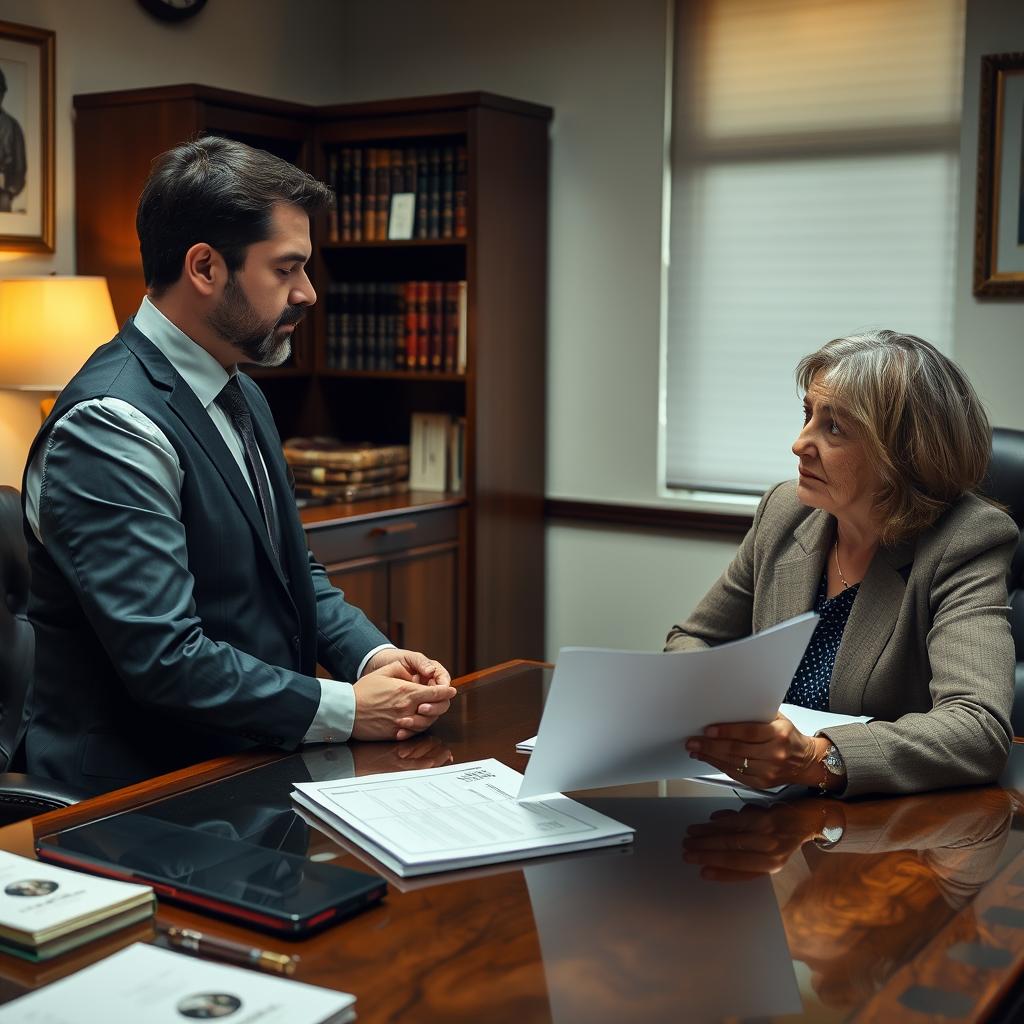
Possession with Intent to Distribute lawyer Louisa County, VA
Federal drug charges carry the weight of the United States government and sentencing guidelines that impose mandatory minimum prison terms. A possession with intent to distribute charge under 21 U.S.C. § 841 in Louisa County is not a state-level drug offense — it is a federal case prosecuted by the U.S. Attorney’s Office in the Western District of Virginia. Law Offices Of SRIS, P.C. defends individuals facing these charges. Mr. Sris and his Of Counsel understand the federal criminal process and work to protect the rights of the accused at every stage. For a consultation, call (888) 437‑7747. Law Offices Of SRIS, P.C. – Advocacy Without Borders.
What a Federal Possession with Intent to Distribute Charge Means in Louisa County
A federal possession with intent to distribute charge arises when federal prosecutors allege that a person knowingly possessed a controlled substance with the intent to manufacture, distribute, or dispense it. Unlike simple possession cases handled in state court, federal charges are filed in U.S. District Court — here, the Western District of Virginia — and are investigated by federal agencies including the DEA, FBI, or ATF. The statute, 21 U.S.C. § 841, provides for sentences that are generally longer than those imposed under Virginia state law, and the federal system has no parole. Convicted individuals serve at least 85% of their sentence. The stakes in Louisa County are therefore significantly higher than in state-level drug prosecutions.
Louisa County is part of the Western District of Virginia, which covers a large geographic area from the Shenandoah Valley to the Tennessee border. Federal cases originating in Louisa County may be heard in Charlottesville, Lynchburg, or Roanoke. The federal court process includes an initial appearance before a U.S. Magistrate Judge, a detention hearing, grand jury indictment, pretrial motions, and, if no plea agreement is reached, a jury trial. Sentencing follows the U.S. Sentencing Guidelines, which calculate an advisory range based on the offense level and criminal history. Mandatory minimums for drug quantities override the guidelines in many instances. For example, 500 grams of powder cocaine triggers a five‑year mandatory minimum; 5 kilograms triggers ten years. Law Offices Of SRIS, P.C. has experience with the federal criminal process and works to seek the trusted resolution under the circumstances.
Frequently Asked Questions
What does “possession with intent to distribute” mean under federal law?
Possession with intent to distribute means the government alleges the defendant knowingly possessed a controlled substance and intended to transfer it to another person — not keep it for personal use. Federal prosecutors do not need to prove an actual sale. Circumstantial evidence such as large quantities of drugs, packaging materials, scales, cash, or text messages referencing drug transactions can support the intent element. Unlike simple possession, intent to distribute carries mandatory minimum prison terms based on the type and weight of the drug. Because federal law defines distribution broadly, a charge can stem from sharing a small amount if the government can show the defendant intended another person to receive it.
How is a federal drug case different from a state drug case in Louisa County?
Federal drug cases are prosecuted in U.S. District Court, not in Louisa County General District Court, and they carry longer sentences and no possibility of parole. Federal agencies such as the DEA or FBI investigate the case, and the U.S. Attorney’s Office, not the local Commonwealth’s Attorney, brings the charge. The federal rules of criminal procedure apply, and sentencing is governed by the U.S. Sentencing Guidelines. State court offers probation and suspended time more readily; the federal system imposes fixed mandatory minimums that strip the judge of much discretion. Additionally, federal cases often involve grand jury indictments, detention hearings, and a longer pretrial process. Mr. Sris and his Of Counsel understand both systems and focus on federal defense strategy.
What are the mandatory minimum sentences for federal drug trafficking?
Federal mandatory minimums depend on the drug type and quantity. For cocaine, 500 grams triggers a 5‑year minimum; 5 kilograms triggers 10 years. For crack cocaine, 28 grams triggers 5 years; 280 grams triggers 10 years. Methamphetamine and heroin have similar tiered thresholds. If death or serious bodily injury results from the drug, the minimum can rise to 20 years to life. The First Step Act of 2018 reduced some mandatory minimums and expanded the “safety valve” provision that allows certain low‑level, non‑violent offenders to be sentenced below the mandatory minimum. These statutes are complex, and the actual sentence depends on the offense level, criminal history category, and any applicable downward departures. An experienced federal criminal attorney can evaluate how the guidelines apply to a specific case.
What should I do if I am under investigation for federal drug charges in Louisa County?
Do not speak with law enforcement agents until you have spoken with an attorney. Federal agents may attempt to interview you before charges are filed. You have the right to remain silent and to have counsel present. Anything you say can be used against you in a federal prosecution. Contact a lawyer who handles federal criminal cases. Early intervention can sometimes influence whether charges are brought, and if they are, whether you are released pending trial. Mr. Sris and his Of Counsel can communicate with federal law enforcement on your behalf and help you understand the scope of the investigation. Prompt legal guidance is important because federal prosecutors may seek pretrial detention.
How does the federal pretrial detention process work in the Western District of Virginia?
After an arrest, a U.S. Magistrate Judge holds a detention hearing to decide whether the defendant is released pending trial. The government may argue that the defendant is a flight risk or a danger to the community. Federal drug charges often carry a presumption of detention, meaning the burden shifts to the defendant to show conditions of release exist. The judge considers factors including the nature of the offense, weight of the evidence, the defendant’s ties to the community, and criminal history. Defendants released on conditions in state court may face a very different outcome in federal court. Mr. Sris and his Of Counsel prepare for detention hearings by gathering evidence of community ties, employment, and family support to argue for pretrial release.
Can I be charged with possession with intent to distribute if no drugs were found on me?
Yes. The government can charge a person with possession with intent to distribute even if no drugs are physically found on them when circumstantial evidence points to their involvement. Federal drug conspiracy statutes allow prosecutors to charge individuals who aided or facilitated the distribution, even if they never touched the drugs. Evidence such as phone calls, text messages, financial records, surveillance, and testimony from cooperating witnesses can establish constructive possession. The element of “intent” is often inferred from the quantity, packaging, and other circumstances. Because the evidentiary standard in federal drug cases is broad, a strong defense may involve challenging the witness credibility, the legality of the search, or the connection between the defendant and the alleged drugs.
What role does the U.S. Sentencing Guidelines play in my case?
The U.S. Sentencing Guidelines provide a recommended sentencing range based on the offense level and criminal history, but they are advisory, not mandatory. After United States v. Booker, federal judges must consider the guidelines but are not bound by them. The advisory range is calculated using a points system: the base offense level is determined by the drug quantity, and adjustments are made for role in the offense, acceptance of responsibility, obstruction of justice, and other factors. The judge then imposes a sentence within or outside the range after considering the factors in 18 U.S.C. § 3553(a). However, statutory mandatory minimums override the guidelines and must be imposed unless the defendant qualifies for the safety valve or provides substantial assistance. An attorney can advocate for a lower sentence by presenting mitigating evidence and arguing for downward departures.
How does a federal criminal defense attorney challenge a possession with intent to distribute charge?
A defense attorney challenges the charge by examining whether law enforcement followed proper procedures, whether the evidence supports the intent element, and whether any constitutional violations occurred. Common defense strategies include filing motions to suppress evidence obtained through an unlawful search or seizure, challenging the chain of custody of the drugs, arguing that the defendant lacked knowledge or control over the substance, and contesting the reliability of cooperating witnesses or informants. The defense may also negotiate with the U.S. Attorney’s Office for a lesser charge or a favorable plea agreement. Each case is unique, and Mr. Sris and his Of Counsel evaluate the specific facts and evidence to develop a tailored defense plan.
What is the difference between a federal grand jury indictment and a criminal complaint?
An indictment is a formal charging document returned by a grand jury after hearing evidence presented by the prosecutor; a criminal complaint is a sworn statement filed by a law enforcement agent to initiate the case. For felony drug offenses, the Constitution requires a grand jury indictment unless the defendant waives that right. The grand jury determines probable cause that a crime was committed and that the defendant committed it. A complaint is used to arrest a defendant and bring an initial appearance before a judge, but the prosecution must still obtain an indictment to proceed. The grand jury process is secret, and the defendant does not have the right to be present or to cross-examine witnesses. Federal defense counsel can evaluate whether the indictment was lawfully obtained.
Do I need a lawyer if I think the federal drug charges will be dropped?
Yes. Federal prosecutors rarely drop charges without a substantial legal or factual basis presented by skilled defense counsel. The U.S. Attorney’s Office does not dismiss cases simply because the defendant asks. If there are grounds to dismiss — such as insufficient evidence, unlawful search, witness credibility issues, or violation of the right to a speedy trial — an experienced attorney can file the appropriate motions and negotiate with the government. Even if the charges are not dropped, early representation can lead to a more favorable plea offer, pretrial release, or a reduced sentence. Self-representation in federal court is extremely risky given the complexity of the federal rules and sentencing laws. Law Offices Of SRIS, P.C. provides experienced federal defense representation. Call (888) 437‑7747.
About Mr. Sris and His Of Counsel
Mr. Sris, Owner and Founder of Law Offices Of SRIS, P.C., has practiced federal criminal defense since the firm’s founding in 1997. He is a former prosecutor who understands how the government builds its cases. Together with his Of Counsel, Mr. Sris handles federal drug trafficking matters, including possession with intent to distribute, in the Western District of Virginia and throughout the country. Over 120 years of combined legal experience between Mr. Sris and his Of Counsel, with 4,739+ documented firm-wide results, inform the firm’s approach to federal criminal defense. Results may vary. Mr. Sris testified before the Virginia House Courts of Justice Committee in support of 2019 HB 635 (chief patron Del. David Bulova). Mr. Sris is admitted in Virginia, Maryland, the District of Columbia, New Jersey, and New York.
Related Federal Criminal Defense Pages
- Federal Criminal Lawyer Fairfax County, VA
- Federal Criminal Lawyer Fairfax City, VA
- Federal Criminal Lawyer Falls Church, VA
- Federal Criminal Lawyer Prince William County, VA
- Federal Criminal Lawyer Manassas, VA
Attorney advertising. Prior results do not guarantee a similar outcome. Results may vary.
Case results depend on a variety of factors unique to each case.