
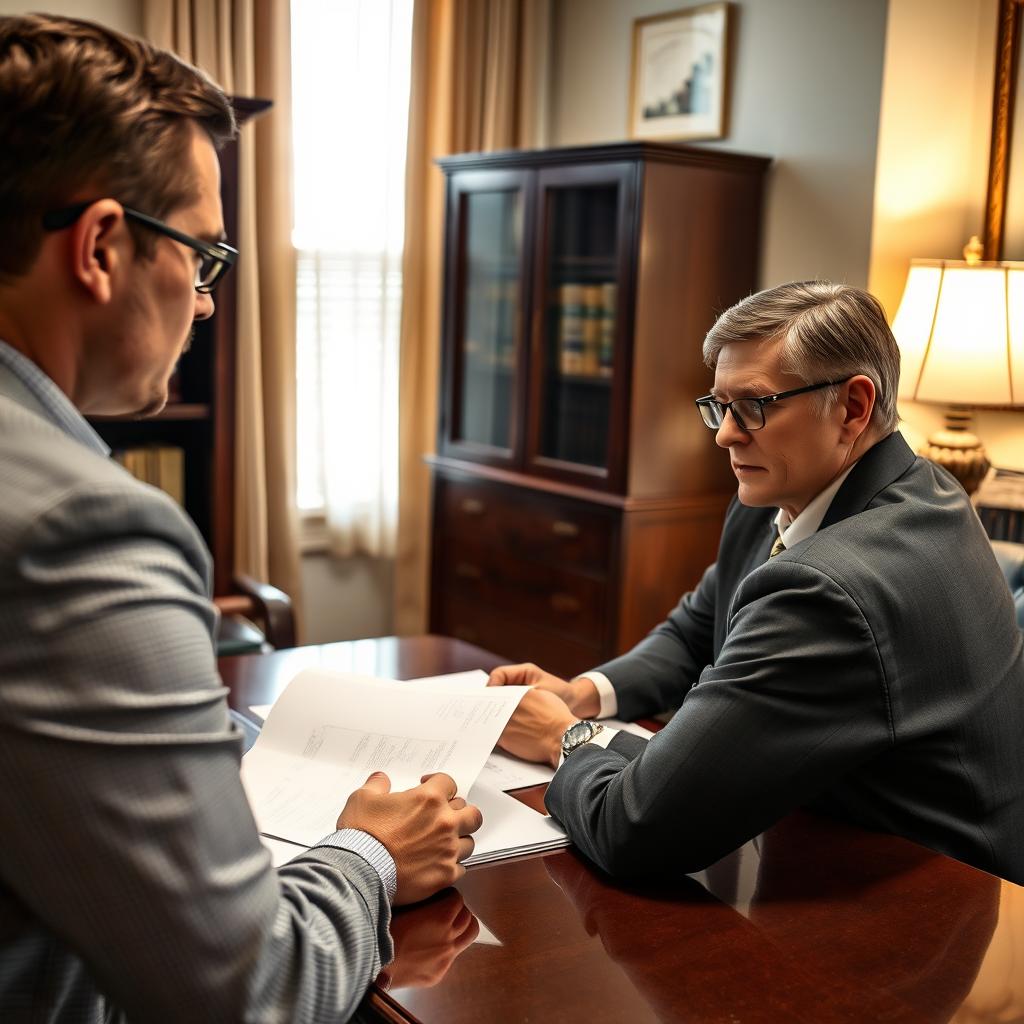
Possession of an Unregistered Firearm lawyer Virginia, VA
Facing a federal charge for possession of an unregistered firearm in Virginia can trigger a prosecution by the U.S. Attorney’s Office with the resources of federal investigative agencies. The charge arises under the National Firearms Act, which imposes strict registration requirements for certain categories of firearms. A conviction carries the potential for significant federal incarceration, supervised release, and a permanent loss of firearm rights. The process from investigation through indictment and trial follows a distinct set of federal procedural rules and sentencing guidelines that differ from Virginia’s state criminal justice system. Mr. Sris and his Of Counsel team at Law Offices Of SRIS, P.C. represent individuals under federal investigation or indictment throughout Virginia, from the Eastern District’s Alexandria, Richmond, Norfolk, and Newport News divisions to the Western District’s Roanoke, Charlottesville, and Abingdon divisions. To request a consultation about your situation, reach the firm at (888) 437-7747. Law Offices Of SRIS, P.C. – Advocacy Without Borders.
What Possession of an Unregistered Firearm Means in Virginia
Under federal law, possessing a firearm that is required to be registered in the National Firearms Registration and Transfer Record, but is not so registered, is a violation of the National Firearms Act. The statute covers specific categories of weapons, including short-barreled rifles, short-barreled shotguns, machine guns, silencers, and destructive devices. In Virginia, these charges are prosecuted by the U.S. Attorney’s Office for either the Eastern District of Virginia or the Western District of Virginia, depending on where the alleged conduct occurred. The U.S. District Court for the Eastern District of Virginia—with courthouses in Alexandria, Richmond, Norfolk, and Newport News—handles cases from Northern Virginia, the Richmond metropolitan area, and Tidewater. The Western District—with courthouses in Roanoke, Charlottesville, and Abingdon—covers the rest of the state. Federal agents from the Bureau of Alcohol, Tobacco, Firearms and Explosives (ATF) often lead the investigations, sometimes working alongside other agencies. The federal government’s investigatory and prosecutorial resources can be extensive, and federal grand jury proceedings are conducted in secrecy. Because the federal system does not offer parole, a conviction means serving a substantial portion of any sentence imposed, subject only to limited good-time credit. The interaction between federal law and state firearms regulations adds layers of complexity that require experienced federal criminal defense counsel.
In Virginia, federal firearm cases often intersect with state-level charges, but it is the federal prosecution that typically carries the most severe consequences. The U.S. Sentencing Guidelines heavily influence the sentence, and the presence of aggravating factors—such as a prior felony record, the use of the firearm in connection with another offense, or the type of weapon involved—can increase the advisory sentencing range considerably. Because federal prosecutors have broad discretion in charging decisions and plea negotiations, early intervention by a defense attorney who understands the guidelines, the mandatory-minimum landscape, and the local practices of each division can materially affect the course of a case. Mr. Sris and his Of Counsel team at Law Offices Of SRIS, P.C. are familiar with the federal courts across Virginia and have appeared on behalf of clients facing firearm-related federal charges.
How Mr. Sris and His Of Counsel Handle Federal Firearm Cases
Representation in a federal firearm case typically begins before formal charges are filed, during what is often a lengthy pre-indictment investigation. Mr. Sris and his Of Counsel work to protect the client’s rights during the investigative stage by engaging with the government when appropriate, seeking to narrow the scope of inquiry, and preparing the client for the possibility of indictment. Once charges are presented to a federal grand jury and an indictment is returned, the case moves through an initial appearance, a detention hearing, and an arraignment. The firm’s approach to detention focuses on presenting a comprehensive picture of the client’s community ties, employment, and other factors that support pretrial release. Throughout discovery, the defense team evaluates the government’s evidence, including the firearm itself, laboratory reports, and witness statements, to identify potential constitutional or procedural challenges. Federal search-and-seizure law, Fourth Amendment protections, and the rules governing statements to investigators are examined closely. In many cases, pretrial motions to suppress evidence or to challenge the sufficiency of the indictment can shape the plea discussions that follow.
If the case proceeds to trial, Mr. Sris and his Of Counsel have experience conducting federal jury trials and are prepared to contest every element of the charged offense. In cases that resolve through a negotiated plea, the focus shifts to the sentencing phase, where the defense can present mitigating evidence, argue for a sentence below the advisory guideline range, and contest the government’s calculations of offense level and criminal history. The firm’s goal is to achieve favorable outcomes under the specific facts of each case. Because each federal division in Virginia has its own practices and prosecutor personalities, the firm’s multi-jurisdictional experience provides valuable insight into how a case may unfold. The defense team works with the client at every stage, ensuring that the client understands the procedural steps and the available strategic options. Results may vary.
About Mr. Sris and His Of Counsel Team
Mr. Sris, Owner and Founder of Law Offices Of SRIS, P.C., has practiced law since 1997 and is admitted in Virginia, Maryland, the District of Columbia, New Jersey, and New York. A former prosecutor, Mr. Sris brings an understanding of how the government builds its cases—a perspective that informs every federal criminal defense matter the firm handles. Mr. Sris testified before the Virginia House Courts of Justice Committee in support of 2019 HB 635 (chief patron Del. David Bulova). Alongside Mr. Sris, the firm’s Of Counsel team contributes extensive combined legal experience in federal criminal defense. Each Of Counsel attorney is an experienced litigator, and the team works collaboratively on complex federal matters to ensure thorough preparation. Together, Mr. Sris and his Of Counsel have handled matters across multiple practice areas since 1997. Results may vary.
Frequently Asked Questions
What is possession of an unregistered firearm under federal law?
Possession of an unregistered firearm is a federal criminal offense that applies when a person possesses a firearm that falls into certain regulated categories—such as a machine gun, short-barreled rifle, silencer, or destructive device—and the firearm is not registered in the National Firearms Registration and Transfer Record. The requirement to register these weapons comes from the National Firearms Act, not from general state firearm laws. The government must prove the defendant knowingly possessed the item and that the item met the statutory definition of a firearm requiring registration. The prosecution does not have to show the defendant knew the firearm was unregistered, only that the defendant knowingly possessed the weapon and it was, in fact, unregistered. Federal courts in Virginia, including the Eastern and Western Districts, have addressed a variety of challenges to these charges, including attacks on the statute’s constitutionality and issues of constructive possession. For guidance on your specific situation, reach Law Offices Of SRIS, P.C. at (888) 437-7747.
What are the penalties for possession of an unregistered firearm?
A conviction for possession of an unregistered firearm exposes a defendant to a term of imprisonment in the federal Bureau of Prisons, a fine, and a term of supervised release. The specific sentence is determined by the U.S. Sentencing Guidelines, which calculate an advisory range based on the offense level and the defendant’s criminal history. In the federal system, parole has been abolished, so a person serves a substantial portion of any prison term imposed, subject only to limited good-time credit. Additional consequences can include the loss of the right to possess firearms permanently, the loss of certain professional licenses, and the long-term impact of a federal felony conviction on employment and housing. Certain prior convictions—especially prior felony drug or violent-crime convictions—can dramatically increase the sentencing exposure under the Armed Career Criminal Act. Because the sentence is highly case-specific, anyone facing such a charge should discuss the particular facts with federal defense counsel. To discuss the details of your matter, contact Law Offices Of SRIS, P.C. at (888) 437-7747.
Do I need a federal criminal defense lawyer for a gun charge in Virginia?
Yes, retaining a lawyer with experience in federal court is important because federal criminal procedure, the rules of evidence, and the sentencing framework are different from Virginia’s state courts. Federal cases are prosecuted by Assistant U.S. Attorneys who handle a smaller caseload and have access to substantial investigative resources. The pretrial detention standards under the Bail Reform Act can result in pretrial incarceration for defendants who might have been released pending trial in state court. The discovery process is governed by Federal Rule of Criminal Procedure 16 and the government’s obligations under Brady v. Maryland, and understanding these rules is critical to identifying weaknesses in the prosecution’s case. An attorney who is unfamiliar with the federal system may not spot issues that can affect the outcome of a detention hearing, suppression motion, or sentencing. For a consultation, reach Mr. Sris and his Of Counsel at (888) 437-7747.
How does a federal firearm case proceed in Virginia?
A federal firearm case typically begins with an investigation by an agency such as the ATF, FBI, or DEA, which may last months before an arrest or indictment occurs. After indictment, the defendant makes an initial appearance before a U.S. Magistrate judge, who will determine whether the defendant will be released or detained pending trial. The arraignment follows, at which the defendant enters a plea. The discovery and motions phase can take several months, during which the defense may challenge the legality of a search, the validity of a confession, or the sufficiency of the indictment. If the case does not resolve by plea agreement, it proceeds to a jury trial. Sentencing, if there is a conviction, is handled by the district judge and includes the preparation of a presentence report by the U.S. Probation Office. The overall timeline varies by division and the complexity of the case. For guidance on your specific situation, reach Law Offices Of SRIS, P.C. at (888) 437-7747.
What should I do if I am under federal investigation for an unregistered firearm?
If you learn you are under federal investigation, you should invoke your right to remain silent, decline to speak with law enforcement, and immediately seek legal representation. Do not discuss the facts of the investigation with anyone except your attorney. Do not agree to an interview with federal agents without counsel present, and do not consent to a search of your home, vehicle, or electronic devices. Early engagement of a defense lawyer can help protect your rights during the pre-indictment stage, influence the scope of the investigation, and prepare you for the possibility that charges will be brought. In Virginia, federal prosecutors are often willing to communicate with defense counsel before seeking an indictment, and an attorney with experience in federal gun cases can begin working to develop mitigating information and to engage in pre-charge negotiations. To discuss the details of your matter, contact Law Offices Of SRIS, P.C. at (888) 437-7747.
Can I get a federal gun charge dismissed?
A dismissal is possible, but it depends on the strength of the government’s evidence and the presence of legal or procedural defects in the case. A skilled federal defense attorney may file pretrial motions to suppress the firearm if law enforcement obtained it through an unconstitutional search or seizure. If the stop, warrant, or arrest violated the Fourth Amendment, the exclusionary rule can result in the suppression of the key evidence, often experienced to dismissal. Other grounds for dismissal can include a failure to preserve exculpatory evidence, statutory defects in the indictment, or speedy-trial violations. In some cases, a negotiated resolution that results in a charge being reduced or deferred can be achieved. While no outcome can be past results do not guarantee a similar outcome, Mr. Sris and his Of Counsel work to identify the strong $1s available under the specific facts of each case. For a consultation, reach Mr. Sris and his Of Counsel at (888) 437-7747.
Further information:
- Federal Criminal Lawyer Fairfax County
- Federal Criminal Lawyer Fairfax City
- Federal Criminal Lawyer Falls Church
- Federal Criminal Lawyer Prince William County
- Federal Criminal Lawyer Manassas
Official sources:
- U.S. District Court for the Eastern District of Virginia
- U.S. District Court for the Western District of Virginia
Attorney advertising. Prior results do not guarantee a similar outcome. Case results depend on a variety of factors unique to each case. Results may vary.