
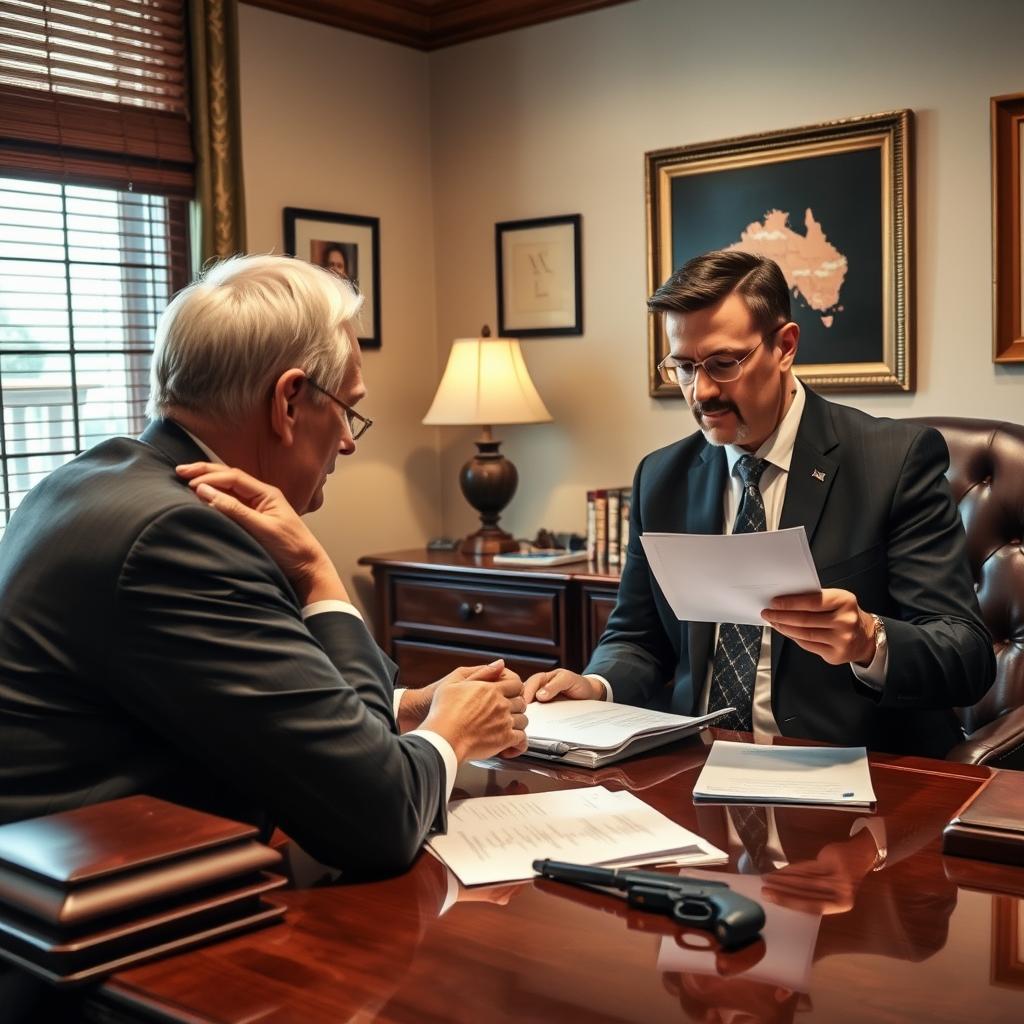
Possession of an Unregistered Firearm lawyer Isle of Wight County, VA
Federal firearm charges carry severe consequences—prosecution by the U.S. Attorney’s Office, sentencing under the federal guidelines, and no possibility of parole. If you or someone you care about is facing a federal charge for possession of an unregistered firearm in Isle of Wight County, Virginia, you need experienced counsel who understands how federal cases are built, investigated, and litigated. Law Offices Of SRIS, P.C., practicing since 1997, represents clients in federal criminal matters throughout Virginia, including Isle of Wight County. Mr. Sris and his Of Counsel are admitted in Virginia, Maryland, the District of Columbia, New Jersey, and New York. Our Richmond location regularly serves clients in Isle of Wight County whose cases proceed before the U.S. District Court for the Eastern District of Virginia. To discuss your situation, call (888) 437‑7747. Law Offices Of SRIS, P.C. – Advocacy Without Borders.
Federal Firearm Offenses in Isle of Wight County: What You Need to Know
Isle of Wight County falls within the Eastern District of Virginia. Federal criminal matters arising here are typically heard at the Newport News or Norfolk divisions of the U.S. District Court for the Eastern District of Virginia. An indictment—returned by a federal grand jury—marks the formal start of a felony prosecution. From that point forward, the case is governed by the Federal Rules of Criminal Procedure and the United States Sentencing Guidelines.
A charge of possession of an unregistered firearm implicates the National Firearms Act, which regulates certain categories of weapons including short‑barreled rifles, short‑barreled shotguns, machine guns, silencers, and destructive devices. Federal prosecutors bear the burden of proving each element beyond a reasonable doubt, but the investigatory resources of the FBI, ATF, and other federal agencies are substantial. Because evidence is often gathered before a prosecutor files charges, early legal guidance can be critical—before statements are made, searches are executed, or a grand jury convenes.
Isle of Wight County residents have access to representation from our Richmond location. While our attorneys are not based in the county, we appear regularly in federal court throughout the Eastern District. Cases that originate in this part of Virginia travel through the same procedural stages as any federal felony: initial appearance and detention hearing before a U.S. Magistrate Judge, often at the Newport News courthouse; arraignment; discovery; pretrial motions; and, if no resolution is reached, jury trial before a U.S. District Judge. Throughout each phase, the government is represented by an Assistant U.S. Attorney from the Eastern District’s office.
How Mr. Sris and His Of Counsel Handle Federal Firearm Cases
Federal firearm prosecutions often turn on the government’s adherence to the Fourth Amendment—whether the search that uncovered the weapon was lawful—and on technical definitions: is the item actually a “firearm” under the National Firearms Act? Does the government have evidence of knowing possession? Mr. Sris and his Of Counsel evaluate every component of the government’s case, from the initial stop or encounter through the forensic analysis of the alleged firearm.
In many federal firearm cases, the defense also focuses on sentencing exposure. Even when the government believes its evidence is overwhelming, a thorough examination of the sentencing guidelines, mandatory minimums, and statutory enhancements can materially affect the length of any imposed term of imprisonment. Mr. Sris and his Of Counsel work to identify avenues for mitigation, including acceptance‑of‑responsibility adjustments, safety‑valve provisions where applicable, and substantial‑assistance departures. Every case is approached with the understanding that federal sentencing is a distinct discipline that requires careful preparation well before a plea or verdict.
About Mr. Sris and His Of Counsel Team
Mr. Sris, Owner and Founder of Law Offices Of SRIS, P.C., is a former prosecutor who practices in Virginia and four other jurisdictions. His experience on the government’s side of the courtroom informs his approach to building a defense—knowing how charges are constructed helps him anticipate the prosecution’s strategy and identify weaknesses early. Mr. Sris is supported by Of Counsel attorneys who bring substantial criminal defense and litigation experience. Together, Mr. Sris and his Of Counsel represent clients facing federal firearm charges in the Eastern District of Virginia, including Isle of Wight County matters. The firm’s practice spans federal criminal defense since 1997, and its attorneys are admitted in Virginia, Maryland, the District of Columbia, New Jersey, and New York.
Frequently Asked Questions
What is possession of an unregistered firearm under federal law?
Possession of an unregistered firearm is a federal criminal offense under the National Firearms Act. The Act requires that certain weapons—including short‑barreled rifles, short‑barreled shotguns, machine guns, silencers, and destructive devices—be registered in the National Firearms Registration and Transfer Record. A person who possesses such a weapon without proper registration may face felony charges. The government must prove that the item meets the statutory definition of a firearm and that the defendant knowingly possessed it. Because the registration requirement is strict, legal defenses often focus on whether the item qualifies as a regulated firearm under the law or whether the defendant’s possession was knowing.
What potential penalties apply to a federal unregistered‑firearm charge?
A conviction carries the possibility of imprisonment, supervised release, and fines, with the specific sentence determined by the U.S. Sentencing Guidelines. Federal sentencing for firearm offenses takes into account factors such as the type of weapon involved, the defendant’s role, whether the firearm was used in connection with another offense, and the defendant’s criminal history. Because federal parole has been abolished, any term of imprisonment is served in full, subject only to limited good‑conduct credits. Sentencing exposure can be substantial, making it essential to work with counsel who understands how the guidelines apply and how to present mitigation to the court.
How does a defense attorney challenge a federal firearm charge in Isle of Wight County?
An experienced federal criminal defense attorney evaluates the legality of the search, the evidence of knowing possession, and the technical classification of the firearm. If law enforcement violated the Fourth Amendment in obtaining the weapon, a motion to suppress may be appropriate. Defense counsel also examines whether the government can prove that the item is indeed a firearm as defined by the National Firearms Act—not all items that resemble regulated weapons meet the statutory criteria. Where a pretrial resolution is pursued, counsel negotiates with the U.S. Attorney’s Office to seek a charge reduction or a sentencing recommendation that accurately reflects the defendant’s role and acceptance of responsibility.
Do I need a lawyer for a federal firearm investigation in Virginia?
Yes—a lawyer should be contacted as soon as you become aware of a federal investigation. Federal agents from the ATF, FBI, or other agencies begin building a case long before charges are filed. Speaking with investigators without counsel can lead to statements that are later used against you. An attorney can communicate with the government on your behalf, protect your rights during any search or interview, and advise you on steps that may affect the eventual outcome. Early involvement of counsel is often the single most consequential decision in a federal criminal matter.
What should I do if I have been indicted for possession of an unregistered firearm?
Retain federal criminal defense counsel immediately and refrain from discussing the case with anyone except your attorney. An indictment signals that the grand jury found probable cause; it is not a finding of guilt. Your lawyer will obtain discovery from the government, assess the evidence, and develop a defense strategy. The Speedy Trial Act imposes deadlines that move the case forward, so prompt action is necessary. Do not attempt to explain your situation to law enforcement or to anyone else—conversations with family members, cellmates, or social media posts can be introduced as evidence. Direct all inquiries to your counsel.
How do federal sentencing guidelines affect a firearm case?
The U.S. Sentencing Guidelines provide a framework that the court must consider, though they are advisory after United States v. Booker. The guidelines calculate a recommended sentencing range based on the offense level and the defendant’s criminal history category. For firearm offenses, the base offense level can increase depending on factors such as the type of weapon, whether it was possessed in connection with another felony, and whether the defendant is a prohibited person. While judges have discretion to depart from the guideline range, they must explain any deviation. Skilled sentencing advocacy can influence where within—or outside—the guideline range a sentence falls.
Related Federal Criminal Defense Pages
Federal Criminal Lawyer Fairfax County, VA |
Federal Criminal Lawyer Prince William County, VA |
Federal Criminal Defense Manassas, VA |
Federal Criminal Lawyer Falls Church, VA
Official Resources
U.S. District Court for the Eastern District of Virginia |
Virginia’s Judicial System |
United States Sentencing Commission
To discuss your federal firearm matter with an experienced attorney, contact Law Offices Of SRIS, P.C. at (888) 437‑7747.
Attorney advertising. Prior results do not guarantee a similar outcome. Results may vary.
Case results depend on a variety of factors unique to each case.