
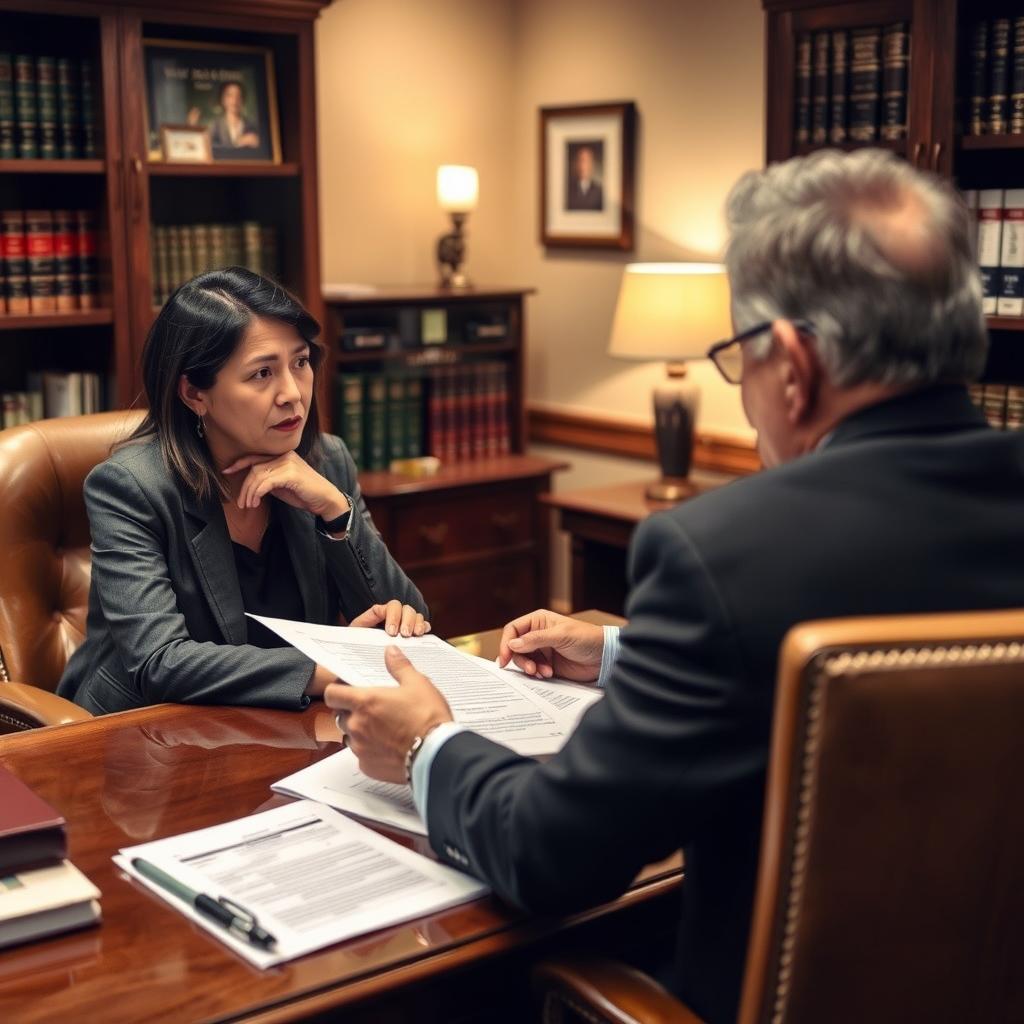
Perjury lawyer Chesterfield County, VA
Federal perjury charges under 18 U.S.C. § 1621 subject a person to serious prison time and permanent damage to their reputation. When the United States Attorney for the Eastern District of Virginia opens a perjury investigation arising from testimony given in Chesterfield County—whether before a federal grand jury, in a deposition, or during any official proceeding where an oath was administered—the stakes are immediate. A conviction can result in up to five years of incarceration per count, and the U.S. Attorney’s Office in the Eastern District prosecutes these cases actively. Mr. Sris, Owner and Founder of Law Offices Of SRIS, P.C., and his Of Counsel bring extensive combined legal experience defending federal criminal matters in the Eastern District of Virginia. Results may vary. Our Richmond location serves residents and businesses throughout Chesterfield County, including Midlothian, Chester, Bon Air, Brandermill, and the Colonial Heights area. If you have been contacted by federal agents or are facing a perjury charge, reach Law Offices Of SRIS, P.C. at (888) 437-7747 to schedule a consultation.
What Federal Perjury Means in Chesterfield County
For a person in Chesterfield County, federal perjury is not a state-level offense—it is a felony prosecuted in the United States District Court for the Eastern District of Virginia, Richmond Division. Under 18 U.S.C. § 1621, the government must prove that the defendant knowingly made a material false statement while under oath in a federal proceeding. A statement is material if it could influence the decision of the tribunal or agency before which it was given. The oath may be administered in a range of settings: a grand jury investigation, a deposition in a civil lawsuit, an administrative hearing, or a bankruptcy proceeding. Even a single false statement can form the basis of a charge, and each separate falsehood may be charged as a distinct count.
The Richmond Division of the Eastern District of Virginia sits at 701 E. Broad Street in Richmond, just a short distance from Chesterfield County. Cases brought in this division are handled by experienced Assistant United States Attorneys who often combine perjury charges with related offenses such as obstruction of justice, false statements to federal agents, or witness tampering. Because the federal system has no parole, a perjury conviction carries particularly severe consequences. The court applies the United States Sentencing Guidelines, which calculate a recommended sentencing range based on offense characteristics and the defendant’s criminal history. Although the guidelines are advisory, judges in the Eastern District consider them carefully. Mr. Sris and his Of Counsel are familiar with the practices and expectations of the Richmond federal bench and build each defense strategy accordingly.
How Mr. Sris and His Of Counsel Handle Federal Perjury Cases
Defending a federal perjury charge requires a disciplined, evidence-focused approach that begins the moment a person learns they are under investigation. Mr. Sris and his Of Counsel first work to understand exactly what statement is alleged to be false, the proceeding in which it was made, and the context surrounding the oath. The government’s case often rests on a narrow interpretation of a handful of words, and the defense may succeed by showing that the statement was literally true, was not material, or was not made with the requisite intent to deceive. Early engagement often allows counsel to communicate with prosecutors before an indictment is returned, potentially persuading them to decline prosecution or narrow the charges.
If an indictment is issued, the team prepares a thorough challenge to the government’s evidence. This may involve filing motions to suppress statements, challenging the sufficiency of the indictment, or seeking a bill of particulars to limit the scope of the prosecution. In many federal perjury cases, the defense presents the client’s testimony or other witnesses to establish that the allegedly false statement was truthful or the result of a misunderstanding rather than a willful lie. Mr. Sris, a former prosecutor, understands how the U.S. Attorney’s Office constructs a perjury case. That insight guides the firm’s pretrial strategy and, when appropriate, its negotiation of a resolution that minimizes the client’s exposure. Throughout the process, the client is kept informed of developments and the realistic options at each stage.
About Mr. Sris and His Of Counsel Team
Mr. Sris is the Owner and Founder of Law Offices Of SRIS, P.C. A former prosecutor, he established the firm in 1997 and has dedicated his career to defending individuals and businesses in federal and state courts across five jurisdictions. He is admitted to practice in Virginia, Maryland, the District of Columbia, New Jersey, and New York. Mr. Sris testified before the Virginia House Courts of Justice Committee in support of 2019 HB 635 (chief patron Del. David Bulova), reflecting a long-standing commitment to the development of Virginia law.
Working alongside Mr. Sris, the firm’s Of Counsel team includes litigators with experience in federal criminal defense, complex motion practice, and trial advocacy. These attorneys are engaged through Excella and collectively bring extensive combined legal experience to each federal matter. Results may vary. Together, Mr. Sris and his Of Counsel appear regularly in the U.S. District Court for the Eastern District of Virginia, including its Richmond Division, and are prepared to defend clients facing perjury allegations in Chesterfield County and throughout Central Virginia.
Frequently Asked Questions
What is federal perjury under 18 U.S.C. § 1621?
Federal perjury is the crime of knowingly making a material false statement under oath in a federal proceeding. The statement must be made with the intent to deceive, and it must be capable of influencing the decision of the tribunal or agency before which it is given. A false statement made under oath during a grand jury investigation, a deposition, an administrative hearing, or a trial can all support a perjury charge. Because the government must prove both falsity and willfulness, a defense may show that the statement was literally true, the result of a good-faith misunderstanding, or not material to the proceeding.
What are the penalties for perjury in Chesterfield County federal court?
A conviction for federal perjury under 18 U.S.C. § 1621 carries a maximum sentence of five years in prison per count. In addition to imprisonment, the court may impose a term of supervised release, a fine, and a mandatory special assessment. Because the federal system abolished parole, a person convicted of perjury will serve a substantial portion of any prison term imposed. Sentencing is guided by the United States Sentencing Guidelines, which consider factors such as the nature of the false statement, whether it obstructed justice, and the defendant’s criminal history. A conviction also creates a lasting federal felony record.
Do I need a lawyer if I am under investigation for perjury?
Yes, anyone who learns they are the subject of a federal perjury investigation should consult an experienced defense attorney immediately. Even before charges are filed, statements made to federal agents can become the basis for additional counts of perjury itself or other obstruction offenses. An attorney can communicate with the government on your behalf, help you avoid making incriminating statements, and begin assembling evidence that may forestall an indictment. Early intervention is often the most effective way to narrow or prevent a prosecution in the Eastern District of Virginia.
How does the government prove perjury in federal court?
The prosecution must prove beyond a reasonable doubt that the defendant was under oath, made a false statement, knew it was false, and that the statement was material. Proof of falsity often requires the testimony of at least one other witness or documentary evidence that contradicts the sworn statement. The government must also establish that the statement was not the result of confusion, faulty memory, or ambiguous questioning. Because the statute requires a willful intent to deceive, the defense may introduce evidence that the defendant believed the statement was true or that the statement, when considered in context, was not materially false.
Can perjury charges be dismissed?
Perjury charges can be dismissed if the government lacks sufficient evidence, if the indictment is defective, or if a motion to suppress key evidence is granted. A defense attorney may file a motion to dismiss arguing that the allegedly false statement was not material, that the oath was not properly administered, or that the indictment fails to state an offense. In some cases, the government may agree to dismiss perjury counts as part of a negotiated resolution. Every case is different; the likelihood of dismissal depends on the specific facts and the strength of the prosecution’s evidence.
How do I choose a federal perjury lawyer in Chesterfield County?
Look for a lawyer with experience in the Eastern District of Virginia, particularly the Richmond Division, and with a background defending federal criminal charges. The attorney should be admitted to practice in the U.S. District Court and be familiar with the procedural rules, the local prosecutors, and the sentencing practices of the judges. Mr. Sris has represented federal defendants in the Eastern District since 1997 and works with a team of Of Counsel who bring extensive combined legal experience to each case. You can schedule a consultation by calling (888) 437-7747.
Related pages:
Henrico County Federal Criminal Lawyer |
Hanover County Federal Criminal Lawyer |
Fairfax County Federal Criminal Lawyer |
Fairfax City Federal Criminal Lawyer |
Falls Church Federal Criminal Lawyer
External resources:
18 U.S.C. § 1621 (Perjury) |
U.S. Attorney’s Office, Eastern District of Virginia |
U.S. District Court for the Eastern District of Virginia
Attorney advertising. Prior results do not guarantee a similar outcome. Results may vary.
Case results depend on a variety of factors unique to each case.