
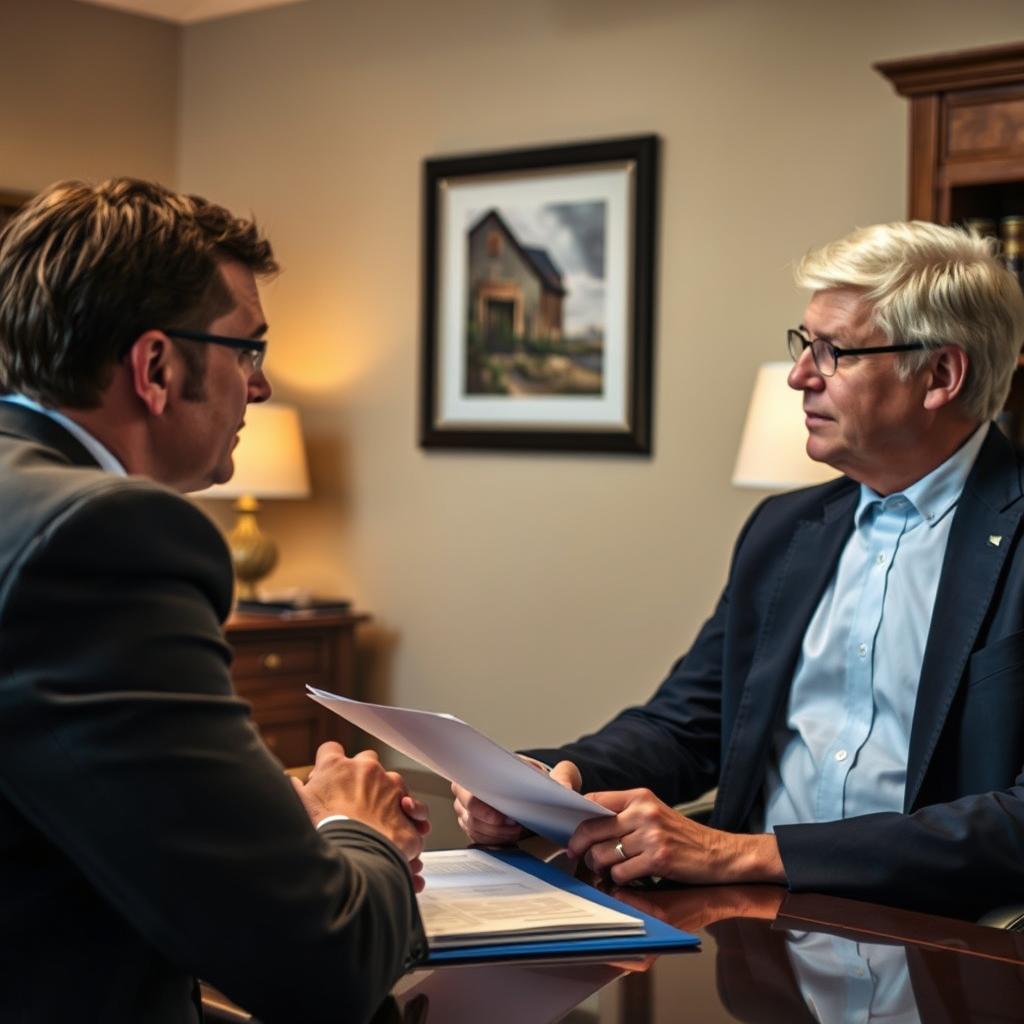
Operating a Drug-Involved Premises lawyer Fluvanna County, VA
A federal charge of operating a drug-involved premises under 21 U.S.C. § 856—often called the “crack house” statute—is prosecuted by the United States Attorney for the Western District of Virginia, which includes Fluvanna County. A conviction can carry substantial prison time, fines, and asset forfeiture; the federal sentencing guidelines and any triggering mandatory minimums make sentencing exposure severe. Law Offices Of SRIS, P.C. Concentrates its practice on defending individuals facing federal drug premises allegations, including those arising from investigations by the DEA, FBI, or local task forces that result in federal indictment. Mr. Sris, a former prosecutor, leads the defense, working alongside Of Counsel with deep federal courtroom experience. For a consultation about an operating a drug-involved premises matter in Fluvanna County or elsewhere in the Western District of Virginia, call (888) 437-7747.
What Operating a Drug-Involved Premises Means in Fluvanna County
Fluvanna County sits within the Charlottesville Division of the United States District Court for the Western District of Virginia. Federal drug premises cases arising in Palmyra, Fork Union, or Lake Monticello are investigated by federal agencies and prosecuted in that court, typically before a magistrate judge for initial appearance and detention, then before a district judge for motions, trial, and sentencing. Because the Western District covers a wide geographic area, local practice can vary, but the legal standards under 21 U.S.C. § 856 remain uniform: the government must prove the defendant knowingly opened, maintained, managed, or controlled a place for the purpose of manufacturing, distributing, or using a controlled substance. A conviction may lead to sentences measured in years and require forfeiture of the property involved.
People often assume a state-level case will proceed in the Fluvanna County General District Court or Circuit Court. However, once federal authorities adopt an investigation, the matter moves to the federal docket with its own procedural rules, higher conviction rates, and no parole. The U.S. Sentencing Guidelines drive the advisory range, and statutory mandatory minimums triggered by drug quantity or prior convictions may eliminate judicial discretion to impose a lower sentence. Because the federal system moves quickly—initial appearance and detention hearing within days, indictment within 30 days under the Speedy Trial Act, and a trial deadline of 70 days—a defendant needs counsel who appears regularly in the Western District. Mr. Sris and his Of Counsel are admitted in the federal courts of Virginia and represent clients in Fluvanna County federal matters from our Shenandoah Location at 505 N Main St, Suite 103, Woodstock, VA 22664.
How Mr. Sris and His Of Counsel Handle Federal Drug Premises Cases
Defending an operating a drug-involved premises charge begins with a thorough review of the government’s evidence. Federal agents often rely on surveillance, controlled buys, confidential informants, and forensic analysis of financial records or communications. The defense looks for gaps in proof: did the defendant actually manage or control the premises? Was the purpose of the location drug-related, or was there an innocent explanation for the activity? Were searches and seizures lawful under the Fourth Amendment? Mr. Sris and his Of Counsel examine each procedural step—from the search warrant application through the chain of custody—to identify suppression issues and factual weaknesses.
Because federal prosecutors often seek pretrial detention, early engagement is critical. At the initial appearance and detention hearing, presenting a strong bail package with credible third-party custodians, employment ties, and community support can persuade the magistrate judge to release the defendant pending trial. Throughout the case the defense explores whether the evidence supports a lesser offense, challenges improper sentence enhancements, and, when appropriate, negotiates with the U.S. Attorney’s Office for a resolution that avoids the most severe penalties. Every federal case is unique; the defense strategy is tailored to the facts of the charge and the client’s circumstances. Mr. Sris and his Of Counsel work to achieve a favorable resolution; Results may vary.
About Mr. Sris and His Of Counsel Team
Mr. Sris, Owner and Founder of Law Offices Of SRIS, P.C., built a multi-state practice that includes federal criminal defense in Virginia’s Western District. A former prosecutor, he understands how the government constructs a drug premises case and has appeared in federal courtrooms across the state. He is admitted in Virginia, Maryland, the District of Columbia, New Jersey, and New York. Mr. Sris testified before the Virginia House Courts of Justice Committee in support of 2019 HB 635 (chief patron Del. David Bulova).
Alongside Mr. Sris, the firm’s Of Counsel bring over 120 years of combined legal experience and 4,739+ documented firm-wide results. Results may vary. Their collective backgrounds include service as a former Maryland Assistant State’s Attorney, a former Virginia State Trooper, and attorneys with decades of trial and appellate work. Together they offer a team approach that draws on prosecutorial insight, law-enforcement training, and extensive criminal-defense experience.
Frequently Asked Questions
What does “operating a drug-involved premises” mean under federal law?
It means knowingly opening, maintaining, managing, or controlling a place for the purpose of manufacturing, distributing, or using a controlled substance. The statute, 21 U.S.C. § 856, applies to any location—a house, apartment, commercial space, vehicle, or outdoor area. The government must prove the defendant intended for the location to be used for drug activity. Even transient or occasional use can qualify if the defendant had the requisite knowledge and purpose. Federal prosecutors often bring this charge alongside drug trafficking or conspiracy counts, increasing the total sentencing exposure.
How do federal sentencing guidelines work in a Western District of Virginia drug premises case?
Federal sentencing follows the U.S. Sentencing Guidelines, a points-based system that calculates a recommended range using the offense level and the defendant’s criminal history category. For a drug premises conviction, the base offense level typically ties to the underlying drug quantity. The court then adjusts for factors like acceptance of responsibility, role in the offense, and any applicable mandatory minimums. The guidelines are advisory after Booker v. United States, but judges in the Western District of Virginia give them substantial weight. Law Offices Of SRIS, P.C. represents defendants at sentencing. Call (888) 437-7747 to discuss your exposure.
What is the difference between a state and a federal drug premises charge?
Federal charges are prosecuted by the U.S. Attorney, generally carry longer sentences, and eliminate the possibility of parole. Virginia state law may charge maintaining a drug house as a felony, but federal prosecution typically involves harsher mandatory minimums and the U.S. Sentencing Guidelines. Federal resources—DEA, FBI, task forces—often result in more extensive investigations. An experienced federal defense attorney is essential because state court procedures, sentencing options, and plea negotiation norms differ markedly from federal practice.
Do I need a federal criminal defense lawyer for an operating a drug-involved premises case in Fluvanna County?
Yes, you should obtain counsel immediately if you are under investigation or charged federally in Fluvanna County. The U.S. Attorney’s Office for the Western District of Virginia prosecutes these cases actively, and a detention hearing occurs soon after arrest. An attorney familiar with the federal magistrate judges and district judges in Charlottesville can advocate effectively for pretrial release and build a defense strategy before indictment. Law Offices Of SRIS, P.C. handles federal drug premises defense across the Western District. Call (888) 437-7747 to request a consultation.
How does a Virginia lawyer defend against operating a drug-involved premises charges?
Defense strategies focus on challenging the government’s proof of knowledge, purpose, and control, as well as the legality of the investigation. A lawyer may argue the defendant did not “maintain” the premises, that the drug activity occurred without the defendant’s knowledge, or that law enforcement obtained evidence through an unconstitutional search. Additional defenses include questioning the reliability of informants, the accuracy of surveillance, and whether the defendant was merely present. Each case depends on its specific facts; Mr. Sris and his Of Counsel evaluate every angle to tailor a defense.
What should I do if I am facing operating a drug-involved premises charges in Virginia federal court?
Contact a federal criminal attorney immediately, preserve all documents and communications, and do not discuss the case with anyone except your lawyer. Federal agents may attempt to interview you; exercise your right to remain silent and request counsel. Keep any evidence that could support your defense, such as lease agreements, business records, or messages, but do not alter or destroy anything. Prompt action allows your attorney to intervene early—potentially before an indictment is returned. Reach Law Offices Of SRIS, P.C. at (888) 437-7747 to schedule a consultation about your situation.
Related federal defense pages: Fairfax County Federal Criminal Defense · Fairfax City Federal Criminal Lawyer · Falls Church Federal Criminal Attorney · Prince William County Federal Criminal Lawyer · Manassas Federal Criminal Defense
Attorney advertising. Prior results do not guarantee a similar outcome. Results may vary.
Case results depend on a variety of factors unique to each case.