
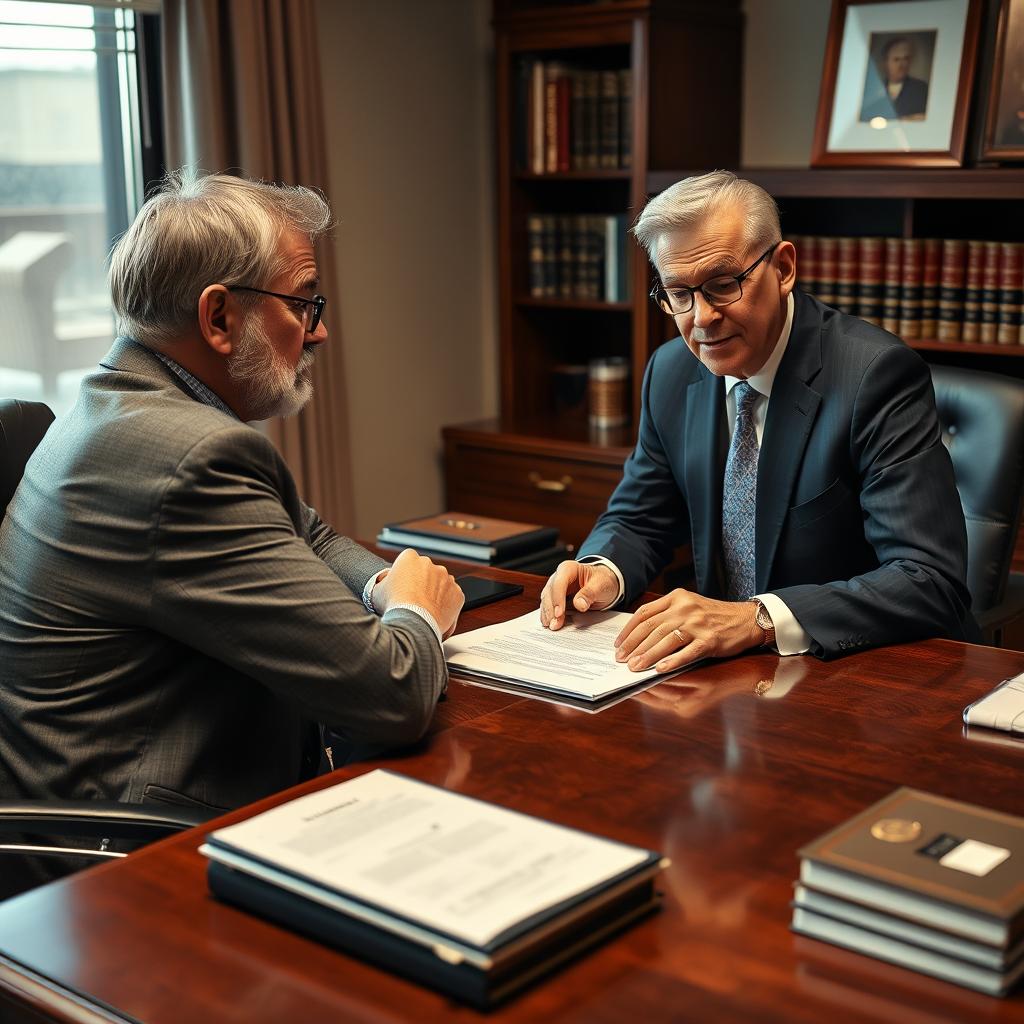
Manufacturing of Controlled Substances lawyer Rockingham County, VA
Federal manufacturing of controlled substances charges in Rockingham County carry consequences that extend well beyond any state‑level drug offense. Because these cases originate under 21 U.S.C. § 841 and are prosecuted by the United States Attorney’s Office for the Western District of Virginia, they move through a distinct federal procedural track—from grand‑jury indictment through sentencing under the United States Sentencing Guidelines. A person accused of manufacturing, or possessing with intent to manufacture, a scheduled substance faces the full weight of federal investigative resources, often marshaled by the DEA, FBI, or other specialized task forces operating in the Shenandoah Valley region. Mr. Sris at Law Offices Of SRIS, P.C., founded in 1997, represents individuals charged in the Harrisonburg Division of the Western District, which hears cases arising from Rockingham County, Harrisonburg, and surrounding communities. The firm’s criminal defense team understands that a federal manufacturing charge demands an exacting review of search‑warrant affidavits, laboratory analyses, and how the government intends to prove each element of the offense beyond a reasonable doubt. To request a consultation about a pending or anticipated charge, contact our Shenandoah/Woodstock location at (888) 437‑7747. Law Offices Of SRIS, P.C. – Advocacy Without Borders.
What Manufacturing of Controlled Substances Means in Rockingham County, VA
Rockingham County sits within the Harrisonburg Division of the United States District Court for the Western District of Virginia. Federal criminal cases arising anywhere in the county—whether from Harrisonburg, Bridgewater, Dayton, Elkton, Timberville, or Broadway—are typically filed and adjudicated at the federal courthouse in Harrisonburg. For a manufacturing charge under 21 U.S.C. § 841, the government must prove that the accused knowingly or intentionally manufactured a controlled substance, or possessed the precursor chemicals and equipment with the intent to manufacture. “Manufacture” is defined broadly to include production, preparation, propagation, compounding, or processing of a substance listed in the federal controlled‑substance schedules.
The Western District has its own rhythms. The United States Attorney’s Office for this district, with a significant presence in Harrisonburg, routinely collaborates with the DEA’s Harrisonburg Resident Office, the FBI, and state‑level drug task forces. Investigations often begin with informant tips, controlled purchases, or surveillance operations that can span several localities along the I‑81 corridor. Because Rockingham County is both a rural community and home to James Madison University, federal narcotics enforcement here frequently blends agricultural and university‑adjacent patterns. When a case moves forward, it does so in a system that, unlike Virginia’s state courts, provides no parole for federal sentences, and where the sentencing judge must consider advisory guidelines that weigh drug type and quantity heavily. Understanding how the local U.S. Attorney’s Office constructs its indictments, which statutory enhancements it regularly seeks, and how the Harrisonburg magistrate judges handle initial appearances and detention hearings, is critical for anyone facing a manufacturing charge—and that local familiarity is what Mr. Sris brings to each representation in Rockingham County.
How Mr. Sris Handles Manufacturing of Controlled Substances Cases
Every federal drug manufacturing case begins with a thorough assessment of the government’s evidence. The defense team reviews the affidavit supporting the search warrant, the chain‑of‑custody logs for any seized substances, and the lab reports that the prosecution intends to offer at trial. If law enforcement exceeded the scope of a warrant, relied on an unreliable informant, or failed to preserve potentially exculpatory evidence, those issues shape the defense strategy early. Mr. Sris also scrutinizes the indictment itself for any overcharging—particularly whether the government has correctly identified the controlled substance and the applicable statutory penalty range under 21 U.S.C. § 841.
Procedurally, after the initial appearance and detention hearing before a federal magistrate judge in the Harrisonburg Division, the defense works to secure pretrial release where possible. Because federal manufacturing charges often trigger a presumption of detention, counsel presents a detailed mitigation package addressing community ties, absence of flight risk, and the availability of third‑party custodians. Throughout the discovery phase, Mr. Sris engages with the assigned Assistant United States Attorney to explore whether the matter can be resolved short of trial—for example, through a plea to a lesser included offense or a charge that avoids the harsh mandatory minimums that Congress has attached to certain drug quantities. If a negotiated resolution is not in the client’s interest, the team prepares thoroughly for trial, challenging lab testimony, mounting factual defenses, and holding the government to its burden of proof. The timeline of a federal case varies with its complexity and the court’s docket, but at every stage the firm works to protect the client’s rights and to pursue the most favorable outcome achievable under the circumstances.
About Mr. Sris and His Team
Mr. Sris, Owner and Founder of Law Offices Of SRIS, P.C., has practiced criminal defense since 1997. He is a former prosecutor and is admitted to practice in Virginia, Maryland, the District of Columbia, New Jersey, and New York. Mr. Sris testified before the Virginia House Courts of Justice Committee in support of 2019 HB 635 (chief patron Del. David Bulova). His practice concentrates on complex federal and state criminal matters, and he personally involves himself in the investigation and strategic direction of every significant federal case the firm accepts.
Mr. Sris is supported by an experienced team. Together, Mr. Sris and his team bring over 120 years of combined legal experience, supported by 4,739+ documented firm-wide results. Results may vary. The team’s collaborative approach ensures that each federal manufacturing case receives thorough factual investigation, rigorous legal analysis, and careful preparation. They appear regularly in the United States District Court for the Western District of Virginia and understand the local practices that can influence the direction of a criminal prosecution.
Frequently Asked Questions
What is the difference between state and federal drug manufacturing charges?
Federal drug manufacturing charges are prosecuted by the United States Attorney under 21 U.S.C. § 841, generally carry harsher penalties than state charges, and are governed by the United States Sentencing Guidelines. Unlike Virginia state court, the federal system does not offer parole, and certain drug quantities can trigger mandatory minimum sentences that limit judicial discretion. Additionally, federal investigations are typically conducted by the DEA or FBI rather than local law enforcement, which means they often involve more extensive resources and a longer investigative timeline. Anyone facing a federal charge should speak with an attorney who regularly practices in the Western District of Virginia. For a consultation, reach Mr. Sris at (888) 437‑7747.
What are the penalties for manufacturing controlled substances under federal law?
Penalties under 21 U.S.C. § 841 include imprisonment, substantial fines, and supervised release, with the specific range determined largely by the type and quantity of the controlled substance involved. For example, the statute provides a mandatory minimum of five years for 500 grams or more of powder cocaine or 5 grams or more of crack cocaine, and higher quantities can yield mandatory minimums of ten years or more. A conviction for manufacturing also carries the possibility of a term of supervised release and may affect future employment, housing, and professional licensing. Because each case is different, understanding how the sentencing guidelines apply to a particular set of facts requires a detailed case evaluation. For guidance on your specific situation, reach Law Offices Of SRIS, P.C. at (888) 437‑7747.
How does a lawyer defend against federal manufacturing of controlled substances charges?
A defense may challenge the legality of a search, question the reliability of laboratory testing, dispute the identity of the controlled substance, or argue that the defendant lacked the requisite intent to manufacture. Mr. Sris begins by examining the search warrant affidavit for probable‑cause deficiencies and scrutinizing whether officers stayed within the warrant’s scope. They also review chain‑of‑custody records and the qualifications of the lab analyst. If evidence was obtained in violation of the Fourth Amendment, a motion to suppress may be filed. In some cases, the defense may present an affirmative factual defense, such as that the defendant had no knowledge of a manufacturing operation occurring on the property. To discuss the details of your matter, contact Law Offices Of SRIS, P.C. at (888) 437‑7747.
What should I do if I am facing a federal manufacturing charge in Rockingham County?
If you are under investigation or have been indicted, you should contact an experienced federal defense attorney immediately and refrain from discussing the case with anyone except your lawyer. Preserve any documents, electronic messages, or call logs that may be relevant, and do not attempt to contact potential witnesses or co‑defendants on your own. Federal charges move swiftly, and early intervention can affect pretrial detention decisions, evidence preservation, and the opportunity to negotiate a favorable resolution. The court deadlines and procedural rules in the Western District are strict; missing a critical filing date can be harmful to the defense. For a consultation, reach Mr. Sris at (888) 437‑7747.
Do I need a lawyer for a federal manufacturing charge in Virginia?
Yes—federal criminal proceedings are adversarial by design, and the government will be represented by an experienced prosecutor; having your own counsel is essential to protect your rights. Federal manufacturing cases involve intricate procedural rules, complex sentencing calculations, and the potential for lengthy incarceration. A lawyer can investigate the government’s evidence, present mitigating information, and argue for pretrial release or a reduced charge. While you have the right to represent yourself, doing so places you at a severe disadvantage against the resources of the U.S. Attorney’s Office. To discuss your legal options, contact Law Offices Of SRIS, P.C. at (888) 437‑7747.
How does the Harrisonburg federal court handle manufacturing cases?
The Harrisonburg Division of the Western District of Virginia follows standard federal procedure: the initial appearance and detention hearing take place before a magistrate judge, and if the case proceeds, the district judge handles the trial and sentencing. The local U.S. Attorney’s Office and the federal magistrate judges in Harrisonburg are familiar with the range of drug enforcement cases that arise across Rockingham County, from small‑scale methamphetamine labs to larger conspiracy operations. Knowing how a particular judge approaches pretrial release, discovery disputes, and sentencing arguments can inform the defense strategy. Mr. Sris appears regularly in the Harrisonburg Division and understands the practical considerations that can influence case management. For guidance on your specific situation, reach Law Offices Of SRIS, P.C. at (888) 437‑7747.
Clarke County federal criminal lawyer
|
Shenandoah County federal criminal lawyer
|
Frederick County federal criminal lawyer
|
Warren County federal criminal lawyer
Outbound primary‑source authority:
Virginia Code Title 13.1
|
SCC business entity filings
|
Virginia courts
Attorney advertising. Prior results do not guarantee a similar outcome. Case results depend on a variety of factors unique to each case. Results may vary.