
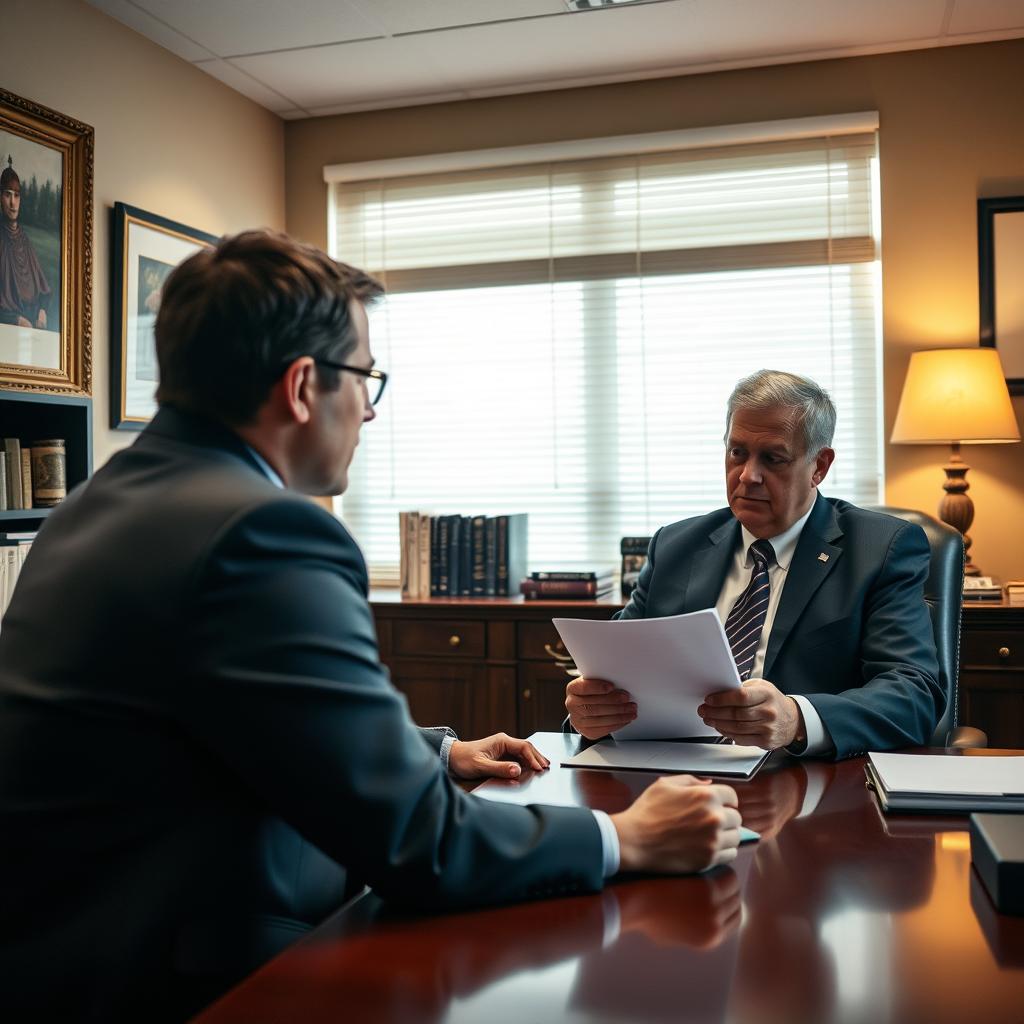
Felon in Possession lawyer Virginia, VA
A charge of being a felon in possession of a firearm is one of the most actively prosecuted federal offenses in Virginia. The United States Attorney’s Offices for the Eastern District of Virginia and the Western District of Virginia prioritize these cases, often working with the Bureau of Alcohol, Tobacco, Firearms and Explosives and the Federal Bureau of Investigation to build evidence before an indictment is ever returned. When you face a federal felon-in-possession charge under 18 U.S.C. § 922(g), you are up against the resources of the federal government and a system in which every procedural step—from the initial appearance and detention hearing to sentencing under the United States Sentencing Guidelines—carries high stakes. Mr. Sris and his Of Counsel team at Law Offices Of SRIS, P.C. concentrate a substantial portion of their practice on federal criminal defense in Virginia and work to protect the rights of individuals charged with weapons offenses. For a consultation, call (888) 437-7747.
Law Offices Of SRIS, P.C. – Advocacy Without Borders.
What Felon in Possession Charges Mean in Virginia
Although the phrase “felon in possession” is often used in casual conversation, the federal statute—18 U.S.C. § 922(g)—makes it unlawful for any person who has been convicted of a crime punishable by imprisonment for a term exceeding one year to ship, transport, possess, or receive any firearm or ammunition. Because the prohibition is federal, it applies regardless of whether the underlying felony conviction was obtained in Virginia, another state, or a federal court. In practice, a Virginia resident may face a federal charge for possessing a firearm that was legally owned before the conviction, if law enforcement discovers the weapon during a traffic stop, a domestic call, or a separate investigation.
Federal prosecutors in Virginia bring these cases in the U.S. District Court for the Eastern District of Virginia (with divisions in Alexandria, Richmond, Norfolk, and Newport News) or the Western District of Virginia (with courthouses in Roanoke, Charlottesville, Harrisonburg, Lynchburg, Abingdon, and Danville). The United States Attorney’s Office often seeks pretrial detention, arguing that the defendant poses a danger to the community. Because federal law provides no parole for offenses committed after 1987 and the Sentencing Guidelines treat firearm possession by a convicted felon seriously, a conviction can lead to a substantial term of incarceration. Every case, however, turns on its own facts—the strength of the government’s evidence, the lawfulness of the search that uncovered the firearm, and the defendant’s criminal history all play a role in the outcome.
How Mr. Sris and His Of Counsel Handle Federal Firearm Possession Cases
Mr. Sris, a former prosecutor, understands how the government investigates and builds a felon-in-possession case. He and his Of Counsel begin by scrutinizing every stage of the investigation. Was the search that yielded the firearm supported by a valid warrant, or does it fall within an exception that can be challenged? Did law enforcement respect the defendant’s Fourth Amendment rights during a traffic stop or a protective sweep? Even if the firearm is found, a successful motion to suppress can lead to dismissal of the charge. The team also examines whether the government can prove the defendant “knowingly” possessed the firearm—a required element of the offense. In situations where multiple people had access to the location where the weapon was found, possession may be contested.
When suppression is not a viable option, Mr. Sris and his Of Counsel engage with the Assistant United States Attorney early to explore whether the case can be resolved through a plea to a lesser charge or a favorable sentencing recommendation. They conduct a thorough analysis of the defendant’s criminal history to determine whether the Armed Career Criminal Act enhancement can be avoided, and they present mitigating evidence—such as stable employment, family ties, and the circumstances surrounding the offense—to the probation officer who prepares the presentence report. Every negotiation and every court appearance is guided by the goal of securing the most favorable outcome possible under the Sentencing Guidelines and the factors set out in 18 U.S.C. § 3553(a). Mr. Sris and his Of Counsel bring extensive combined legal experience to each federal firearms matter. Results may vary.
About Mr. Sris and His Of Counsel Team
Mr. Sris, Owner and Founder of Law Offices Of SRIS, P.C., is a former prosecutor who has practiced law since 1997. He is admitted to the bars of Virginia, Maryland, the District of Columbia, New Jersey, and New York, and he appears regularly in the federal district courts that sit in Virginia. His background includes testimony before the Virginia House Courts of Justice Committee in support of 2019 HB 635 (chief patron Del. David Bulova). Mr. Sris works alongside a team of Of Counsel attorneys who are engaged on a matter-specific basis; they collectively bring extensive federal courtroom experience to every case the firm handles. Together, Mr. Sris and his Of Counsel provide representation to individuals facing felony firearms charges throughout Virginia, from the Northern Virginia suburbs to the Tidewater region and the Shenandoah Valley.
The firm’s approach is thorough and detail-oriented. Because federal criminal procedure has its own rules regarding indictment, discovery, motion practice, and sentencing, the team devotes significant time to understanding the factual and legal nuances of each case. Mr. Sris and his Of Counsel coordinate with investigators, forensic examiners, and sentencing attorneys when necessary to build a defense that addresses both the legal arguments and the human factors that influence a judge’s decision. To discuss your matter, reach Law Offices Of SRIS, P.C. at (888) 437-7747.
Frequently Asked Questions
What is a felon in possession charge in Virginia?
A felon in possession charge is a federal criminal accusation under 18 U.S.C. § 922(g) that prohibits a person with a prior felony conviction from possessing a firearm or ammunition. The charge can be brought even if the person had no intent to use the weapon unlawfully or if the prior conviction is many years old. Federal law does not distinguish between a firearm that is owned lawfully or one that is obtained illegally; the mere possession by a convicted felon is the crime. Because federal jurisdiction attaches when the firearm has crossed state lines at any point—a requirement almost always met—the case is prosecuted in U.S. District Court.
What penalties can someone face for a felon in possession conviction?
A conviction under § 922(g) carries the potential for a significant federal prison sentence and fines; the exact penalty depends on the defendant’s criminal history and the specific circumstances of the offense. While the base statutory maximum is up to 15 years of imprisonment, defendants with three prior qualifying convictions may face a mandatory minimum of 15 years under the Armed Career Criminal Act. Federal sentencing also involves a term of supervised release and a special assessment. There is no parole in the federal system, though good-time credit can reduce the time served. The court imposes sentence after considering the advisory Sentencing Guidelines and the statutory factors.
Can a felon in possession charge be dismissed in Virginia?
Yes, a felon in possession charge can be dismissed if the defense successfully challenges the evidence, shows the search was unlawful, or demonstrates that the government cannot prove knowing possession. A motion to suppress is a critical tool: if the firearm was discovered during an unconstitutional stop or search, the evidence is excluded and the case often collapses. In some instances, the defense may show that the defendant did not know the item was a firearm or that he did not have dominion and control over the location where the weapon was found. Even when dismissal is not achievable, a well-prepared defense can lead to a reduced charge or a favorable plea agreement.
How long does a federal felon in possession case take in Virginia?
The timeline for a federal firearms case varies, but the Speedy Trial Act generally requires that trial commence within 70 days of indictment, though many delays are common. Pretrial motions, discovery disputes, and evidentiary hearings can extend the schedule. Complex cases with forensic testing or multiple defendants may take over a year to resolve, while a straightforward case that results in a plea agreement may conclude within a few months. Because each case is unique, the pace is dictated by the court’s docket and the decisions made by the parties. Your attorney will keep you informed about anticipated milestones.
Should I talk to law enforcement if I am under investigation for felon in possession?
No. You have the right to decline questions and to have an attorney present during any interview with federal agents. Statements made to investigators can be used against you in court, even if you believe you are providing an innocent explanation. Federal agents are trained to elicit incriminating information, and what may feel like a casual conversation can become the foundation of the government’s case. Before speaking with any law enforcement officer, contact a lawyer who can advise you on how to proceed. Once counsel is retained, the attorney can communicate with the government on your behalf.
How can I get my gun rights restored after a felony conviction?
Restoration of firearm rights after a felony conviction is a separate legal process that often depends on state law and may also require federal relief. In Virginia, certain individuals may petition for restoration of rights through the Governor’s office or the courts, but even a state restoration may not automatically lift the federal prohibition under § 922(g). Federal law has limited avenues for relief, and in recent years budgetary restrictions have constrained the ATF’s ability to process relief applications. Any effort to regain firearm rights should be undertaken with the guidance of an attorney who handles both state and federal restoration matters, because possessing a firearm prematurely can lead to new federal charges.
For more on federal criminal defense in specific Virginia localities, see our practice in Fairfax County, Prince William County, and Richmond. Our firm represents clients in federal court across the Commonwealth.
Additional resources: Review the federal statute at the Legal Information Institute. Visit the U.S. District Court for the Eastern District of Virginia and the U.S. District Court for the Western District of Virginia for court-specific information.
Attorney advertising. Prior results do not guarantee a similar outcome. Case results depend on a variety of factors unique to each case. Results may vary.