
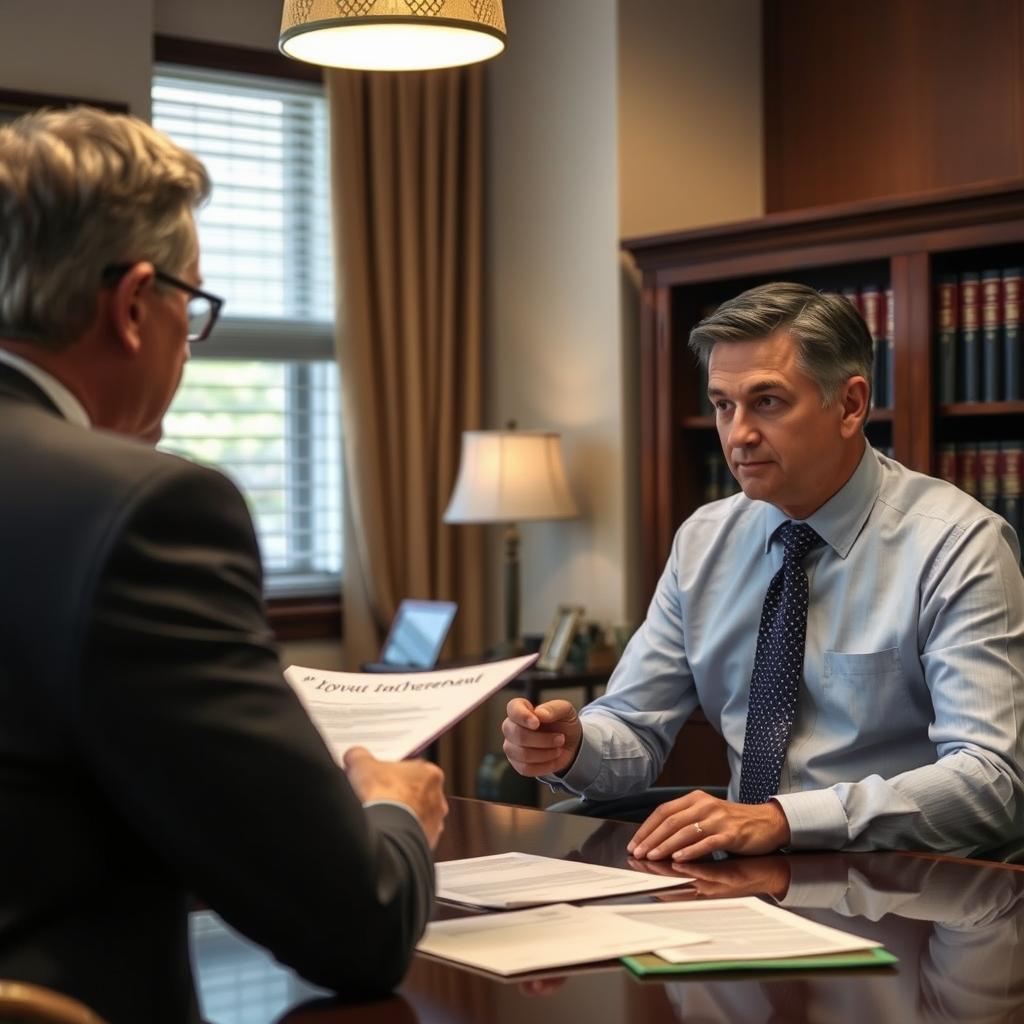
False Statements to a Federal Agent lawyer King William County, VA
King William County, Virginia, lies within the Eastern District of Virginia — one of the nation’s most active federal jurisdictions. When allegations of false statements to a federal agent arise, the matter is prosecuted in U.S. District Court under 18 U.S.C. § 1001. That statute makes it a felony to knowingly and willfully make any materially false, fictitious, or fraudulent statement or representation in any matter within the jurisdiction of the federal government. A conviction carries a maximum sentence of five years imprisonment. The United States Attorney’s Office for the Eastern District of Virginia pursues these cases with federal resources that include the FBI, DEA, and other investigative agencies. For a King William County resident facing a federal investigation or indictment, the stakes are high and the procedural landscape is distinct from state court. Mr. Sris and his Of Counsel handle federal criminal defense across the Eastern District, including matters arising in King William County. Reach Law Offices Of SRIS, P.C. at (888) 437-7747 to request a consultation. Law Offices Of SRIS, P.C. – Advocacy Without Borders.
What False Statements to a Federal Agent Means in King William County, VA
False‑statement charges under 18 U.S.C. § 1001 can stem from a wide range of interactions: an FBI interview, a statement on a federal form, a communication with a federal agency, or any representation made to a federal official acting within his or her official capacity. Because King William County is within the Eastern District of Virginia, any such charge is heard in the U.S. District Court for the Eastern District of Virginia — typically at the Richmond Division, which sits at 701 East Broad Street, Richmond, Virginia. The Richmond Division handles federal criminal matters arising in the county, along with those from neighboring jurisdictions.
The Eastern District of Virginia is known for its efficient docket and a federal bench with substantial criminal experience. Mr. Sris and his Of Counsel maintain a Richmond location at 7400 Beaufont Springs Drive, Suite 300, Room 395, Richmond, VA 23225, by appointment only. From that location, the firm serves King William County and communities such as King William, West Point, and Aylett. The local federal practice includes pretrial proceedings, detention hearings, discovery, motion practice, and, if necessary, trial. Early involvement of counsel — before or shortly after an indictment — can materially affect the course of the case. The firm’s attorneys are admitted in Virginia and four other jurisdictions, and they regularly appear in the U.S. District Court for the Eastern District of Virginia.
How Mr. Sris and His Of Counsel Handle False Statements to a Federal Agent Cases
A federal false‑statement prosecution under § 1001 typically begins with a grand jury investigation, often building on months or years of investigative work by federal agents. Mr. Sris and his Of Counsel evaluate the government’s evidence with a focus on the materiality of the statement — a key element the prosecution must prove — and on whether any exculpatory or mitigating circumstances exist. The defense may challenge the voluntariness of the statement, contest whether the statement was “knowingly and willfully” made, or demonstrate that the statement was not material to the federal matter under inquiry. Each case is fact‑dependent; the strategy is tailored to the client’s particular circumstances.
In the Eastern District of Virginia, federal sentencing is governed by the United States Sentencing Guidelines, which are advisory under Booker. The guidelines calculate a recommended sentence range based on the offense level and the defendant’s criminal history category. In false‑statement cases, the base offense level under §2B1.1 of the Guidelines often depends on the loss amount or the seriousness of the underlying federal matter. Acceptance of responsibility may reduce the sentencing range, and substantial assistance to the government can result in a downward departure. Because there is no parole in the federal system, a defendant serves the vast majority of any sentence imposed. Mr. Sris and his Of Counsel work to present a comprehensive picture to the court, advocating for fair treatment at every stage.
About Mr. Sris and His Of Counsel Team
Mr. Sris, Owner and Founder of Law Offices Of SRIS, P.C., has practiced law since 1997. He is admitted in Virginia, Maryland, the District of Columbia, New Jersey, and New York. A former prosecutor, Mr. Sris brings that prosecutorial experience to the defense of individuals charged in federal court. He and his Of Counsel have handled matters across multiple practice areas since the firm’s founding, and their combined legal experience is extensive. Results may vary.
The firm’s Of Counsel are experienced attorneys who collaborate with Mr. Sris on federal criminal cases. The team approach ensures that each client benefits from a range of perspectives — including insight into how federal prosecutors and investigators build a case. By appointment only, clients meet with Mr. Sris and his Of Counsel to discuss their situation and develop a defense. Reach Law Offices Of SRIS, P.C. at (888) 437-7747 to schedule a consultation.
Frequently Asked Questions
What is 18 U.S.C. § 1001 and why is it used in King William County, Virginia?
18 U.S.C. § 1001 is the federal statute that criminalizes knowingly making a false statement or concealing a material fact in any matter within the jurisdiction of the federal government. In King William County, which lies within the Eastern District of Virginia, the U.S. Attorney’s Office uses this statute to prosecute individuals who allegedly lied to federal agents during investigations, on federal forms, or in other government proceedings. A conviction under § 1001 is a felony and can result in up to five years imprisonment.
How does a Virginia lawyer defend against false statements to a federal agent charges?
Defense strategies in a § 1001 case may include challenging the materiality of the statement, contesting whether it was made “knowingly and willfully,” or raising issues about how the statement was obtained. An experienced attorney also examines whether the government can prove that the statement was made in a matter “within the jurisdiction” of a federal entity — another element the prosecution must establish. Each defense is fact‑specific, and early engagement of counsel is important to preserve rights and evidence.
What should I do if I am facing false statements to a federal agent charges in Virginia?
If you are under investigation or have been charged under 18 U.S.C. § 1001, do not speak to federal agents without a lawyer present and refrain from discussing the matter with anyone except your attorney. Preserve any documents, electronic records, or communications that may relate to the investigation. Contact an experienced federal criminal defense attorney as soon as possible to evaluate your situation and advise you on next steps. Prompt action can affect the outcome of the case.
What are the penalties for false statements to a federal agent in Virginia?
Under 18 U.S.C. § 1001, a conviction for making false statements to a federal agent carries a maximum sentence of five years imprisonment. The actual sentence is determined under the United States Sentencing Guidelines, which consider factors such as the offense level and the defendant’s criminal history. Fines, supervised release, and other conditions may also be imposed. Because the federal system has no parole, a defendant serves a substantial portion of any sentence. Every case is different, and a thorough defense can influence the outcome at sentencing.
How do federal sentencing guidelines work in King William County, Virginia?
Federal sentencing at the U.S. District Court for the Eastern District of Virginia follows the U.S. Sentencing Guidelines — a points‑based calculation using offense level and criminal history category. While advisory since Booker (2005), the guidelines strongly influence the sentence. Statutory mandatory minimums can override downward departures in certain drug, firearm, and child exploitation offenses. Acceptance of responsibility, substantial assistance under §5K1.1, and safety‑valve eligibility may materially reduce exposure. Mr. Sris and his Of Counsel work to present a strong case for mitigation at sentencing. Reach Law Offices Of SRIS, P.C. at (888) 437-7747.
See related pages: Fairfax County Federal Criminal Lawyer | Prince William County Federal Criminal Lawyer | Manassas Federal Criminal Lawyer
Official sources: U.S. District Court for the Eastern District of Virginia | 18 U.S.C. § 1001
Attorney advertising. Prior results do not guarantee a similar outcome. Case results depend on a variety of factors unique to each case. Results may vary.