
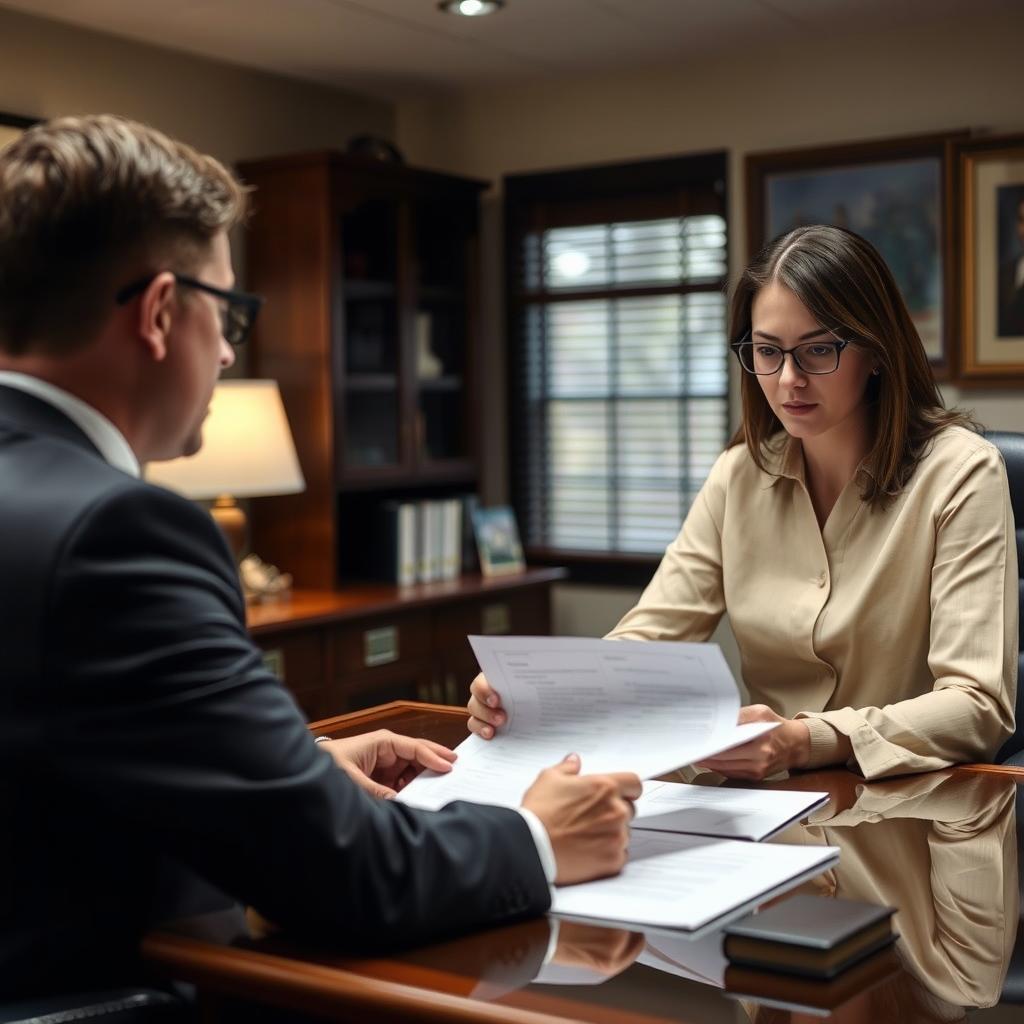
False Statements to a Federal Agent lawyer James City County, VA
When federal agents knock on your door or request an interview, the words you speak can carry life-altering consequences. A casual misstatement, a foggy recollection, or even a mistaken answer can become the basis for a felony charge under 18 U.S.C. § 1001 — making false statements to a federal agent. For residents of James City County, Williamsburg, and the surrounding historic triangle, these investigations are not handled at the local courthouse on Monticello Avenue. They proceed in the U.S. District Court for the Eastern District of Virginia, often through the Newport News or Richmond divisions, where prosecutors from the United States Attorney’s Office pursue convictions with resources and tenacity that far exceed state-level prosecutions. At Law Offices Of SRIS, P.C., Mr. Sris and his Of Counsel team represent individuals in James City County facing federal false-statement allegations, working to protect their rights from the earliest stages of an investigation through trial and, if necessary, sentencing. Reach our location at (888) 437-7747 to request a consultation. Law Offices Of SRIS, P.C. – Advocacy Without Borders.
What Federal False Statement Charges Mean in James City County
James City County sits within the jurisdiction of the U.S. District Court for the Eastern District of Virginia, a court known nationally for its swift dockets and the so‑called “rocket docket.” While county residents encounter the James City County General District Court and Circuit Court for state offenses, any charge under 18 U.S.C. § 1001 removes the matter from local courts entirely. The case will be investigated by a federal agency — often the FBI, but also the DEA, ATF, or IRS Criminal Investigation — and prosecuted by an Assistant United States Attorney in one of the Eastern District’s divisions. Because James City County is geographically situated between the Newport News and Richmond divisions, the venue for hearings, trial, and sentencing will be determined early in the case, typically based on where the alleged statement was made and the agency involved.
Being charged with making a false statement to a federal agent is particularly unsettling because the offense does not require any underlying crime. The government need only prove that you knowingly and willfully made a materially false, fictitious, or fraudulent statement or representation in a matter within the jurisdiction of the federal government. Even a denial during a voluntary interview can be re‑characterized as a violation. This broad reach means many defendants are surprised to find themselves indicted. The statutory maximum penalty is five years of imprisonment per count, and federal sentencing guidelines — though advisory after United States v. Booker — strongly influence the actual sentence imposed. There is no parole in the federal system, making every day of a potential sentence matter. For these reasons, early engagement of counsel experienced in federal criminal defense in the Eastern District of Virginia is critical.
How Mr. Sris and His Of Counsel Handle Federal False Statement Cases
Federal false statement investigations often begin quietly. An agent may call to “just get your side of the story” or show up at your workplace. Mr. Sris and his Of Counsel advise that you should never speak to federal agents without legal present. Once retained, the team promptly notifies the investigating agency that you are represented, which immediately changes the dynamic of the inquiry. From that point, all communications flow through counsel. The goal at the pre‑indictment stage is twofold: first, to prevent an indictment if possible by presenting exculpatory information or context that may persuade the prosecutor not to charge; and second, to preserve every procedural and constitutional defense should the case move forward.
If an indictment is returned, the case moves into the pretrial phase in the U.S. District Court. Mr. Sris and his Of Counsel examine every aspect of the government’s evidence: the precise words alleged to be false, the materiality of the statement to the federal matter, the willfulness of the defendant, and the investigative techniques used. They may challenge the admissibility of statements under the Fifth and Sixth Amendments, seek dismissal for lack of materiality, or negotiate with the prosecutor for a plea to a reduced charge or a sentencing recommendation below the guideline range. Throughout the process, Mr. Sris draws on his experience as a former prosecutor and his deep familiarity with the Eastern District of Virginia to chart the most effective strategy for each client.
About Mr. Sris and His Of Counsel Team
Mr. Sris, Owner and Founder of Law Offices Of SRIS, P.C., established the firm in 1997 and has concentrated his practice on criminal defense, including federal matters, for the entirety of his career. A former prosecutor, he understands how the government builds false‑statement cases and uses that insight to craft a thorough defense. He is admitted to practice in Virginia, Maryland, the District of Columbia, New Jersey, and New York, and he appears regularly in the U.S. District Court for the Eastern District of Virginia. Mr. Sris testified before the Virginia House Courts of Justice Committee in support of 2019 HB 635 (chief patron Del. David Bulova).
Mr. Sris is joined by a dedicated Of Counsel team that includes attorneys with extensive experience in federal criminal defense. Mr. Sris and his Of Counsel bring extensive combined legal experience to each federal matter. This collective approach means that clients benefit from multiple perspectives on the evidence, the law, and the most effective way to present a defense. Because the firm accepts only a limited number of complex federal cases at any time, each client receives focused attention and thorough preparation.
Frequently Asked Questions
What is the difference between state and federal false statement charges?
Federal false statement charges are prosecuted under 18 U.S.C. § 1001 in U.S. District Court, whereas state charges proceed through the Virginia general district and circuit courts. The most significant practical differences are the substantially longer sentences available under the federal sentencing guidelines, the absence of parole in the federal system, and the investigative resources of federal agencies. A lawyer experienced in both forums is crucial.
Do I need a federal criminal defense lawyer in James City County, Virginia?
Yes, immediately. Federal false-statement investigations are serious and can quickly lead to an indictment. Early representation from an attorney familiar with the U.S. Attorney’s Office for the Eastern District of Virginia can be the difference between a dismissed investigation and a felony conviction. Do not speak to federal agents before consulting counsel.
How do federal sentencing guidelines apply to false statement convictions?
The U.S. Sentencing Guidelines calculate a recommended sentencing range based on the offense level, criminal history category, and several specific offense characteristics. For false statement offenses, the base offense level is often low, but enhancements — such as obstruction of justice, substantial monetary harm, or involvement of multiple fraudulent statements — can increase the guideline range significantly. A skilled defense strategy works to minimize the final offense level through motions, cooperation where appropriate, and persuasive argument at the sentencing hearing.
What should I do if I am facing false statement charges in Virginia?
Contact an experienced federal criminal lawyer immediately, preserve all documents and communications, and do not discuss the facts with anyone except your attorney. Early counsel can evaluate whether there is a basis to negotiate a declination of prosecution, a pretrial dismissal, or a favorable plea agreement before charges are filed or shortly after indictment.
How does a Virginia lawyer defend against a 18 U.S.C. § 1001 charge?
Defense strategies often challenge the materiality of the statement, the willfulness of the defendant, or the manner in which the statement was obtained. If the statement was not material to the federal matter, or if the defendant did not act willfully, the government may be unable to prove its case. Additionally, any statements taken in violation of Miranda or under coercive conditions may be suppressed. An experienced attorney evaluates these angles carefully.
What are the potential penalties for making false statements to a federal agent?
The statutory maximum is five years in prison and a substantial fine per count, but actual sentences vary widely depending on the guideline calculation and judicial discretion. Because there is no parole in the federal system, a defendant will serve the majority of any custodial sentence. Probation, home confinement, and supervised release are possible for lower-level offenses, but each case is unique and depends heavily on the specific facts.
For further information about your situation, reach Law Offices Of SRIS, P.C. at (888) 437-7747.
More about federal criminal defense in neighboring localities:
York County federal criminal lawyer · Williamsburg federal criminal lawyer · Fairfax County federal criminal lawyer
Primary sources and court information:
U.S. District Court for the Eastern District of Virginia · 18 U.S.C. § 1001 (False statements) · Virginia Judicial System
Attorney advertising. Prior results do not guarantee a similar outcome. Results may vary.
Case results depend on a variety of factors unique to each case.