
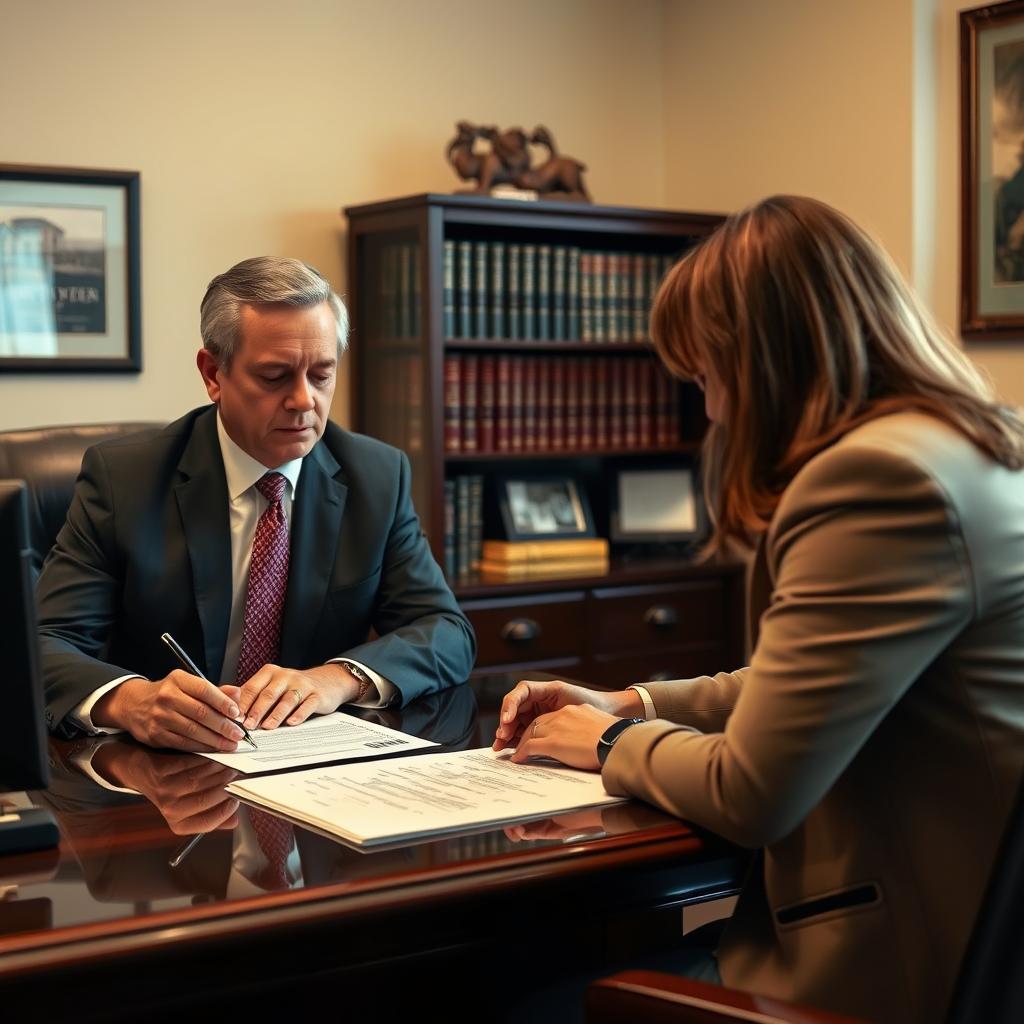
Destruction or Falsification of Records lawyer Virginia, VA
A federal destruction or falsification of records charge in Virginia is a serious felony prosecuted under Title 18 of the United States Code, often alongside fraud, obstruction, or public-corruption allegations. These cases move through the U.S. District Court for the Eastern District of Virginia in Alexandria, Richmond, Norfolk, or Newport News, or the Western District of Virginia in Roanoke, Abingdon, or Charlottesville. The U.S. Attorney’s Office brings these cases using investigative resources from the FBI, IRS-Criminal Investigation, and other federal agencies. A conviction can lead to substantial imprisonment, fines, supervised release, and collateral consequences that affect professional licenses, security clearances, and employment. Because federal prosecutors file charges only after a lengthy grand jury investigation, early legal guidance is critical. Mr. Sris and his Of Counsel team at Law Offices Of SRIS, P.C. represent individuals and businesses facing destruction or falsification of records investigations and prosecutions in Virginia federal courts. To request a consultation, call (888) 437-7747. Law Offices Of SRIS, P.C. – Advocacy Without Borders.
What Destruction or Falsification of Records Means in Virginia
In the federal system, destruction or falsification of records is governed primarily by 18 U.S.C. § 1519, which makes it a crime to knowingly alter, destroy, mutilate, conceal, cover up, falsify, or make a false entry in any record, document, or tangible object with the intent to impede, obstruct, or influence the investigation or proper administration of any matter within the jurisdiction of any department or agency of the United States. The statute is broad and applies to records in any form—paper files, electronic databases, emails, accounting ledgers, corporate minutes, and even personal notes if they relate to a federal matter. Virginia’s federal courts see a steady number of these cases, often arising out of healthcare-fraud audits, securities-enforcement actions, environmental-compliance investigations, and public-contracting disputes. The Eastern District of Virginia, with its proximity to Washington, D.C., handles many cases involving federal-agency records, while the Western District covers a large geographic area that includes government-contractor facilities and research institutions. A destruction or falsification charge rarely stands alone; prosecutors frequently couple it with mail fraud, wire fraud, conspiracy, obstruction of justice, or false-statements charges. Because federal sentencing guidelines compute an advisory range based on the loss amount, the number of documents, and whether the conduct substantially interfered with the administration of justice, the potential exposure is high. An experienced federal criminal defense attorney familiar with Virginia’s federal courts can evaluate the government’s evidence, identify weaknesses in the chain of custody, and challenge whether the required intent existed.
The landscape of these prosecutions in Virginia reflects the variety of federal agencies active in the Commonwealth. The Department of Defense, the intelligence community, and numerous government contractors operate facilities in Northern Virginia and Hampton Roads, making document-retention and records-accuracy obligations a frequent subject of federal scrutiny. In the Western District, industries such as healthcare, energy, and agriculture also generate federal regulatory oversight. When a company or individual learns of a federal investigation—often signaled by a subpoena, a search warrant, or a target letter—the immediate preservation of records becomes both a legal obligation and a potential source of criminal exposure. Destroying documents after learning of an investigation can itself form the basis of a fresh obstruction or falsification charge, even if the underlying conduct is never prosecuted. Law Offices Of SRIS, P.C. advises clients on the intersection of records-preservation duties and criminal exposure, drawing on extensive experience in Virginia’s federal courts.
How Mr. Sris and His Of Counsel Handle Federal Records Cases
When Mr. Sris and his Of Counsel team undertake a destruction or falsification of records matter, they start with a careful review of the government’s investigative file. Federal prosecutors are required to disclose evidence that is material to the defense, and examining that evidence—often terabytes of electronic data, accounting records, and agency correspondence—is the foundation of an effective defense. The team works with forensic accounting and digital-evidence attorneys to evaluate whether the prosecution can prove that the alleged alteration or destruction actually occurred, whether it was done knowingly, and whether the required nexus to a federal matter existed. In many cases, the records at issue are ambiguous; a missing file may be the result of routine document-retention policies, a computer malfunction, or simple mistake rather than criminal intent. The defense highlights these alternative explanations and, where appropriate, negotiates with the United States Attorney’s Office to narrow the charges or secure a favorable pretrial resolution.
The procedural path in Virginia’s federal courts follows the Federal Rules of Criminal Procedure. After a grand jury returns an indictment, the accused appears before a U.S. Magistrate Judge for an initial appearance and, in many cases, a detention hearing. The Speedy Trial Act governs the timeline, and pretrial motions practice—including motions to suppress evidence obtained through allegedly defective search warrants or to dismiss counts for insufficiency—is robust. Mr. Sris and his Of Counsel have experience in both the Alexandria and the regional divisions of the Eastern District, as well as the Western District divisions, and they understand the expectations of the judges and the practices of the U.S. Attorney’s Office in each courthouse. Sentencing under the advisory guidelines requires a detailed analysis of the loss calculation, the offense level, and any applicable enhancements for obstruction or substantial interference. The team advocates for sentences that are consistent with the factors set out in 18 U.S.C. § 3553(a), often presenting evidence of the defendant’s history and characteristics to support a variance below the guideline range. Throughout the representation, the firm maintains open communication with the client so that decisions about plea offers, cooperation, and trial are made with a full understanding of the risks and potential outcomes.
About Mr. Sris and His Of Counsel Team
Mr. Sris, Owner and Founder of Law Offices Of SRIS, P.C., is a former prosecutor who has practiced in Virginia, Maryland, the District of Columbia, New Jersey, and New York since founding the firm in 1997. He testified before the Virginia House Courts of Justice Committee in support of 2019 HB 635 (chief patron Del. David Bulova). He works closely with his Of Counsel team on federal criminal matters, ensuring that each client receives the benefit of extensive combined legal experience between Mr. Sris and his Of Counsel. Together they bring practical knowledge of how federal investigations are built and prosecuted, as well as a track record of representing clients through trial and sentencing in the U.S. District Courts. Results may vary.
The Of Counsel attorneys at Law Offices Of SRIS, P.C. who concentrate on federal criminal defense have substantial experience in complex white-collar and fraud litigation. They appear regularly in the Eastern and Western Districts of Virginia and are admitted to practice in the relevant federal courts. The firm’s collaborative approach means that a team of attorneys reviews each case, drawing on their collective knowledge of the federal sentencing guidelines, the rules of evidence, and the strategic decisions that arise during a federal prosecution. Law Offices Of SRIS, P.C. Accepts cases on a consultation basis and does not guarantee any particular outcome.
Frequently Asked Questions
What is destruction or falsification of records under federal law?
A federal destruction or falsification of records charge under 18 U.S.C. § 1519 makes it a crime to knowingly alter, destroy, or falsify records with intent to impede a federal investigation or proceeding. The law covers any record, document, or tangible object, including electronic files, that is within federal jurisdiction. The government must prove the defendant acted knowingly and with the specific intent to obstruct. Penalties can include up to 20 years of imprisonment, a fine, and supervised release. The statute often accompanies mail fraud, wire fraud, or obstruction charges, and a conviction can lead to professional-license consequences and a lasting criminal record.
Do I need a lawyer if I am under investigation for falsifying records in Virginia?
Yes, you need an experienced federal criminal defense attorney as soon as you learn of a federal investigation related to records destruction or falsification. Federal agents may execute a search warrant or serve a subpoena before charges are filed. Statements you make to investigators can be used against you, and any document destruction after notice of the investigation can be charged as an additional offense. Early counsel can guide you on preserving evidence, communicating with investigators appropriately, and protecting your rights. Law Offices Of SRIS, P.C. represents individuals and businesses during the pre-indictment phase in Virginia federal courts. Reach our firm at (888) 437-7747 to request a consultation.
How does a federal records case move through the U.S. District Court in Virginia?
After indictment by a federal grand jury, the case proceeds through an initial appearance, detention hearing, arraignment, discovery, pretrial motions, trial or plea, and sentencing. In the Eastern District of Virginia, the Alexandria division is known for its “rocket docket,” which sets a faster pace than many other federal courts. The Western District moves at a deliberate pace consistent with its larger geographic jurisdiction. During the process, your attorney will review the government’s evidence, challenge improper search warrants, and negotiate with the United States Attorney’s Office. A full trial or a negotiated plea can take months to resolve; the timeline varies by division and case complexity.
What are the potential penalties for a conviction under 18 U.S.C. § 1519?
A conviction under § 1519 carries a statutory maximum penalty of 20 years in prison, along with a fine of up to for an individual or for an organization, or twice the gain or loss, whichever is greater. The actual sentence is determined by the federal sentencing guidelines, which consider the offense level, the loss amount, and whether the defendant accepted responsibility. A term of supervised release typically follows imprisonment, and the court may order restitution. Collateral consequences can include loss of professional licenses, debarment from federal contracting, and immigration consequences for non-citizens.
Can a destruction or falsification charge be dismissed before trial?
Yes, federal records charges can be dismissed before trial through a motion to dismiss the indictment or through successful pretrial negotiations with the prosecutor. If the government obtained evidence through an unlawful search or seizure, your attorney can move to suppress that evidence, which may gut the prosecution’s case. In some instances, demonstrating that the alleged conduct was not willful or that the records were not within federal jurisdiction can lead to a dismissal or a significant reduction of charges. Each case turns on its specific facts. Mr. Sris and his Of Counsel review every avenue for early resolution in Virginia federal courts.
What should I do if I received a federal target letter regarding records issues?
If you receive a target letter from the United States Attorney’s Office in Virginia, you must immediately contact an experienced federal criminal defense lawyer and refrain from discussing the matter with anyone except your attorney. A target letter indicates that the government has substantial evidence linking you to a crime and intends to seek an indictment. You have a limited window to respond before an indictment is returned. Preserve all relevant documents and electronic records, but do not alter or destroy anything—that would be a separate offense. Law Offices Of SRIS, P.C. can evaluate the letter, engage with the prosecutor, and help you decide on a course of action before charges are filed.
How does a lawyer defend against an obstruction charge tied to destroyed records?
Defense strategies may include challenging the government’s ability to prove the records existed in the first place, that the defendant acted knowingly, or that the destruction was connected to a federal matter. Often, the dispute centers on intent: routine document-destruction policies, accidental deletion, or actions taken before any federal investigation was foreseeable can undermine the element of corrupt intent. Additionally, if the government cannot establish that the matter was within federal jurisdiction, the charge may fail. Your defense team may retain forensic experts to examine metadata and server logs, and will scrutinize the chain of custody for any alleged records.
Counsel appearing on federal criminal matters at the local court in Northern Virginia, VA.
Visit These Federal Practice Pages
Conspiracy to Commit an Offense lawyer Virginia | Wire Fraud lawyer Virginia | Obstruction of Justice lawyer Virginia | Mail Fraud lawyer Virginia | Federal Criminal Defense lawyer Virginia
Outbound primary sources: U.S. District Court, Eastern District of Virginia | U.S. District Court, Western District of Virginia | 18 U.S.C. § 1519
Attorney advertising. Prior results do not guarantee a similar outcome. Results may vary.
Case results depend on a variety of factors unique to each case.