
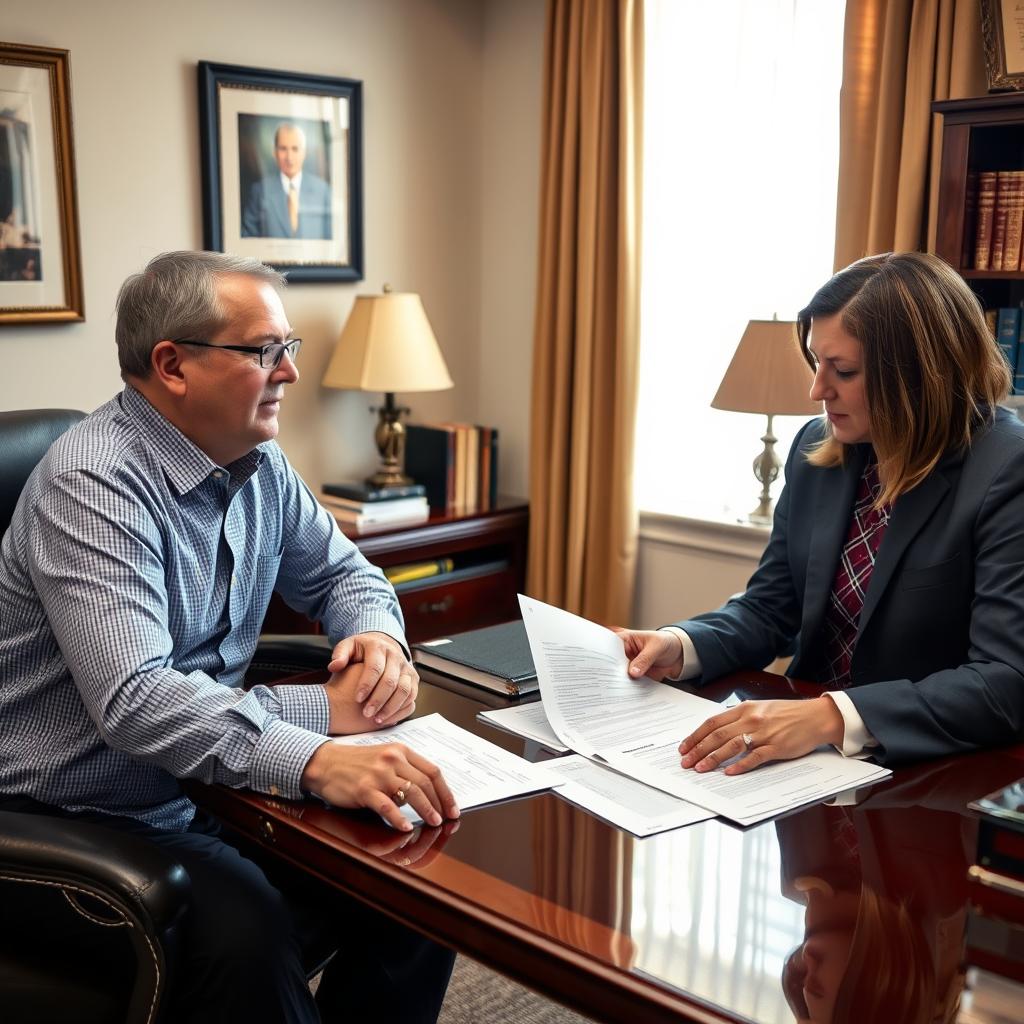
Destruction or Falsification of Records lawyer Rockingham County, VA
A federal charge under 18 U.S.C. § 1519 for destruction or falsification of records demands an experienced attorney. Investigations often start with a subpoena for documents or electronic records, and the U.S. Attorney’s Office for the Western District of Virginia moves actively in these matters. If you are facing scrutiny in Rockingham County or the surrounding Shenandoah Valley, understanding the potential penalties and how a lawyer can respond is the first step. Law Offices Of SRIS, P.C. Concentrates a substantial portion of its practice on federal criminal defense. Mr. Sris and his Of Counsel appear in the Harrisonburg Division of the U.S. District Court for the Western District of Virginia, located at 116 North Main Street in Harrisonburg. For a consultation about your situation, reach our firm at (888) 437‑7747. Law Offices Of SRIS, P.C. – Advocacy Without Borders.
Understanding Federal Destruction or Falsification of Records Charges
A charge under 18 U.S.C. § 1519 arises when someone is alleged to have knowingly altered, destroyed, mutilated, concealed, covered up, falsified, or made a false entry in any record, document, or tangible object with the intent to obstruct, impede, or influence a federal investigation or the administration of any federal matter. This statute applies broadly, from paper documents to electronic files, and federal investigators often execute search warrants at businesses and residences in Rockingham County for computers, servers, and accounting records.
Because these prosecutions are handled by the U.S. Attorney’s Office — not a local Commonwealth’s Attorney — the case proceeds in the U.S. District Court for the Western District of Virginia. The Harrisonburg courthouse at 116 North Main Street is the division covering Rockingham County. Federal sentencing guidelines apply, and a conviction can carry a substantial term of imprisonment. No parole exists in the federal system, so every strategic decision matters. Mr. Sris and his Of Counsel examine the prosecution’s chain of evidence, the scope of the alleged alteration, and whether any statutory defenses or procedural challenges may apply.
Frequently Asked Questions
How does a Virginia lawyer defend against destruction or falsification of records charges?
Defense strategies may include challenging the sufficiency of evidence, examining whether records were actually falsified, and investigating whether there was intent to obstruct a federal investigation. A lawyer may scrutinize the chain of custody and the search warrant’s validity. In some cases, the defense can present that the records were altered inadvertently or that the accused did not act knowingly. The specific facts of each situation determine the strongest approach. Mr. Sris and his Of Counsel evaluate all angles to build a defense tailored to the charge and the particular circumstances in Rockingham County.
What should I do if I am facing destruction or falsification of records charges in Virginia?
Contact a federal criminal defense attorney immediately and do not discuss the matter with anyone except your lawyer. Preserve all documents and electronic devices exactly as they are — do not delete emails, texts, or files, even if you believe they are harmful. Any additional alteration can be seen as further obstruction. A lawyer can communicate with federal agents on your behalf and guide you through the initial stages, including the possibility of a grand jury appearance. Acting quickly is important because the U.S. Attorney’s Office may have already assembled a case.
What are the penalties for destruction or falsification of records under federal law?
A conviction under 18 U.S.C. § 1519 can result in a sentence of up to 20 years in prison, along with fines and supervised release. The actual sentence depends on the federal sentencing guidelines, the extent of the obstruction, and any prior criminal history. The court also retains discretion after the U.S. Supreme Court’s Booker decision. Because no parole exists in the federal system, an experienced lawyer’s effort to challenge the evidence or negotiate with the U.S. Attorney is critical. Each case is different, and outcomes vary based on the facts.
What is the difference between state and federal destruction of records charges?
Federal destruction of records charges are prosecuted in U.S. District Court by the U.S. Attorney under 18 U.S.C. § 1519, while state offenses are handled in Virginia General District Courts or Circuit Courts under state statutes. Federal charges often involve investigations by the FBI, IRS‑CI, or other federal agencies, and they carry the possibility of longer sentences without parole. State charges, in contrast, are pursued by the local Commonwealth’s Attorney and may involve different evidentiary standards. The procedural rules and sentencing structures are entirely distinct.
How does a federal investigation for destruction of records begin in Rockingham County?
A federal investigation typically starts with a grand jury subpoena, a search warrant executed at a home or business, or a target letter from the U.S. Attorney’s Office. Agents may interview witnesses, seize computers, and obtain financial or business records. The investigation may expand to related individuals or entities. Because the federal government often uses forensic accountants and digital analysts, a thorough defense requires prompt legal intervention. Mr. Sris and his Of Counsel are familiar with the investigation tactics used by federal agencies and can step in to protect a client’s rights from the earliest stages.
Can destruction or falsification of records be charged alongside other federal crimes?
Yes, a destruction or falsification count frequently appears with charges such as obstruction of justice under 18 U.S.C. § 1503, false statements under 18 U.S.C. § 1001, or underlying fraud or money‑laundering counts. Prosecutors often include a records‑related charge to strengthen their case by implying that the defendant attempted to conceal wrongdoing. Each additional charge increases the potential sentencing exposure, making it important to have a lawyer who understands how these statutes interact in the federal system.
Do I need a lawyer if I only received a subpoena for records?
Yes, you should consult a federal defense lawyer immediately after receiving a subpoena, even if no charges have been filed. The subpoena may be part of a broader investigation in which you are a target or a subject. A lawyer can assess whether compliance is appropriate, negotiate the scope of the subpoena, and raise any available privileges or protections. Handling a subpoena without legal guidance can unintentionally expose you to criminal liability or waive important rights.
What is the role of the grand jury in a federal records‑destruction case?
A federal grand jury decides whether there is probable cause to indict; it does not determine guilt. In a records‑destruction case, the prosecutor presents evidence to the grand jury in secret proceedings. The target of the investigation typically has no right to be present or to challenge evidence at that stage. If an indictment is returned, the case moves to the U.S. District Court, where a defense attorney can contest the charges through motions and at trial.
How can a lawyer challenge evidence in a federal records‑destruction case?
A defense lawyer may file motions to suppress evidence obtained through an unlawful search, to exclude coerced statements, or to challenge the authenticity of the records. Federal rules of evidence and constitutional protections apply. For example, if a search warrant was overbroad or based on a flawed affidavit, a motion to suppress can limit the evidence the prosecution may use. A meticulous review of the government’s case is essential to identify such issues.
What happens at the initial appearance and detention hearing in federal court?
At the initial appearance, the magistrate judge informs the defendant of the charges, and a detention hearing determines whether the defendant will be released pending trial. The judge considers factors such as the seriousness of the offense, ties to the community, and risk of flight. A lawyer can present evidence and arguments for release on conditions, which could include electronic monitoring or a signature bond. The Harrisonburg Division of the Western District of Virginia handles these proceedings for Rockingham County matters.
About Mr. Sris and His Of Counsel Team
Mr. Sris, Owner and Founder of Law Offices Of SRIS, P.C., is a former prosecutor experienced in federal criminal defense. Together with his Of Counsel, he represents individuals in federal court throughout Virginia, including the U.S. District Court for the Western District of Virginia, Harrisonburg Division. The team concentrates on federal criminal matters and works to develop a defense strategy that addresses the specific allegations a client faces. Mr. Sris is admitted to practice in Virginia, Maryland, the District of Columbia, New Jersey, and New York. For a consultation about a destruction or falsification of records charge, reach our firm at (888) 437‑7747.
Related Federal Criminal Defense pages: Clarke County Federal Criminal Lawyer, Shenandoah County Federal Criminal Lawyer, Augusta County Federal Criminal Lawyer.
Attorney advertising. Prior results do not guarantee a similar outcome. Case results depend on a variety of factors unique to each case.