
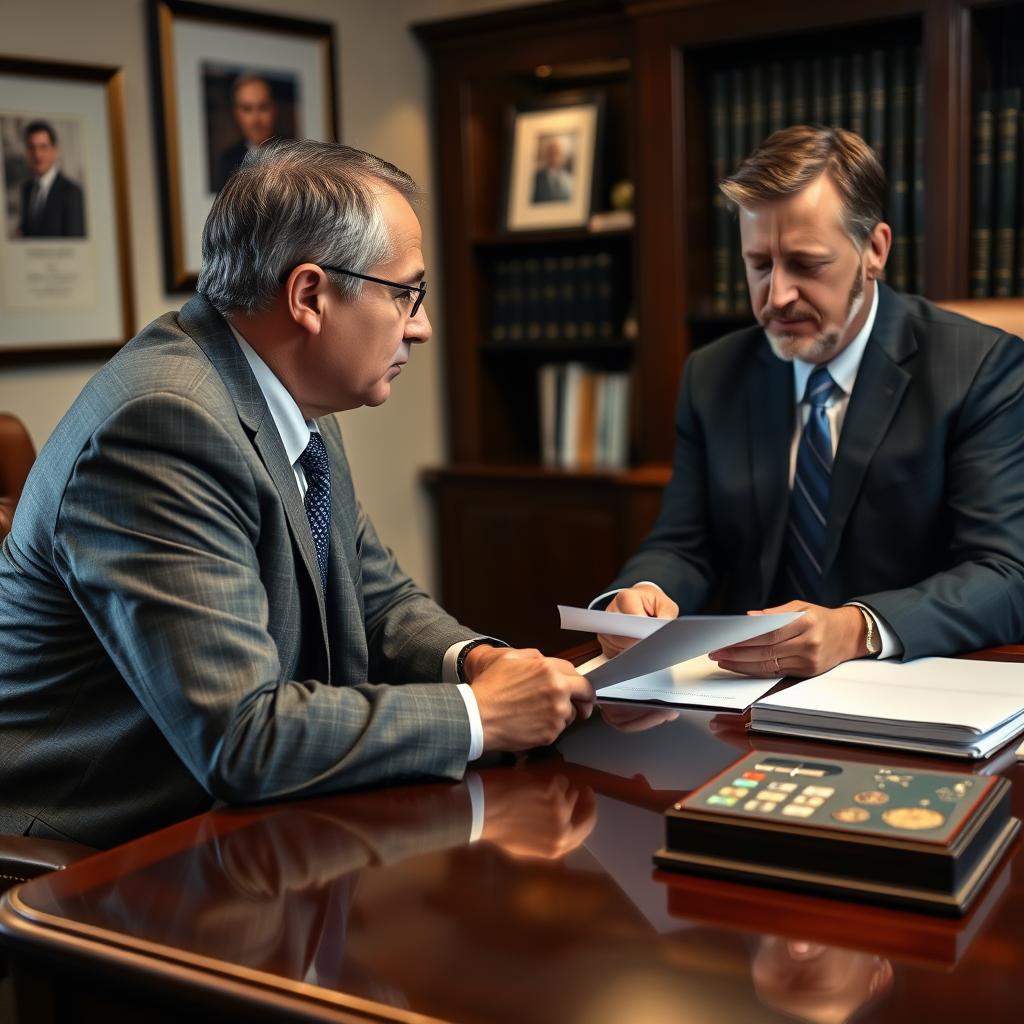
Conspiracy to Commit Fraud lawyer Rockingham County, VA
Federal conspiracy to commit fraud charges carry severe potential consequences, including years in prison and substantial financial penalties. If you are under investigation or have been indicted in the Western District of Virginia for an alleged scheme to defraud, the experience can feel overwhelming. The federal government has immense resources at its disposal, and federal prosecutors pursue these cases actively. At Law Offices Of SRIS, P.C., Mr. Sris and his Of Counsel team provide determined defense representation for individuals facing conspiracy to commit fraud allegations in Rockingham County and throughout the Shenandoah Valley. Our firm, practicing since 1997, concentrates in federal criminal defense and understands how these complex financial-crime cases are built, charged, and litigated in the U.S. District Court for the Western District of Virginia, including the Harrisonburg Division. Conspiracy to commit fraud under 18 U.S.C. § 1349 is charged when the government alleges that two or more people agreed to commit a fraud offense — such as wire fraud, mail fraud, bank fraud, or securities fraud — and at least one person took an overt act toward that agreement. The statutory penalties can reach 20 or 30 years of imprisonment, and the U.S. Sentencing Guidelines often call for significant incarceration even for first-time offenders. Because the federal system has no parole, every decision in your case matters. For a consultation about your situation, reach Law Offices Of SRIS, P.C. at (888) 437-7747. Law Offices Of SRIS, P.C. – Advocacy Without Borders.
What Federal Criminal Defense Means in Rockingham County
Rockingham County and the city of Harrisonburg sit at the heart of the Shenandoah Valley along the Interstate 81 corridor. Federal criminal cases arising in this region are prosecuted in the U.S. District Court for the Western District of Virginia. The Harrisonburg Division of that court, located at 116 N Main Street, Harrisonburg, Virginia, handles federal felony matters from Rockingham, Augusta, Page, Shenandoah, and several surrounding counties. The Western District spans a wide geographic area from the Alleghany Highlands to the Tennessee border, with divisional courthouses also in Roanoke, Charlottesville, Lynchburg, Abingdon, and Big Stone Gap. When a federal conspiracy to commit fraud investigation begins, it is typically led by agencies such as the FBI, the U.S. Postal Inspection Service, IRS Criminal Investigation, or the Secret Service, rather than local police. Federal prosecutions in the Western District are conducted by the United States Attorney’s Office, which has its main office in Roanoke and a branch in Charlottesville. Assistant U.S. Attorneys assigned to these cases have experience with financial crime and will often spend months or longer building a case through grand jury subpoenas, search warrants, and witness interviews.
If an indictment is returned, the defendant makes an initial appearance before a U.S. Magistrate Judge, and a detention hearing may follow to determine whether pretrial release will be granted. The case then proceeds through discovery, where the government is required to disclose its evidence, and the defense has an opportunity to file motions challenging the charges or the admissibility of certain evidence. Federal sentencing, should the case result in a conviction, is governed by the U.S. Sentencing Guidelines, which consider the amount of loss, the number of victims, and the defendant’s role in the offense. Because the guidelines are complex and advisory after the Supreme Court’s decision in United States v. Booker, a thorough understanding of how the Harrisonburg Division judges apply the guidelines is essential. Defendants in Rockingham County benefit from having counsel who knows the procedural landscape of the Western District and can anticipate how the local federal court system handles conspiracy to commit fraud matters.
How Mr. Sris and His Of Counsel Handle Federal Criminal Cases
When Law Offices Of SRIS, P.C. takes on a federal conspiracy to commit fraud case from Rockingham County, the legal team begins by examining the indictment, the underlying fraud statute, and the government’s investigative history. Mr. Sris and his Of Counsel scrutinize whether the alleged agreement actually meets the legal definition of a conspiracy — which requires more than a mere buyer-seller relationship or parallel conduct — and whether the overt act charged is sufficient to support the count. Federal fraud cases often involve voluminous documentary evidence, bank records, emails, and financial statements. Our team works with forensic accountants and investigators when necessary to trace transactions, identify gaps in the government’s proof, and develop alternative explanations for the financial activity at issue.
Defense strategy may include moving to suppress evidence obtained through an unlawful search or seizure, challenging the sufficiency of the grand jury process, or negotiating with prosecutors to seek a dismissal, a reduction of charges, or a favorable plea agreement. If the case goes to trial, Mr. Sris and his Of Counsel draw on their collective courtroom experience to cross-examine government witnesses effectively, present defense evidence, and argue for an acquittal or a conviction on a lesser charge. Sentencing advocacy is equally important: we present a comprehensive sentencing memorandum that highlights the client’s background, the nature of the offense, and any mitigating factors that justify a sentence below the guidelines range. Throughout the process, the client remains fully informed about the strengths and weaknesses of the case, the potential exposure, and the realistic options at each stage. Our goal is to work toward the most favorable outcome achievable under the specific facts and law.
About Mr. Sris and His Of Counsel Team
Mr. Sris, Owner and Founder of Law Offices Of SRIS, P.C., has concentrated his practice on federal criminal defense since 1997. A former prosecutor, he brings insight into how federal cases are investigated and charged. Mr. Sris is admitted to practice in Virginia, Maryland, the District of Columbia, New Jersey, and New York, and he has handled federal matters across multiple U.S. District courts. He testified before the Virginia House Courts of Justice Committee in support of 2019 HB 635 (chief patron Del. David Bulova). Mr. Sris and his Of Counsel bring over 120 years of combined legal experience. Results may vary. The team has documented 4,739+ case results across all practice areas since 1997.
The Of Counsel attorneys who support federal conspiracy to commit fraud defense include experienced litigators with backgrounds in criminal law, complex financial investigations, and trial advocacy. Together, the legal team applies a collaborative approach, ensuring that every aspect of the client’s case receives thorough attention. Law Offices Of SRIS, P.C. serves clients from its Shenandoah location at 505 N Main Street, Suite 103, Woodstock, Virginia 22664. Reach our firm at (888) 437-7747 to schedule a consultation. Meetings are by appointment.
Frequently Asked Questions
What is conspiracy to commit fraud under federal law?
Federal conspiracy to commit fraud is an agreement between two or more people to commit a fraud offense against the United States or a federally protected interest. The government must prove that the defendant knowingly entered into the agreement with the intent to defraud and that at least one member of the conspiracy performed an overt act in furtherance of the scheme. The crime is charged under 18 U.S.C. § 1349, which incorporates the penalties of the underlying fraud statute — such as wire fraud (18 U.S.C. § 1343) or mail fraud (18 U.S.C. § 1341). An experienced federal defense attorney can challenge whether the evidence shows a genuine agreement as opposed to innocent business dealings or parallel conduct that may appear suspicious but is not criminal.
How does a Virginia lawyer defend against conspiracy to commit fraud charges?
Defense strategies often focus on attacking the existence of a genuine agreement, the defendant’s intent, and the sufficiency of the government’s evidence. In a conspiracy case, the prosecution may rely on circumstantial proof, which can be rebutted with alternative interpretations of the financial records or communications. A defense attorney may also file motions to suppress evidence obtained through flawed search warrants, challenge the credibility of cooperating witnesses who are testifying for reduced sentences, and present exculpatory documents. Because conspiracy to commit fraud frequently involves voluminous discovery, effective defense requires a meticulous review of bank records, emails, and forensic accounting reports to identify inconsistencies in the government’s narrative.
What should I do if I am facing conspiracy to commit fraud charges in Virginia?
You should contact an attorney immediately and avoid discussing the matter with anyone else, especially law enforcement or potential co‑defendants. Preserve all documents, electronic records, and communications that may be relevant — do not delete emails, text messages, or financial files, as doing so could lead to obstruction‑of‑justice charges. The earlier counsel is involved, the better positioned the defense team will be to intervene during the investigation phase, possibly before an indictment is returned. Early legal guidance can also help you understand the potential penalties, the timeline under the Speedy Trial Act, and what to expect at the initial appearance and detention hearing in the U.S. District Court for the Western District of Virginia.
What are the penalties for conspiracy to commit fraud in Virginia?
Under 18 U.S.C. § 1349, the penalty for conspiracy to commit fraud mirrors the punishment for the underlying offense — up to 20 or 30 years in federal prison, depending on the statute violated. Additionally, the court may impose fines up to $1 million or more, restitution to victims, forfeiture of assets connected to the fraud, and a term of supervised release following imprisonment. The U.S. Sentencing Guidelines will heavily influence the actual sentence by calculating the offense level based on the amount of loss, the number of victims, and the defendant’s role. Because the federal system has eliminated parole, a defendant will serve at least 85 percent of any prison term imposed, making it critical to have a dedicated defense lawyer who understands federal sentencing procedure.
Is a federal conspiracy charge different from a state fraud charge in Virginia?
Yes, federal conspiracy charges are prosecuted in U.S. District Court, carry different procedural rules, and often involve longer potential sentences than comparable state charges. Federal prosecutors from the United States Attorney’s Office handle the case, and the investigation is typically conducted by federal agencies. The federal rules of evidence and criminal procedure apply, and sentencing falls under the U.S. Sentencing Guidelines rather than the Virginia state sentencing scheme. Federal juries are drawn from a broader geographic area — the Western District’s jury pool may include residents from miles away — and conviction rates in federal court are high. An attorney who practices regularly in federal court understands these differences and can adapt the defense strategy accordingly.
How do federal investigations into fraud start in Rockingham County?
Federal fraud investigations often begin with a referral from a financial institution, a whistleblower complaint, or an audit that reveals irregularities. Federal agencies such as the FBI, IRS Criminal Investigation, or the U.S. Postal Inspection Service may then open a case and begin gathering records through subpoenas or search warrants. In Rockingham County, investigations can involve local businesses, nonprofits that receive federal funds, or online transactions that cross state lines, triggering federal jurisdiction under the commerce clause or federal program fraud statutes. Once an investigation becomes overt — for example, when agents contact a target or execute a search warrant — it is critical to secure legal representation at the earliest possible moment to protect rights and potentially shape the direction of the inquiry.
Do I need a lawyer if I am only a target of an investigation and not yet charged?
Yes, having a lawyer during the investigative phase can be one of the most important decisions you make. Counsel can communicate with federal agents on your behalf, help you understand what is at stake, and work to prevent the filing of charges. In some cases, early cooperation or proactive disclosure of information — done carefully and with legal advice — can persuade prosecutors not to bring an indictment. A lawyer can also ensure that you do not inadvertently waive your rights during an interview or by turning over documents without a subpoena. The earlier an experienced federal defense attorney is involved, the more options may be available to resolve the matter short of a trial.
Can conspiracy to commit fraud charges be dropped or dismissed?
Yes, charges may be dismissed if the defense can show a defect in the indictment, a lack of probable cause, or a violation of the defendant’s constitutional rights. A motion to dismiss might argue that the alleged agreement does not meet the legal definition of a conspiracy, that the overt act was insufficient, or that the statute of limitations has expired. Pretrial motions to suppress evidence can also lead to dismissal if the government’s case depends on evidence that the court excludes. While dismissal is not common in federal court, a thorough defense investigation sometimes uncovers grounds that convince a prosecutor to drop or reduce the charges.
How does sentencing work for conspiracy to commit fraud in the Western District of Virginia?
Sentencing is based on the U.S. Sentencing Guidelines, which calculate an advisory range using the offense level and the defendant’s criminal history category. For fraud conspiracies, the base offense level is driven primarily by the loss amount, but enhancements may apply for the number of victims, use of sophisticated means, abuse of a position of trust, or the defendant’s role as an organizer or leader. The court also considers factors under 18 U.S.C. § 3553(a), including the defendant’s history and characteristics, the need for deterrence, and the need to provide restitution. In the Western District, judges have discretion to impose a sentence outside the guideline range if they find that a different sentence better serves the statutory purposes of punishment. A well-prepared sentencing presentation can significantly impact the final outcome.
What should I look for when choosing a conspiracy to commit fraud defense lawyer in Rockingham County?
Look for meaningful federal court experience, a track record of handling complex financial cases, and a lawyer who communicates clearly about your options. Because federal conspiracy cases involve technical evidence and lengthy investigations, your attorney should be comfortable working with forensic accountants, challenging electronic evidence, and understanding federal sentencing guidelines. Confirm that the lawyer is licensed to practice in the U.S. District Court for the Western District of Virginia and is in good standing with the bar. Ask about the lawyer’s approach to building a defense, how the team is staffed, and how the attorney keeps clients informed at each stage. A strong attorney‑client relationship built on trust and transparency is essential when facing serious federal charges.
Internal-Link Navigation
Explore our federal criminal defense services in neighboring counties:
Clarke County Federal Criminal Lawyer — Shenandoah County Federal Criminal Lawyer — Frederick County Federal Criminal Lawyer — Warren County Federal Criminal Lawyer — Augusta County Federal Criminal Lawyer
Primary Source Authority
U.S. Code Title 18 — Crimes and Criminal Procedure — U.S. Sentencing Commission — Sentencing Guidelines — U.S. District Court for the Western District of Virginia
Attorney advertising. Prior results do not guarantee a similar outcome. Case results depend on a variety of factors unique to each case. Results may vary.