
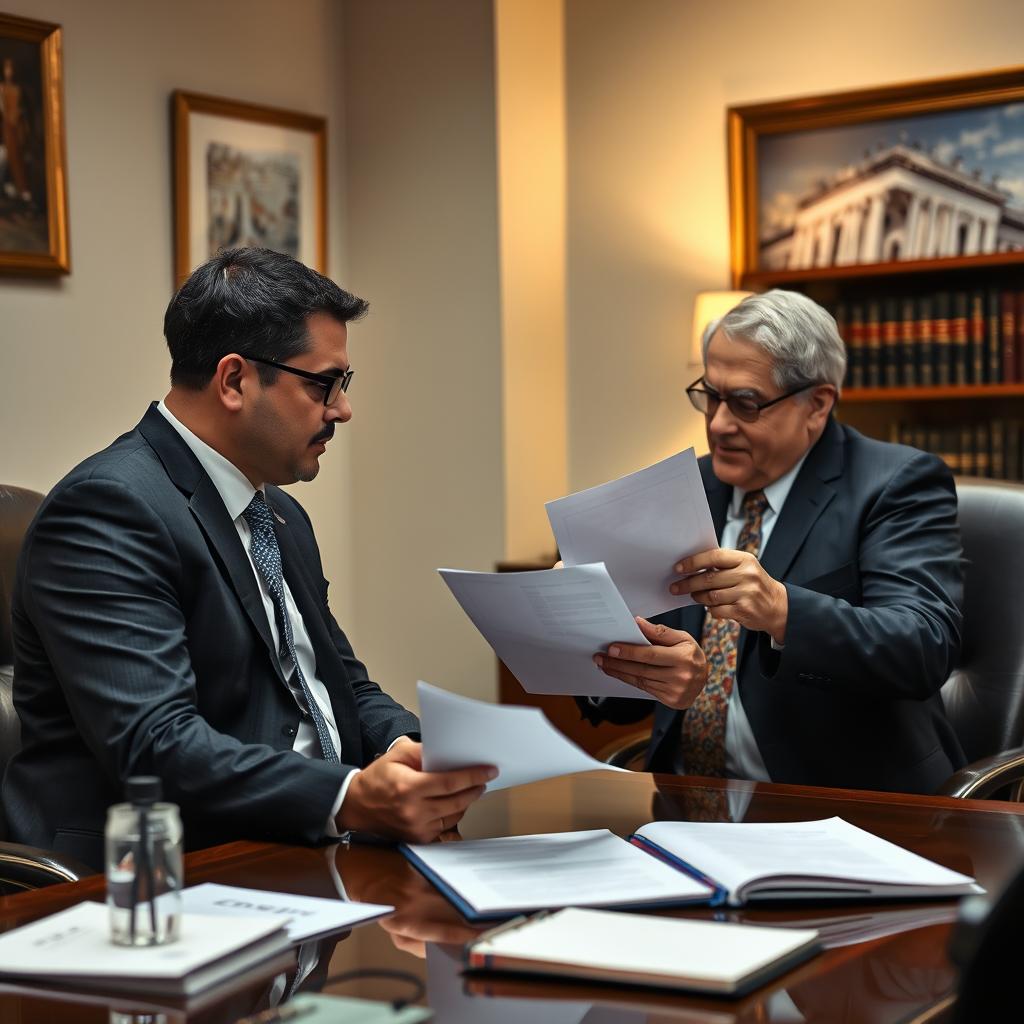
Manufacturing of Controlled Substances lawyer DC
Federal manufacturing of controlled substances charges in Washington, D.C. Are prosecuted under 21 U.S.C. § 841 by the U.S. Attorney’s Office for the District of Columbia. A conviction can trigger mandatory minimum prison terms and carry severe, life‑altering consequences. Mr. Sris, Owner and Founder of Law Offices Of SRIS, P.C., and the firm’s Of Counsel attorneys represent clients facing federal drug manufacturing allegations in the U.S. District Court for the District of Columbia. Our Arlington location serves Washington, D.C., and we appear regularly in federal court. For a confidential consultation, call (888) 437‑7747. Law Offices Of SRIS, P.C. – Advocacy Without Borders.
What Federal Manufacturing Charges Mean in Washington, D.C.
The District of Columbia occupies a unique position in federal criminal law. While most states handle local drug offenses in state court, the U.S. Attorney’s Office for D.C. Prosecutes both local crimes and serious federal offenses. A federal manufacturing of controlled substances charge therefore falls under the exclusive jurisdiction of the U.S. District Court for the District of Columbia, located at the E. Barrett Prettyman U.S. Courthouse on Constitution Avenue. The case will be prosecuted by an Assistant U.S. Attorney, often after an investigation by the FBI, DEA, or other federal agencies, and will follow the Federal Rules of Criminal Procedure.
Federal manufacturing cases are distinct from simple possession. The government must prove that the defendant knowingly or intentionally manufactured a controlled substance—such as methamphetamine, fentanyl, cocaine, or heroin—or possessed precursor chemicals with intent to manufacture. Because the U.S. Sentencing Guidelines and mandatory minimums are tied to drug type and quantity, even a modest‑scale manufacturing operation can trigger lengthy mandatory incarceration. A person facing these charges in Washington, D.C., needs defense counsel who is thoroughly familiar with the federal court’s procedures, the practices of the U.S. Attorney’s Office, and the strategic options available under the Sentencing Guidelines.
Under 21 U.S.C. § 841, a federal manufacturing conviction carries mandatory minimum prison terms that depend on the type and weight of the controlled substance. For example, a conviction involving 500 grams of powder cocaine triggers a 5‑year mandatory minimum, while an offense involving 5 kilograms triggers a 10‑year mandatory minimum.
Source: 21 U.S.C. § 841. U.S. Code § 841
Reviewed by Mr. Sris, admitted in VA/MD/DC/NJ/NY.
Washington, D.C., residents and those who work in the District can be charged in the U.S. District Court regardless of where the alleged manufacturing occurred, as long as there is a federal nexus. The firm routinely handles cases arising from investigations that originate in neighborhoods such as Georgetown, Capitol Hill, Dupont Circle, Adams Morgan, Columbia Heights, U Street, Logan Circle, Foggy Bottom, Navy Yard, Petworth, Brookland, Anacostia, Southwest Waterfront, Woodley Park, Cleveland Park, Spring Valley, Forest Hills, Chevy Chase DC, American University Park, Wesley Heights, Bloomingdale, Tenleytown, Friendship Heights, Glover Park, Mount Pleasant, Shaw, Chinatown/Penn Quarter, NoMa, Ivy City, Eckington, Deanwood, Hillcrest, Congress Heights, Barracks Row, and Eastern Market. Our Arlington, Virginia location is approximately 4.5 miles from the U.S. District Courthouse, allowing convenient in‑person meetings by appointment.
How Mr. Sris and His Of Counsel Handle Federal Drug Manufacturing Cases
A federal manufacturing case typically begins with an investigation that may include controlled buys, surveillance, confidential informants, and wiretaps. If a grand jury returns an indictment, the defendant is arrested and brought before a magistrate judge for an initial appearance and detention hearing. Law Offices Of SRIS, P.C. Enters the case at the earliest possible stage, often pre‑indictment, to advocate against the filing of charges and to protect the client’s rights during any search, seizure, or questioning.
Once charges are filed, Mr. Sris and the firm’s Of Counsel attorneys scrutinize every facet of the government’s evidence—chain of custody, laboratory analysis, search warrant affidavits, and the credibility of cooperating witnesses. Because federal mandatory minimums and sentencing enhancements turn on drug quantity and the defendant’s role, a meticulous review of the government’s calculation is critical. The defense team explores all available motions, including suppression for constitutional violations, challenges to the sufficiency of the evidence, and, where appropriate, requests for a safety‑valve reduction or substantial‑assistance departure under 18 U.S.C. § 3553(e) and U.S.S.G. § 5K1.1. Throughout the process, the firm works to achieve the most favorable resolution possible while preparing every case for trial.
About Mr. Sris and the Firm’s Of Counsel Attorneys
Mr. Sris, Owner and Founder of Law Offices Of SRIS, P.C., has concentrated his practice on criminal defense since founding the firm in 1997. A former prosecutor, Mr. Sris brings an insider’s understanding of how the government builds a manufacturing case, from investigation through sentencing. He is admitted to practice in Virginia, Maryland, the District of Columbia, New Jersey, and New York, and has represented clients in federal courts throughout the region. Mr. Sris testified before the Virginia House Courts of Justice Committee in support of 2019 HB 635 (chief patron Del. David Bulova).
The firm’s Of Counsel attorneys complement Mr. Sris’s experience with substantial backgrounds in complex federal litigation, scientific‑evidence challenges, and trial advocacy. Together, Mr. Sris and the firm’s Of Counsel attorneys provide a defense team that understands both the law and the local federal court environment. For a consultation about a federal manufacturing matter, call (888) 437‑7747.
Frequently Asked Questions
What is the difference between a federal manufacturing charge and a state drug charge?
Federal charges are prosecuted by the U.S. Attorney’s Office under the Controlled Substances Act, generally carry harsher penalties than state charges, and do not allow for parole. In Washington, D.C., the U.S. Attorney’s Office handles both local and federal cases, but federal manufacturing charges are brought in the U.S. District Court rather than the DC Superior Court. Federal sentences are governed by the U.S. Sentencing Guidelines and mandatory minimums based on drug type and quantity. Because there is no parole in the federal system, an individual convicted of a federal manufacturing offense serves the entire sentence imposed by the court, less good‑time credit. An experienced federal defense attorney is critical from the earliest stage of an investigation.
Do I need a lawyer if I am under investigation for manufacturing a controlled substance in D.C.?
Yes. Even before charges are filed, retaining a lawyer can help protect your rights during an investigation and may influence whether charges are brought. Federal agents frequently interview suspects before arrest, and anything said can be used in a grand jury proceeding. A defense attorney can intervene early by communicating with the prosecutor, preserving evidence, and negotiating for limited cooperation or a pre‑indictment resolution. Because manufacturing charges often carry decades‑long mandatory minimums, having counsel at the pre‑indictment stage can significantly impact the outcome.
What are the possible penalties for federal manufacturing of a controlled substance?
Penalties under 21 U.S.C. § 841 include mandatory minimum prison terms, fines, and supervised release, with the exact range determined primarily by the type and quantity of the drug. A first‑time manufacturing conviction involving a Schedule I or II controlled substance can trigger a five‑year, ten‑year, or longer mandatory minimum, depending on the drug weight. Courts also impose terms of supervised release, financial penalties, and forfeiture of assets connected to the offense. The U.S. Sentencing Guidelines may recommend a sentence well above the mandatory floor. An attorney can evaluate whether a safety‑valve reduction, substantial‑assistance departure, or variance based on mitigating factors applies to reduce the sentence below the mandatory minimum.
How does the federal court process work for a manufacturing case in Washington, D.C.?
After an indictment or criminal complaint, the defendant appears before a magistrate judge at the U.S. District Court for the District of Columbia, where bail is considered and the case moves toward pretrial motions, plea negotiations, or trial. The initial appearance and detention hearing occur promptly after arrest. Discovery follows, and the defense may file motions to suppress evidence or dismiss the indictment. Plea negotiations with the U.S. Attorney’s Office are common and may involve cooperating with the government. If the case proceeds to trial, the trial takes place in the U.S. District Court before a district judge. Throughout this process, strict deadlines apply under the Speedy Trial Act. Working with counsel familiar with the D.C. Federal court ensures that procedural deadlines are met and strategic decisions are made with full knowledge of the local practice.
What distinguishes a federal manufacturing charge from a D.C. Local drug charge?
A federal manufacturing charge is prosecuted in the U.S. District Court under the Controlled Substances Act, whereas a D.C. Local drug charge is handled in DC Superior Court under the D.C. Code. Federal charges often involve larger quantities, interstate activity, or an investigation by a federal agency. The penalties in the federal system are typically more severe because of mandatory minimums and the absence of parole. Even if a local prosecutor declines to file charges, federal authorities can independently pursue a manufacturing case. An attorney can determine whether the case is likely to proceed in federal court and what defense strategies are available under each jurisdiction’s rules.
What should I look for in a federal criminal defense attorney in Washington, D.C.?
Look for a lawyer who regularly practices in the U.S. District Court for the District of Columbia, understands the U.S. Sentencing Guidelines, and has experience handling drug manufacturing cases under 21 U.S.C. § 841. The attorney should be licensed to practice in the District of Columbia and have a track record of litigating federal criminal matters. Familiarity with the local U.S. Attorney’s Office and federal magistrate practices is invaluable. Beyond credentials, the attorney should be willing to explain the process clearly, answer questions, and outline realistic goals. At Law Offices Of SRIS, P.C., Mr. Sris and the firm’s Of Counsel attorneys bring substantial experience in federal court and are prepared to discuss defense options during a consultation. Call (888) 437‑7747.
Federal Criminal Defense in Washington, D.C. Neighborhoods: The firm also serves clients in Georgetown, Spring Valley, Cleveland Park, Chevy Chase, and American University Park.
Authoritative Sources: U.S. District Court for the District of Columbia • 21 U.S.C. § 841
Attorney advertising. Prior results do not guarantee a similar outcome. Case results depend on a variety of factors unique to each case. Results may vary.