
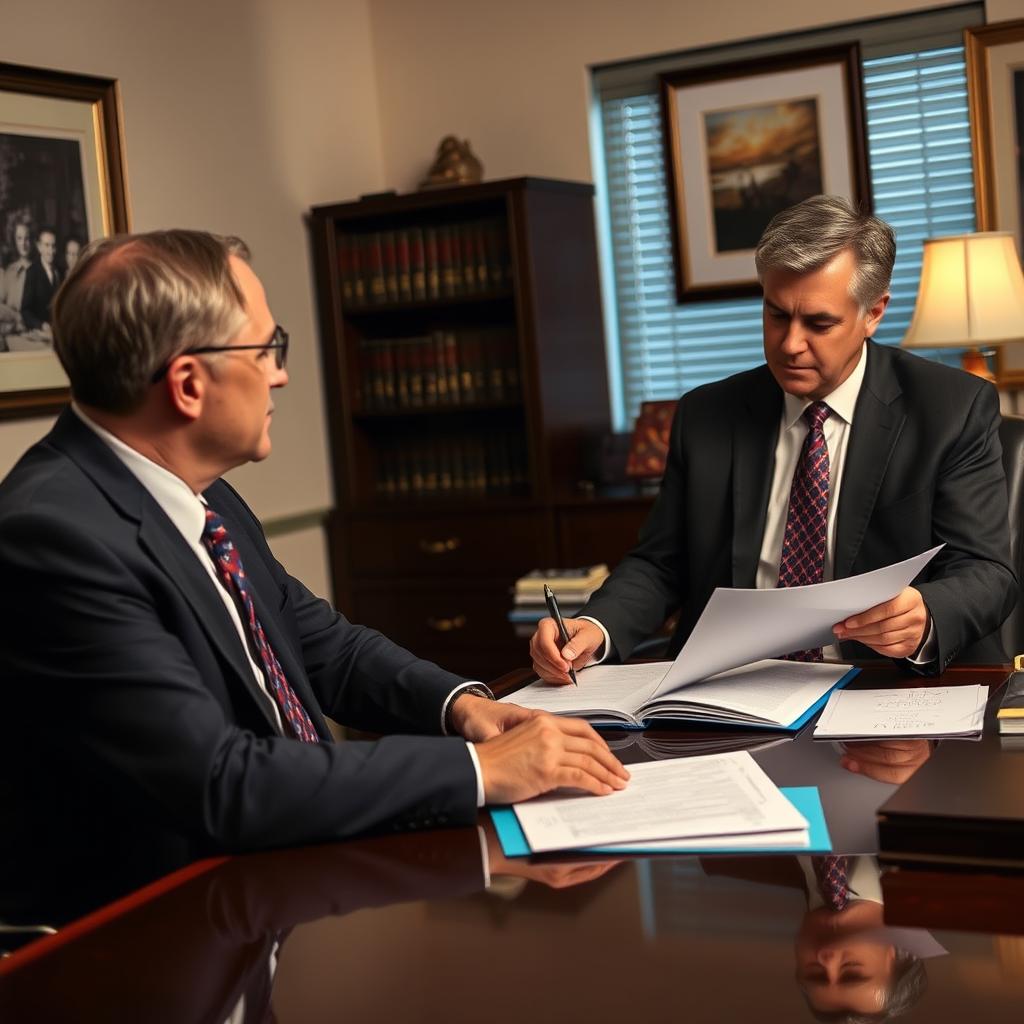
Destruction or Falsification of Records lawyer Maryland, MD
When federal investigators or prosecutors in Maryland turn their attention to records you handled, the charge of destruction or falsification of records is serious. These cases often involve business documents, financial statements, emails, government forms, or any material that could be relevant to a pending or contemplated federal investigation. Law Offices Of SRIS, P.C. represents individuals throughout Maryland in federal criminal matters arising from allegations under Title 18 of the United States Code, including obstruction-related charges. Federal cases in Maryland proceed in the U.S. District Court for the District of Maryland with divisions in Baltimore and Greenbelt, where the U.S. Attorney’s Office pursues these matters actively. Early engagement with experienced federal criminal counsel can affect how your case is charged, how evidence is reviewed, and what procedural options are available before indictment. Reach our location at (888) 437-7747 to request a confidential consultation. Law Offices Of SRIS, P.C. – Advocacy Without Borders.
What Federal Destruction or Falsification of Records Means in Maryland
A federal charge for destruction or falsification of records typically arises under obstruction-of-justice statutes when a person is alleged to have knowingly destroyed, altered, concealed, or falsified a document or other object with the intent to impede a federal investigation or official proceeding. The government must prove both the act and the intent; a mistake or routine destruction of old files generally is not enough. Because federal agencies such as the FBI, IRS‑Criminal Investigation, and HSI have broad subpoena power, they may identify missing or altered records during a financial-investigation review, a healthcare audit, a securities inquiry, or a public-corruption probe. In Maryland, these charges often appear alongside bank fraud, mail fraud, tax evasion, or public-integrity offenses, which means the potential sentence can reflect multiple counts and mandatory enhancements under the federal sentencing guidelines.
Prosecutors in the District of Maryland bring these cases in either the Baltimore Division or the Greenbelt Division of the U.S. District Court. The government’s burden includes showing that the record in question was relevant to a particular matter and that the defendant acted with the specific purpose of obstructing or influencing that matter. Because the line between a routine business practice and a prohibited act is not always bright, the timeline and context matter. Substantive review of discovery often focuses on what the defendant knew, when the document was altered or discarded, and whether any law-enforcement inquiry was already underway.
Navigating the federal system requires counsel familiar with the Federal Rules of Criminal Procedure, the Speedy Trial Act, and the advisory sentencing guidelines. No parole is available in the federal system, so every procedural step—from a grand-jury appearance to pretrial motions—carries lasting implications. Law Offices Of SRIS, P.C. Appears regularly in the District of Maryland, and the firm’s attorneys understand how the U.S. Attorney’s Office approaches records-related charges alongside other financial or obstruction counts.
How Mr. Sris and the Firm’s Of Counsel Attorneys Handle These Cases
When a client comes to the firm under investigation or following an indictment for destruction or falsification of records, the first step is a comprehensive review of the government’s allegations and the underlying documents. That review examines whether the government can establish the necessary mens rea—that the accused acted with the intent to obstruct—and whether the records at issue are actually covered by the relevant statute. If the evidence is thin, the firm may push for a declination or challenge the charging decision through pre-indictment advocacy.
The firm’s approach includes evaluating the chain of custody for the records, analyzing digital metadata or computer logs that may show when a document was last changed, and assessing whether any innocent explanation exists for the missing or altered record. In many cases, the government’s theory relies on circumstantial evidence; pointing out alternative, lawful reasons for the conduct can weaken the prosecution’s position. Pretrial motions—such as motions to suppress evidence obtained through an overbroad subpoena or a procedural misstep—can further narrow the case.
Because federal destruction or falsification of records is often charged alongside related financial or fraud counts, the firm evaluates the entire indictment to determine whether a favorable plea agreement on a lesser included offense makes sense or whether the case should proceed to trial. Throughout the process, the firm’s attorneys communicate directly with clients about the practical consequences of each decision, including the sentencing guideline range, cooperation options, and the impact of any restitution or forfeiture order. Consultations are confidential and by appointment. Reach our location at (888) 437-7747.
About Mr. Sris and the Firm’s Of Counsel Attorneys
Mr. Sris, Owner and Founder of Law Offices Of SRIS, P.C., has practiced since 1997 and is admitted in Virginia, Maryland, the District of Columbia, New Jersey, and New York. A former prosecutor, he brings firsthand insight into how government attorneys build and evaluate obstruction-related charges. Mr. Sris appears in federal court in Maryland and leads the firm’s federal criminal defense practice, working with clients to develop a strategy that addresses both the immediate charge and the broader collateral consequences that a federal conviction can bring.
The firm’s Of Counsel attorneys contribute additional litigation experience and support the analysis of discovery, pretrial motions, and trial preparation. Mr. Sris and the firm’s Of Counsel attorneys bring extensive combined legal experience to every federal matter, and the firm maintains a Rockville location that serves clients from Montgomery County, Prince George’s County, Howard County, and across Maryland. Results may vary.
Frequently Asked Questions
What is federal destruction or falsification of records?
Federal destruction or falsification of records is a criminal offense charged under obstruction-of-justice statutes when a person knowingly destroys, alters, or conceals a document or object with the intent to impede a federal investigation or official proceeding. The government must prove the records were relevant to a specific matter and that the accused acted with the purpose of interfering. Routine document disposal without knowledge of an investigation typically does not satisfy the statute.
What should I do if I am under investigation for record destruction in Maryland?
If you learn you are under federal investigation for destruction or falsification of records in Maryland, you should immediately retain experienced federal criminal counsel and decline to speak with investigators until you have legal representation. Early involvement allows counsel to assess whether the government has already issued subpoenas, to preserve exculpatory evidence, and to engage with the U.S. Attorney’s Office before a formal charge is filed. Contact Law Offices Of SRIS, P.C. at (888) 437-7747 to discuss your situation.
How does the federal court process work for these charges in Maryland?
Federal destruction-or-falsification charges in Maryland proceed in the U.S. District Court for the District of Maryland, either in the Baltimore or Greenbelt division, following the Federal Rules of Criminal Procedure. After an indictment or information is filed, the court holds an initial appearance and arraignment. Pretrial motions, discovery, and plea negotiations follow. If the case goes to trial, a jury decides guilt based on evidence presented by the U.S. Attorney’s Office. Sentencing is governed by the advisory federal sentencing guidelines, and there is no parole in the federal system.
What are the possible penalties for a federal destruction-or-falsification conviction?
A conviction for federal destruction or falsification of records can lead to substantial prison time, fines, restitution, and a term of supervised release, with the exact sentence determined by the federal sentencing guidelines and any applicable statutory mandatory minimums. Because these charges often accompany other financial or fraud offenses, the aggregate guideline range can be significantly higher. A federal criminal defense attorney can explain the specific exposure in your case after reviewing the indictment and the government’s evidence.
Can I be charged with obstruction even if the investigation was never formally opened?
Yes, it is possible to be charged with destruction or falsification of records even if no investigation was formally opened, as long as the government can prove the defendant anticipated a future proceeding and acted with intent to obstruct it. The exact statutory language varies, but courts have held that an “official proceeding” need not be pending at the time of the act if one was foreseeable. An experienced federal attorney can evaluate whether the government’s theory meets the legal standard.
How do I find a federal destruction-or-falsification lawyer in Maryland?
To find a federal criminal defense lawyer in Maryland, look for counsel admitted to practice in the U.S. District Court for the District of Maryland who regularly handles obstruction and records-related charges. You can contact Law Offices Of SRIS, P.C. at (888) 437-7747 to schedule a consultation. The firm’s attorneys appear in the District of Maryland and can discuss how they would approach your matter.
Related pages:
Federal Criminal Lawyer Montgomery County, MD •
Federal Criminal Lawyer Prince George’s County, MD •
Federal Criminal Lawyer Howard County, MD •
Federal Criminal Lawyer Anne Arundel County, MD •
Federal Criminal Lawyer Frederick County, MD
Federal court and sentencing resources:
U.S. District Court for the District of Maryland
U.S. Sentencing Commission Guidelines Manual
Attorney advertising. Prior results do not guarantee a similar outcome.
Case results depend on a variety of factors unique to each case.
Results may vary.