
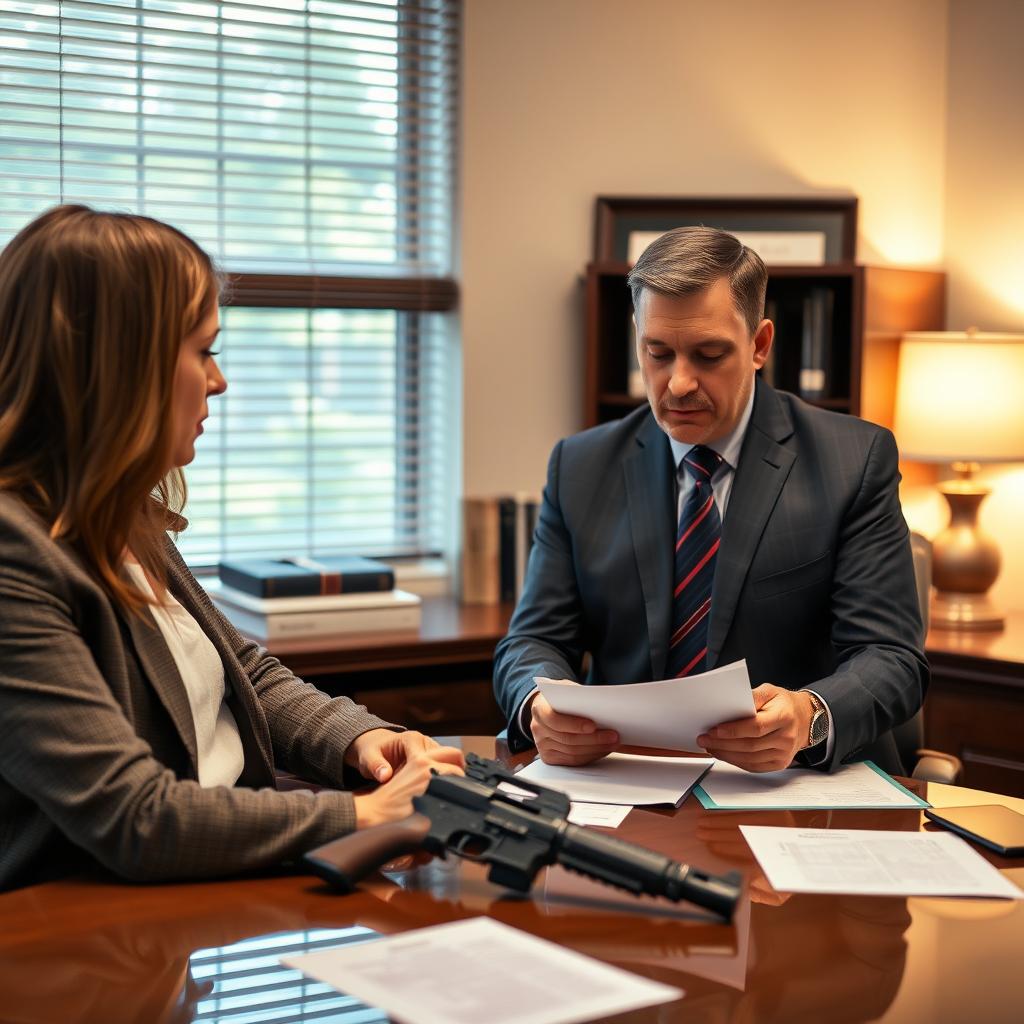
Possession or Use of a Machine Gun lawyer York County, VA
If you are facing a federal charge involving possession or use of a machine gun in York County, Virginia, the stakes could not be higher. Federal prosecutors in the Eastern District of Virginia pursue these cases actively, and a conviction can carry severe penalties, including decades in prison with no possibility of parole. Law Offices Of SRIS, P.C. is a multi-state firm with a Richmond Location serving clients in Yorktown, Grafton, Tabb, Seaford, and throughout York County. Led by Mr. Sris, a former prosecutor and Owner and Founder, the firm has defended individuals in federal court since 1997. We understand how the U.S. Attorney builds firearms cases and what it takes to challenge the government’s evidence. Reach our location at (888) 437-7747 to request a consultation. Law Offices Of SRIS, P.C. – Advocacy Without Borders.
Admitted in Virginia, Maryland, District of Columbia, New Jersey, and New York. Practicing since 1997. Richmond Location — 7400 Beaufont Springs Drive, Suite 300, Room 395, Richmond, VA 23225. By appointment only. Call (888) 437-7747.
Federal Machine Gun Charges in York County
Federal prosecutions for possession or use of a machine gun arise under the National Firearms Act and other federal statutes that strictly regulate automatic weapons. In York County, these cases are handled in the U.S. District Court for the Eastern District of Virginia—most often in the Newport News or Norfolk Division, though some proceedings may occur in Richmond. The Eastern District is known for its efficient docket and experienced federal judiciary. A case that starts with an investigation by the Bureau of Alcohol, Tobacco, Firearms and Explosives (ATF) or the FBI can quickly move to a grand jury indictment and an arrest warrant, placing the accused in a system where federal detention and sentencing guidelines leave little room for leniency.
The York County community—including the historic areas of Yorktown and the residential neighborhoods of Grafton, Tabb, and Seaford—is not immune to federal firearms investigations. Even a minor involvement with a fully automatic weapon or a conversion device can trigger federal charges. Because federal law does not provide parole, the need for an experienced federal criminal defense attorney is immediate.
Understanding Federal Possession or Use of a Machine Gun Offenses
Federal law defines a machine gun broadly to include any weapon that shoots automatically more than one shot without manual reloading, as well as the frame or receiver of such a weapon, and any part designed to convert a semiautomatic firearm into a machine gun. The government may charge possession, transfer, or use of an unregistered machine gun, or possession of a machine gun in furtherance of a drug trafficking crime or a crime of violence. Because these offenses are prosecuted in federal court rather than in the York County General District Court or Circuit Court, the procedural rules, the sentencing exposure, and the government’s resources are all substantially greater than in a state court case. The U.S. Attorney’s Office for the Eastern District of Virginia often coordinates with multiple federal agencies, and the investigation may include undercover operations, surveillance, and forensic firearm analysis.
Penalties for Federal Firearms Offenses
Federal sentencing for machine gun offenses can be extraordinarily harsh. A conviction may result in a prison sentence of ten years or more, and certain offenses carry mandatory minimum terms. The federal system has abolished parole, meaning that an individual sentenced to prison will serve the vast majority of the term imposed, subject only to limited good time credit—up to 54 days per year. The United States Sentencing Guidelines, while advisory, heavily influence the actual sentence. A prior criminal record, the circumstances of the alleged offense, and whether the weapon was used in connection with another felony all shape the guideline range. Because the Eastern District of Virginia has a high conviction rate, building a defense early is critical.
The Federal Criminal Process in the Eastern District of Virginia
A federal firearms case typically begins with a criminal complaint and an arrest, followed by an initial appearance before a U.S. Magistrate Judge. The government then presents the case to a federal grand jury, which decides whether to return an indictment. Once indicted, the defendant is arraigned, and the court addresses pretrial detention and discovery. The prosecution must disclose evidence, including forensic reports, witness statements, and any exculpatory material. Motions to suppress evidence—such as challenging the legality of a search or the chain of custody for a firearm—may be filed. If the case proceeds to trial, it is heard before a U.S. District Judge and a jury. Sentencing, if there is a conviction, occurs after a presentence investigation report and a sentencing hearing where both sides argue for a particular outcome. Throughout this process, the Speedy Trial Act imposes deadlines, but many delays are excludable, and a complex federal case can take several months to over a year to resolve.
How Mr. Sris and His Of Counsel Handle Machine Gun Cases
Mr. Sris, a former prosecutor, draws on his understanding of how the government builds its cases when challenging evidence in federal firearm prosecutions. He and his Of Counsel team evaluate every stage of the investigation and prosecution: Was the search warrant supported by probable cause? Did law enforcement follow proper procedures when testing the firearm? Were statements obtained in compliance with Miranda and the Fifth Amendment? The team works with forensic experts and investigators to examine the government’s ballistics analysis and the technical classification of the weapon. Often, early engagement with the U.S. Attorney’s Office can open the door to pre-indictment negotiations or a resolution that avoids the most severe mandatory minimum sentence. Mr. Sris and his Of Counsel bring extensive combined legal experience. Results may vary.
About Mr. Sris and the Legal Team
Mr. Sris is the Owner and Founder of Law Offices Of SRIS, P.C. and has practiced in federal court in Virginia since 1997. He is a former prosecutor who testified before the Virginia House Courts of Justice Committee in support of 2019 HB 635 (chief patron Del. David Bulova). Mr. Sris is admitted in Virginia, Maryland, the District of Columbia, New Jersey, and New York. His Of Counsel team includes attorneys with significant experience in federal criminal defense, and he collaborates closely with them on complex federal firearm cases. The firm’s Richmond Location serves clients throughout the Eastern District of Virginia, including all communities in York County.
Frequently Asked Questions
How does a Virginia lawyer defend against possession or use of a machine gun charges?
Defense strategies for federal machine gun charges often focus on challenging the legality of the search, the accuracy of the firearm’s classification, and the sufficiency of the government’s proof that the defendant knowingly possessed an automatic weapon. Mr. Sris and his Of Counsel examine whether the ATF or other agency obtained a valid warrant, whether the weapon was properly tested to meet the legal definition of a machine gun, and whether any statements made by the accused were lawfully obtained. They also explore whether the defendant lacked knowledge of the weapon’s automatic capability or was merely present where the weapon was found. In many cases, early negotiation with the U.S. Attorney’s Office can lead to a charge that carries a lower mandatory minimum sentence.
What should I do if I am facing possession or use of a machine gun charges in Virginia?
If you are facing federal machine gun charges, exercise your right to remain silent and immediately request an attorney. Do not discuss the case with anyone except your lawyer. Federal agents are trained to obtain incriminating statements, and anything you say can be used against you. Preserve any documents, messages, or digital evidence that may be relevant, but do not attempt to contact witnesses or destroy anything. Contact an experienced federal criminal defense attorney who practices in the Eastern District of Virginia as soon as possible to begin building your defense.
What is the difference between state and federal charges?
Federal charges are prosecuted by the U.S. Attorney’s Office under federal statutes and generally carry harsher penalties, including no parole. Unlike Virginia state charges, which are handled in York County General District Court or Circuit Court and may offer sentence suspension or early release, federal convictions require serving at least 85% of the sentence. Federal investigations often involve multiple agencies and grand jury proceedings. An attorney experienced in federal criminal defense is critical because the procedures, discovery, and sentencing guidelines differ markedly from state practice.
How long does a federal criminal case take in Virginia?
The timeline for a federal case varies, but most federal criminal cases take several months to over a year from indictment to resolution. The Speedy Trial Act requires trial within 70 days of indictment, but many delays are excludable—for example, time needed to review discovery, negotiate a plea, or litigate motions. Complex machine gun cases involving forensic testing and multiple defendants can extend the timeline further. Defendants who are held in pretrial detention often see faster scheduling, but every case is different.
How much does a federal criminal lawyer cost in Virginia?
Legal fees for federal criminal defense vary based on the complexity of the case, the anticipated length of litigation, and the attorney’s experience. Law Offices Of SRIS, P.C. offers consultations by appointment; during that consultation, we discuss the specifics of your matter and provide information about fees. Federal cases generally require a retainer arrangement, and payment plans may be available. Contact our Richmond Location at (888) 437-7747 to schedule a consultation and discuss your situation.
What are the penalties for federal firearm offenses in Virginia?
Federal firearm offenses, including possession or use of a machine gun, can carry prison sentences of ten years to life, depending on the specific charge and whether the weapon was used in other crimes. Mandatory minimum sentences often apply. The federal system abolished parole, so a person convicted will serve nearly the entire sentence, less good time credit of up to 54 days per year. Fines can reach $250,000 or more, and supervised release typically follows incarceration. These penalties underscore the need for a thorough defense.
Can federal machine gun charges be dropped?
Yes, federal charges can be dismissed, reduced, or resolved without a trial, but it depends on the strength of the government’s evidence and the legal defenses available. If evidence was obtained through an unconstitutional search or the firearm does not meet the legal definition of a machine gun, the government may move to dismiss or agree to a plea to a lesser offense. Early involvement of defense counsel is essential to identify these issues and present them to the U.S. Attorney’s Office before an indictment is returned.
What is the statute of limitations for federal firearm offenses?
Most federal felony firearm offenses are subject to a five-year statute of limitations, but there are exceptions, particularly for crimes that involve ongoing conduct or are committed in connection with other felonies. The clock generally begins on the date the offense is completed. However, certain federal offenses have longer limitations periods, and if a defendant leaves the United States or conceals the offense, the statute may be tolled. Anyone concerned about a potential federal firearms charge should consult an attorney promptly.
Do I need a lawyer for a federal machine gun charge in York County?
Having an attorney is strongly advised because federal machine gun charges are among the most serious firearm offenses and carry the potential for decades of imprisonment. The U.S. Attorney’s Office has substantial resources, and the federal sentencing guidelines are complex. A lawyer can challenge the government’s evidence, negotiate with prosecutors, and protect your rights at every stage. Without experienced representation, a defendant risks accepting a plea offer that does not fully account for possible defenses or errors in the government’s case.
Where are federal cases from York County heard?
Federal cases originating in York County, Virginia, are typically heard in the U.S. District Court for the Eastern District of Virginia, most often in the Newport News or Norfolk Division. The Newport News Division is located at 2400 West Avenue, Newport News, VA 23607. Some matters may be assigned to the Richmond Division or the Norfolk Division. An attorney familiar with the Eastern District can help you understand which venue your case will be in and the preferences of the judges who sit there.
Internal Link Navigation
Explore related pages:
Federal Criminal Lawyer in James City County |
Federal Criminal Lawyer in Williamsburg |
Federal Criminal Lawyer in Fairfax County |
Federal Criminal Lawyer in Fairfax City
Primary Legal Sources
For more information, consult these official resources:
U.S. District Court for the Eastern District of Virginia |
U.S. Attorney’s Office — Eastern District of Virginia |
United States Sentencing Commission — Guidelines Manual
Attorney advertising. Prior results do not guarantee a similar outcome. Results may vary. Case results depend on a variety of factors unique to each case. Engaging Law Offices Of SRIS, P.C. Requires a signed engagement agreement. Contact us at (888) 437-7747 to request a consultation.