
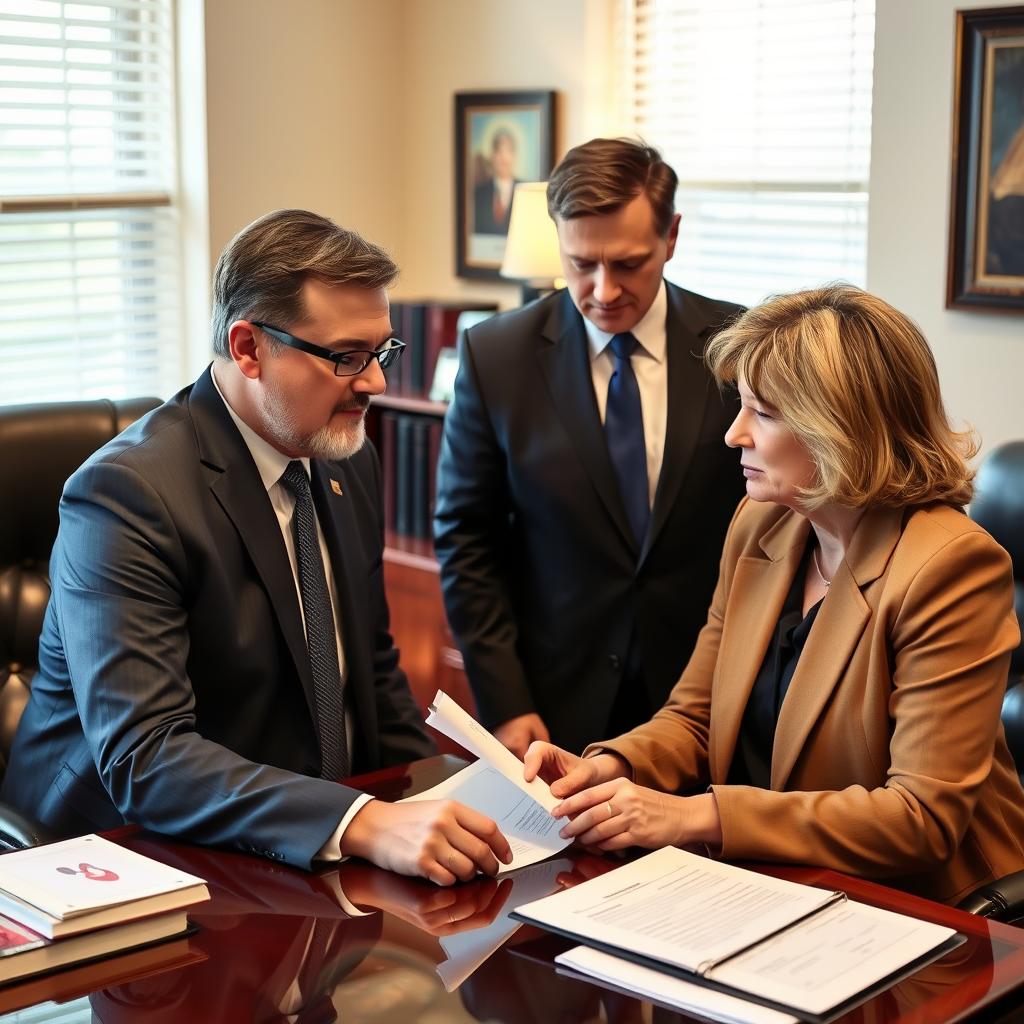
Possession or Use of a Machine Gun lawyer Fauquier County, VA
Facing a federal investigation or indictment for possession or use of a machine gun in Fauquier County calls for experienced legal counsel who knows the federal court system and the local prosecutorial landscape. The U.S. Attorney’s Office for the Eastern District of Virginia prosecutes these firearm offenses actively, and a conviction can bring decades in federal prison, forfeiture of assets, and a lifetime stigma. Residents of Warrenton, New Baltimore, Bealeton, Marshall, The Plains, and all of Fauquier County who are confronted with federal machine gun charges need a defense team that understands both the technical statutory framework and the practical realities of federal criminal procedure. Law Offices Of SRIS, P.C., founded in 1997, concentrates its practice on federal criminal defense and represents clients throughout Northern Virginia. Mr. Sris, Owner and Founder of the firm, is a former prosecutor whose experience on the other side of the courtroom informs every defense strategy his firm undertakes. He and his Of Counsel team have years of collective experience handling serious federal firearm cases in the U.S. District Court for the Eastern District of Virginia. To speak directly with an attorney about your situation, call (888) 437-7747 to request a consultation. Law Offices Of SRIS, P.C. – Advocacy Without Borders.
What Possession or Use of a Machine Gun Means in Fauquier County
Federal machine gun charges in Fauquier County are not handled in the local state courts but rather in the U.S. District Court for the Eastern District of Virginia. The Alexandria division hears cases arising from the county, which means defendants and their counsel travel to the federal courthouse at 401 Courthouse Square in Alexandria. The federal criminal process differs sharply from state court practice: grand jury indictments are the norm for felony offenses, detention hearings determine pretrial release, and sentencing is driven by the U.S. Sentencing Guidelines—a set of advisory rules that judges closely follow.
Under federal law, a machine gun is broadly defined as any weapon that shoots, is designed to shoot, or can be readily restored to shoot, automatically more than one shot without manual reloading, by a single function of the trigger. The possession or transfer of a machine gun manufactured after May 19, 1986, is generally unlawful, and the use or carriage of a machine gun during and in relation to a crime of violence or a drug trafficking crime triggers additional mandatory penalties. Federal investigative agencies, such as the Bureau of Alcohol, Tobacco, Firearms and Explosives (ATF) and the Federal Bureau of Investigation (FBI), often lead these inquiries, and the U.S. Attorney’s Office for the Eastern District of Virginia has a dedicated violent crime and firearms unit. The combination of federal resources, complex statutory language, and the absence of parole in the federal system makes early intervention by a knowledgeable defense team essential.
How Mr. Sris and His Of Counsel Handle Federal Machine Gun Cases
When a client brings a machine gun charge to Law Offices Of SRIS, P.C., the defense begins with a detailed review of the government’s theory and the evidence. Machine gun prosecutions often hinge on technical classification—whether the firearm truly meets the statutory definition of a machine gun. The firm examines the weapon’s design, any modifications, and the circumstances of its alleged possession or use. Issues such as the validity of a search warrant, the chain of custody of the firearm, and the reliability of ATF testing are scrutinized early.
Mr. Sris and his Of Counsel then assess the client’s exposure under the sentencing guidelines and any applicable mandatory minimums, including those tied to other offenses in the indictment. The team engages with the Assistant U.S. Attorney to explore pretrial release conditions, whether a plea resolution that reduces the charges is possible, and what a trial would look like. Because Mr. Sris is a former prosecutor, he understands how federal charging decisions are made and uses that insight to guide negotiations. Throughout the process, the firm prepares every case as if it will go to trial, ensuring that the government’s evidence is tested and that the client is fully informed at each stage. The goal in every matter is to secure a meaningful reduction in the charges and a sentence that reflects all mitigating circumstances.
About Mr. Sris and His Of Counsel Team
Mr. Sris, Owner and Founder of Law Offices Of SRIS, P.C., has practiced law since 1997 and is admitted in Virginia, Maryland, the District of Columbia, New Jersey, and New York. As a former prosecutor, he brought firsthand trial experience to private practice, and he has built a firm that concentrates on defending individuals facing serious federal and state charges. Mr. Sris testified before the Virginia House Courts of Justice Committee in support of 2019 HB 635 (chief patron Del. David Bulova), demonstrating his commitment to the law beyond the courtroom.
In federal machine gun cases, Mr. Sris works closely with his Of Counsel team—attorneys who are engaged through Excella and who bring substantial federal criminal litigation backgrounds to the firm. Together, they offer the knowledge of multiple legal perspectives, from the government’s trial tactics to the technical defenses that can prevail in federal court. The firm’s Fairfax Location serves clients from Fauquier County and the surrounding areas, providing convenient access to experienced counsel. To discuss your case with Mr. Sris or a member of his Of Counsel team, call (888) 437-7747.
Frequently Asked Questions
What should I do if I am being investigated for possession or use of a machine gun in Fauquier County?
If you are under investigation, contact an experienced federal criminal defense attorney immediately and do not discuss the matter with anyone except your lawyer. Federal agents may attempt to question you before an arrest; you have the right to remain silent and to have counsel present. Preserve all documents and communications related to the firearm and any interactions with law enforcement. Early legal guidance can influence whether charges are filed and help protect your rights during a search or seizure.
What is the difference between state and federal charges for machine gun offenses?
Federal machine gun charges are prosecuted by the U.S. Attorney’s Office, carry generally harsher penalties than comparable state charges, and the federal system has no parole. A state charge in Virginia would proceed in a state court, while a federal charge is brought in U.S. District Court under the National Firearms Act and the Gun Control Act. Federal sentencing guidelines apply, and mandatory minimum sentences often attach if the weapon was used in connection with a drug or violent offense. The procedural rules, discovery obligations, and potential consequences are meaningfully different, making it important to retain counsel who regularly practices in federal court.
How are federal sentencing guidelines applied in machine gun cases?
Federal sentencing follows the U.S. Sentencing Guidelines, which calculate an advisory sentencing range based on the offense level and the defendant’s criminal history. For a machine gun possession alone, the base offense level may be elevated if the firearm was used in furtherance of another felony. Additional statutes, such as 18 U.S.C. § 924(c), impose mandatory consecutive prison terms if a machine gun was carried or used during a crime of violence or a drug trafficking crime. Although the guidelines are advisory after the Supreme Court’s decision in United States v. Booker (2005), they remain highly influential, and departures require specific legal justification.
How can a lawyer defend against a federal machine gun possession charge?
A defense may challenge whether the weapon legally qualifies as a machine gun, question the lawfulness of the search, or argue that the defendant lacked knowledge or control. The statutory definition of a machine gun is technical; firearms that malfunction or do not shoot automatically without manual reloading may not meet the legal standard. Defense counsel can also examine the chain of custody of the weapon, the accuracy of ATF testing, and any violations of the defendant’s Fourth Amendment rights. Where appropriate, negotiations with the U.S. Attorney’s Office can result in reduced charges or a favorable sentencing recommendation.
How does a federal criminal case progress in the Eastern District of Virginia?
A federal criminal case typically begins with an arrest or a summons, followed by an initial appearance before a magistrate judge and a detention hearing if the government seeks pretrial detention. Felony charges require a grand jury indictment, after which the defendant is arraigned and enters a plea. Discovery and motions practice follow, including potential motions to suppress evidence. If the case does not resolve through a plea agreement, it proceeds to trial before a district judge. Federal trials in the Eastern District are conducted efficiently, and the Speedy Trial Act imposes deadlines that keep the process moving. Sentencing, if there is a conviction, is usually scheduled several months after the verdict or plea.
For more information about your specific circumstances, call (888) 437-7747 to request a consultation.
Primary Source Authority
For authoritative information on federal criminal procedure and court operations, refer to these official sites:
- U.S. District Court for the Eastern District of Virginia
- U.S. Sentencing Commission Guidelines Manual
- Federal Rules of Criminal Procedure
Attorney advertising. Prior results do not guarantee a similar outcome. Case results depend on a variety of factors unique to each case. Results may vary.