
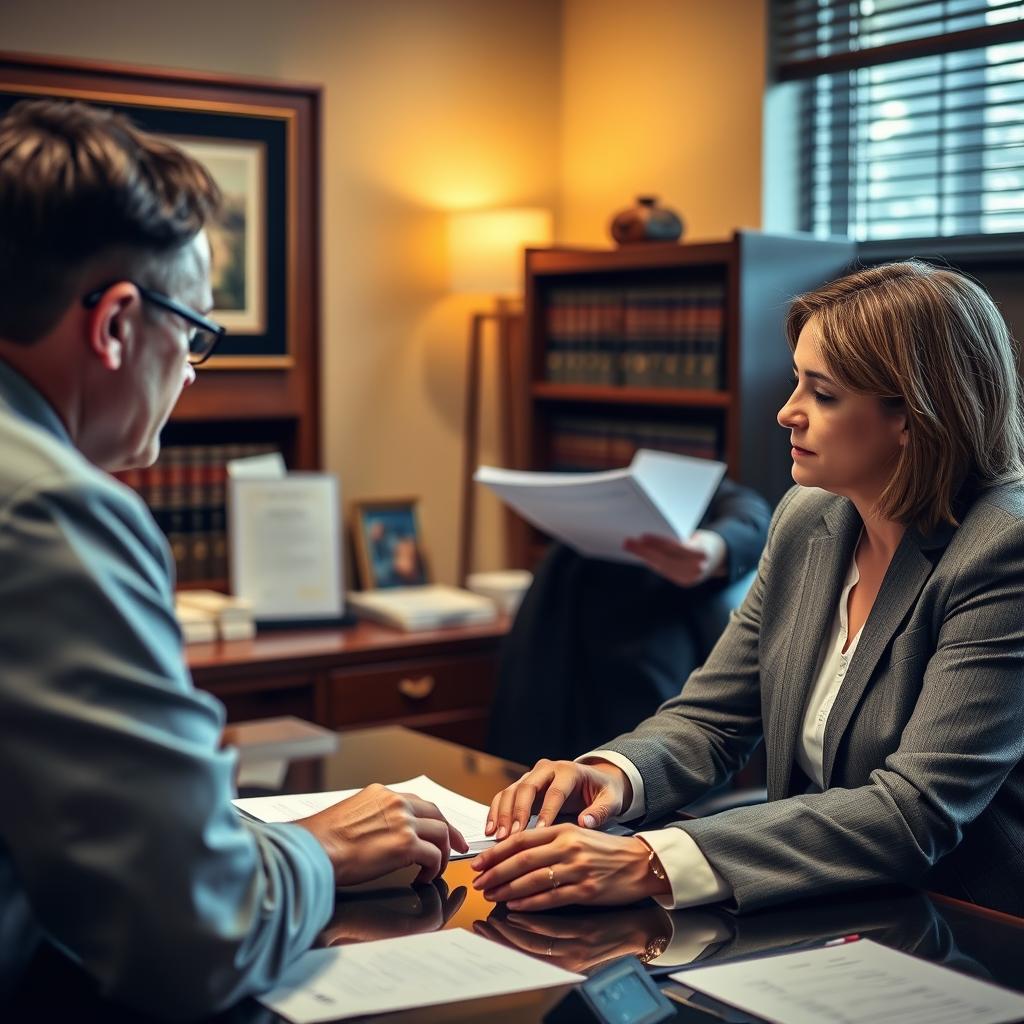
Destruction or Falsification of Records lawyer Prince George County, VA
If you are under federal investigation or have been charged with destruction or falsification of records in Prince George County, Virginia, the consequences can be life-altering. Federal prosecutors routinely pursue these charges under 18 U.S.C. § 1519 and related obstruction statutes, which carry the potential for significant prison time and heavy fines. At Law Offices Of SRIS, P.C., Mr. Sris and his Of Counsel bring extensive combined legal experience to defending individuals in federal criminal matters. To request a consultation about your situation, call (888) 437‑7747.
What a Federal Destruction or Falsification of Records Charge Means in Virginia
Federal law makes it a crime to knowingly alter, destroy, mutilate, conceal, cover up, falsify, or make a false entry in any record, document, or tangible object with the intent to impede, obstruct, or influence the investigation or proper administration of any matter within the jurisdiction of a federal agency. The government can bring charges under 18 U.S.C. § 1519 or other obstruction statutes, and conviction can lead to severe punishment. Because the United States Attorney’s Office for the Eastern District of Virginia has a strong record of pursuing these cases, a person facing an accusation needs defense counsel who understands both the substantive law and the local federal court procedures.
Mr. Sris and his Of Counsel have experience handling federal criminal matters in the Eastern District of Virginia, including cases that involve allegations of record-keeping violations. They review the government’s evidence carefully, evaluate whether the required intent can be proved, and build a defense strategy that addresses the specific facts of the case. When an individual in Prince George County is contacted by federal agents or receives a target letter, promptly securing experienced representation can help protect rights during the investigative phase.
Frequently Asked Questions
What is federal destruction or falsification of records?
It is a federal felony to knowingly destroy, alter, or falsify a record with the intent to obstruct a federal investigation or matter. The primary statute, 18 U.S.C. § 1519, was enacted as part of the Sarbanes‑Oxley Act and carries a maximum penalty of up to 20 years in prison. The government must prove that the defendant acted with the specific intent to impede an investigation or the proper administration of a matter under federal jurisdiction.
How does a Virginia lawyer defend against destruction or falsification of records charges?
Defense counsel can challenge the evidence, question the intent element, and explore whether the records were falsified for a reason unrelated to any federal matter. The prosecution must show beyond a reasonable doubt that the person knowingly altered the record and that the purpose was to obstruct a specific federal proceeding or investigation. An experienced federal criminal attorney will examine whether the government’s evidence meets each legal element and may present mitigating facts that cast doubt on criminal intent.
What should I do if I am facing destruction or falsification of records charges in Virginia?
Contact an experienced federal criminal defense attorney immediately and do not discuss the facts with anyone except your lawyer. Preserve all relevant documents and electronic records, but do not attempt to delete, alter, or hide anything, as that can lead to additional charges. Request a consultation with Mr. Sris and his Of Counsel by calling (888) 437‑7747.
What are the potential penalties for a conviction under 18 U.S.C. § 1519?
A conviction can result in up to 20 years of imprisonment and a substantial fine. The actual sentence is determined by the Federal Sentencing Guidelines and the judge’s discretion. Because there is no parole in the federal system, a person convicted will serve the majority of the sentence imposed. Additional consequences can include supervised release, restitution orders, and the loss of certain civil rights.
Can federal destruction of records charges be dropped?
Yes, charges can be dismissed if the government’s evidence is insufficient or if a legal challenge succeeds. Pre‑trial motions may argue that the indictment is defective, that evidence was obtained unlawfully, or that the element of specific intent cannot be established. In some cases, negotiations with the U.S. Attorney’s Office can result in a reduced charge. Every case depends on its unique facts, and Results may vary.
Do I need a lawyer for a federal records investigation even if I have not been indicted?
Yes, retaining counsel as soon as you learn of an investigation is essential. Federal agents often build their case during the investigative stage, and statements made without an attorney present can be used against you. Mr. Sris and his Of Counsel can communicate with investigators on your behalf and work to protect your legal rights before charges are formally filed.
How long does a federal criminal case take in Virginia?
The timeline varies, but a typical federal case may take several months to over a year from indictment to resolution. The Speedy Trial Act requires an indictment within 30 days of arrest and trial within 70 days of indictment, although many delays are legally excludable. Complex document‑intensive cases, such as those involving falsified records, may take longer because of the need to review extensive evidence.
What is the difference between state and federal charges for altering records?
Federal charges are prosecuted by the U.S. Attorney’s Office and generally carry more severe penalties than state-level offenses. While Virginia state law may criminalize certain types of document fraud, federal jurisdiction attaches when the records relate to a matter within the authority of a federal agency or when the conduct crosses state lines. An attorney experienced in federal criminal defense is critical because federal procedural rules and sentencing guidelines differ significantly from state court practices.
What elements must the government prove to convict someone under 18 U.S.C. § 1519?
The government must prove that the defendant (1) knowingly (2) altered, destroyed, or falsified a record (3) with the intent to impede, obstruct, or influence (4) the investigation or proper administration of a matter (5) within the jurisdiction of a federal agency. Each element must be established beyond a reasonable doubt. A defense strategy may focus on challenging the government’s proof of knowledge, intent, or the existence of a pending federal matter at the time of the alleged act.
How can Mr. Sris and his Of Counsel help with a federal destruction of records case in Prince George County?
They provide thorough representation that includes analyzing the government’s evidence, conducting an independent factual investigation, and developing a defense tailored to the specific circumstances. Mr. Sris, a former prosecutor and founder of the firm, works alongside Of Counsel who bring extensive combined legal experience. They represent clients in federal court throughout the Eastern District of Virginia, including cases arising in Prince George County. To discuss your matter, call (888) 437‑7747.
What are the immigration consequences of a federal conviction for falsifying records?
A conviction for obstruction‑of‑justice offenses can have severe immigration consequences, including deportation for non‑citizens. Federal obstruction crimes are often considered aggravated felonies or crimes involving moral turpitude, which can trigger removal proceedings and permanent bars to re‑entry. Any non‑citizen facing such charges should consult with an attorney who can coordinate the criminal defense with potential immigration ramifications.
How is destruction of records different from other obstruction offenses?
Section 1519 specifically addresses the falsification or destruction of records with the intent to impede a federal matter, whereas other obstruction statutes may cover witness tampering, threats, or interference with court proceedings. The record‑focused charge does not require proof that a proceeding was ongoing; it is enough that the defendant intended to obstruct a matter that falls within federal jurisdiction. Understanding this distinction can be important in evaluating the strength of the government’s case.
About Mr. Sris and His Of Counsel Team
Mr. Sris, Owner and Founder of Law Offices Of SRIS, P.C., is a former prosecutor and an experienced federal criminal defense attorney. He testified before the Virginia House Courts of Justice Committee in support of 2019 HB 635 (chief patron Del. David Bulova). Mr. Sris and his Of Counsel bring extensive combined legal experience. Results may vary. The firm’s Richmond Location serves clients in Prince George County and throughout the region. For a consultation, call (888) 437‑7747.
Related federal criminal defense pages: Fairfax County Federal Criminal Lawyer | Prince William County Federal Criminal Lawyer | Manassas Federal Criminal Lawyer
For additional information, visit the Virginia Judicial System and the Virginia Legislative Information System.
Attorney advertising. Prior results do not guarantee a similar outcome. Results may vary.
Case results depend on a variety of factors unique to each case.