
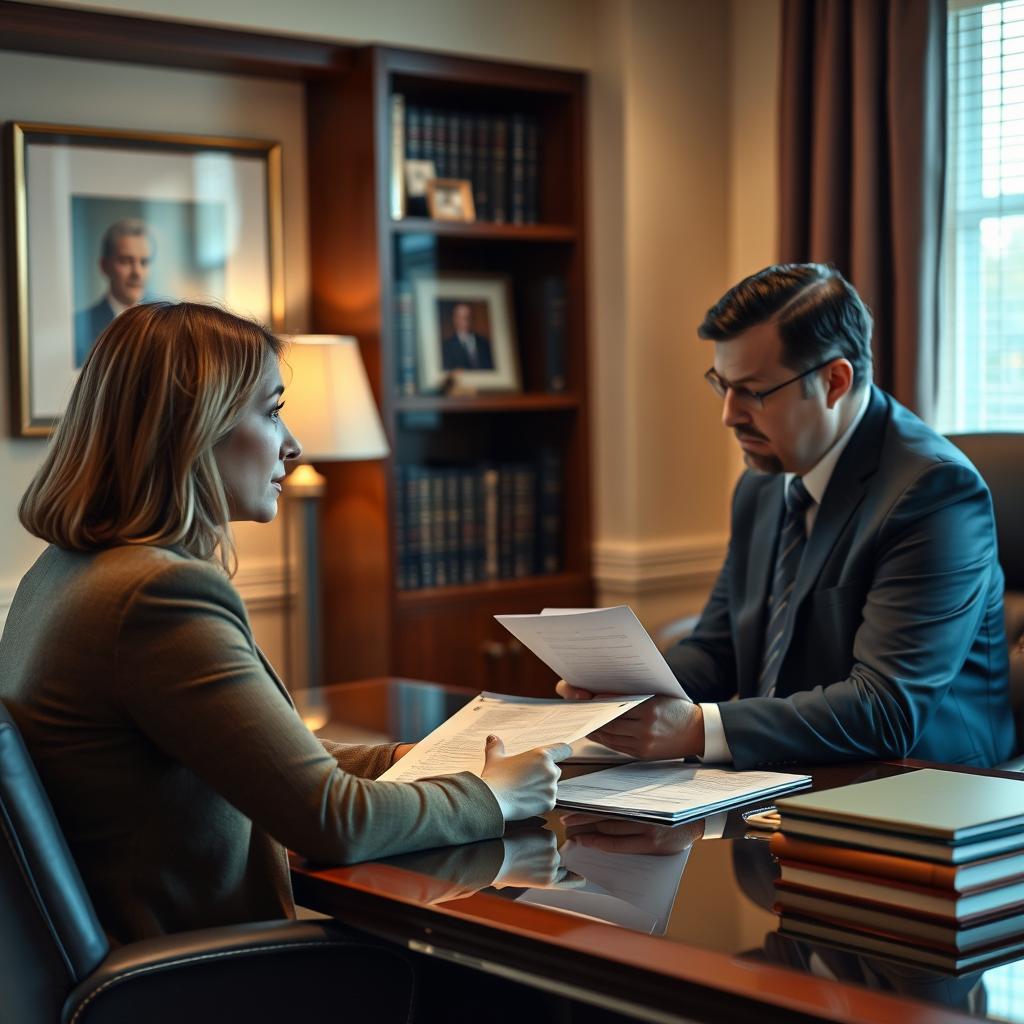
False Statements to a Federal Agent lawyer Chesterfield County, VA
If you are under investigation or have been charged with making false statements to a federal agent under 18 U.S.C. § 1001, you need an experienced federal defense attorney who understands how these cases are prosecuted in the U.S. District Court for the Eastern District of Virginia, Richmond Division. A conviction can result in up to five years of imprisonment and substantial fines, and the federal system offers no parole. At Law Offices Of SRIS, P.C., Mr. Sris and his Of Counsel defend clients in Chesterfield County and throughout Virginia against federal false‑statement charges. Reach our location at (888) 437‑7747 to request a consultation. Law Offices Of SRIS, P.C. – Advocacy Without Borders.
Chesterfield County residents and those investigated by federal authorities in the Richmond region face proceedings in a court known for its swift dockets and experienced prosecutors. Mr. Sris, a former prosecutor, uses his insight into federal charging decisions to build a well‑prepared defense. Because a federal investigation often begins long before an indictment—through agencies such as the FBI, DEA, or IRS‑CI—early engagement with counsel materially affects how a case develops.
What It Means if You Are Facing a False Statement Charge in Chesterfield County
A federal false‑statement prosecution under Section 1001 punishes any person who, in any matter within the jurisdiction of the executive, legislative, or judicial branch, knowingly and willfully makes a materially false, fictitious, or fraudulent statement or representation. The statute is broad; it applies to oral statements made to law enforcement officers, written responses on federal forms, and even statements made during background checks or regulatory interviews. In the Eastern District of Virginia, the United States Attorney’s Office routinely brings Section 1001 charges as part of larger fraud, public‑corruption, or drug‑trafficking investigations, or as standalone counts when someone is alleged to have lied to federal agents.
The key elements the government must prove are that the statement was false, that it was made knowingly and willfully, and that it was material—meaning it had a natural tendency to influence the agency’s decision. Simple mistakes, misunderstandings, or statements that are merely incorrect without intent to deceive do not meet the statute’s willfulness requirement. Mr. Sris and his Of Counsel carefully examine the investigative record to challenge whether the government can prove each element beyond a reasonable doubt.
How Federal False‑Statement Cases Are Prosecuted
Most federal false‑statement investigations start with an interview by agents from the FBI, DEA, ATF, or another investigative agency. If a prosecutor believes a person made a false statement during that interview—or in a document submitted to a federal agency—the case may be presented to a federal grand jury. A grand jury indictment is required for felony charges. After indictment, the defendant appears before a magistrate judge for an initial appearance, and the court determines conditions of pretrial release. The case then proceeds through discovery, pretrial motions, and, in many instances, a trial. Federal sentencing follows the U.S. Sentencing Guidelines, which calculate a guidelines range based on offense level and criminal history. While the guidelines are advisory after United States v. Booker, they heavily influence the sentence a judge imposes.
Because the Eastern District of Virginia is one of the fastest‑moving federal courts in the country, cases can proceed quickly. Under the Speedy Trial Act, trial generally must begin within seventy days of indictment, though many delays are excludable. Having counsel who understands the local procedural rhythm and the expectations of the judges and prosecutors in this district is essential to protecting your rights at every stage.
About Mr. Sris and His Of Counsel
Mr. Sris, Owner and Founder of Law Offices Of SRIS, P.C., has been practicing since 1997. He is admitted in Virginia, Maryland, the District of Columbia, New Jersey, and New York. As a former prosecutor, he knows how federal charging decisions are made and how to identify weaknesses in the government’s evidence. He testified before the Virginia House Courts of Justice Committee in support of 2019 HB 635 (chief patron Del. David Bulova).
Mr. Sris works alongside a team of Of Counsel attorneys who bring additional federal‑court experience. Together, they collaborate on case strategy, motions practice, and trial preparation. This team‑based approach provides clients with thorough attention without the overhead of a large firm. The firm’s Richmond Location serves Chesterfield County and all surrounding communities from 7400 Beaufont Springs Drive, Suite 300, Room 395, Richmond, VA 23225. All meetings are by appointment; we are available 24 hours a day at (888) 437‑7747.
Frequently Asked Questions
What are the penalties for making a false statement to a federal agent in Virginia?
Violating 18 U.S.C. § 1001 is a felony punishable by up to five years of imprisonment and a fine of up to $250,000 for an individual. If the offense involves terrorism, or if it is committed in connection with a criminal offense against the United States, the maximum term may increase to eight years. The federal system has no parole, and good‑time credit is limited to about fifteen percent of the sentence. A conviction also creates a permanent federal felony record that can affect employment and firearm rights.
What should I do if federal agents contact me?
You have the right to remain silent and to speak with an attorney before answering any questions. Do not voluntarily agree to an interview without counsel present. Anything you say can be used against you in a subsequent prosecution, even if you believe you are being helpful. Politely decline to speak further and immediately contact an experienced federal criminal defense attorney. Preserving your right to silence is the single most important step you can take to protect yourself.
How can a lawyer defend against a false‑statement charge?
A defense strategy may challenge whether the statement was actually false, whether it was made with the required intent, or whether it was material to the agency’s function. Other approaches include asserting that the statement was literally true, that the defendant had a good‑faith belief in its truth, or that the statement was the product of an ambiguous question. In some cases, the defense will focus on whether the statement falls within the “exculpatory no” doctrine, which, while not formally recognized after Brogan v. United States, may still influence prosecutorial discretion. Each defense is tailored to the specific facts of the case.
Do I need a lawyer if I am only being investigated and haven’t been charged?
Yes, retaining counsel during the investigation phase is critical. An attorney can communicate with federal agents on your behalf, help you avoid making incriminating statements, and potentially persuade the prosecutor not to seek an indictment. Because federal false‑statement charges often grow out of an interview that the target thought was harmless, early legal guidance can prevent a charge from ever being filed.
How does a federal case differ from a state criminal case in Virginia?
Federal cases are prosecuted by the United States Attorney’s Office, not by a local Commonwealth’s Attorney, and they follow federal procedural and sentencing rules. Federal court has stricter discovery obligations for the government, but also generally harsher sentencing guidelines and mandatory minimums in certain companion offenses. Unlike Virginia’s state system, the federal system does not have parole, and probation is far more limited. The Eastern District of Virginia also moves cases significantly faster than many state courts.
What is the difference between a false statement under § 1001 and perjury under § 1621?
Perjury under 18 U.S.C. § 1621 requires a false statement made under oath in a judicial proceeding, while § 1001 applies to any matter within federal jurisdiction, whether or not under oath. Section 1001 has a lower evidentiary bar for the government because it does not require the government to prove that the statement was made under oath or that a formal proceeding was taking place. Both offenses carry up to five years of imprisonment. A person can be charged under both statutes for separate statements made in different contexts.
Can I be charged with making a false statement even if I didn’t sign anything?
Yes. Section 1001 applies to oral statements, as well as written ones, so long as they are made in a matter within federal jurisdiction. Agents frequently document interviews and later use an interviewee’s own words as the basis for a false‑statement charge. Courts have upheld convictions based on verbal denials made during routine questioning, even when the defendant thought the conversation was informal.
What is the statute of limitations for a false‑statement offense?
The general federal statute of limitations for non‑capital offenses is five years, including false‑statement charges under 18 U.S.C. § 1001. This period typically begins to run on the date the false statement is made. However, certain events—such as a defendant fleeing the jurisdiction or the commission of a conspiracy—can toll or extend the limitations period. Consult with counsel promptly to determine whether any deadline may affect your case.
How do federal sentencing guidelines work in a false‑statement case?
The guidelines assign a base offense level, usually six, which is then adjusted upward depending on factors such as the amount of loss, the number of victims, or whether the offense was part of a larger scheme. Additional adjustments may apply for obstruction of justice or acceptance of responsibility. The final offense level, combined with the defendant’s criminal history category, produces a recommended sentencing range that the judge considers along with the statutory factors under 18 U.S.C. § 3553(a). Experienced counsel can present mitigating evidence and argue for a departure or variance.
Where does a federal false‑statement case in Chesterfield County go to court?
All federal criminal cases arising in Chesterfield County are heard in the Richmond Division of the U.S. District Court for the Eastern District of Virginia, located at 701 East Broad Street, Richmond, VA 23219. The Richmond Division handles both felony and misdemeanor federal cases. Mr. Sris and his Of Counsel appear regularly in this courthouse and are familiar with its practices and personnel.
Speak With a Federal Defense Attorney
If you or someone you know is under investigation for making a false statement to a federal agent, contact Law Offices Of SRIS, P.C. at (888) 437‑7747 to request a consultation. Mr. Sris and his Of Counsel serve clients throughout Chesterfield County, the Richmond metropolitan area, and across Virginia. Early representation can make a meaningful difference in the outcome of your case.
Additional Resources
18 U.S.C. § 1001 — False Statements (Cornell Legal Information Institute) · U.S. District Court for the Eastern District of Virginia (Court Website) · Virginia Circuit Courts
Federal Criminal Defense in Neighboring Localities
Henrico County Federal Criminal Lawyer ·
Hanover County Federal Criminal Lawyer ·
Fairfax County Federal Criminal Lawyer ·
Fairfax City Federal Criminal Lawyer ·
Falls Church Federal Criminal Lawyer
Attorney advertising. Prior results do not guarantee a similar outcome. Results may vary.
Case results depend on a variety of factors unique to each case.