
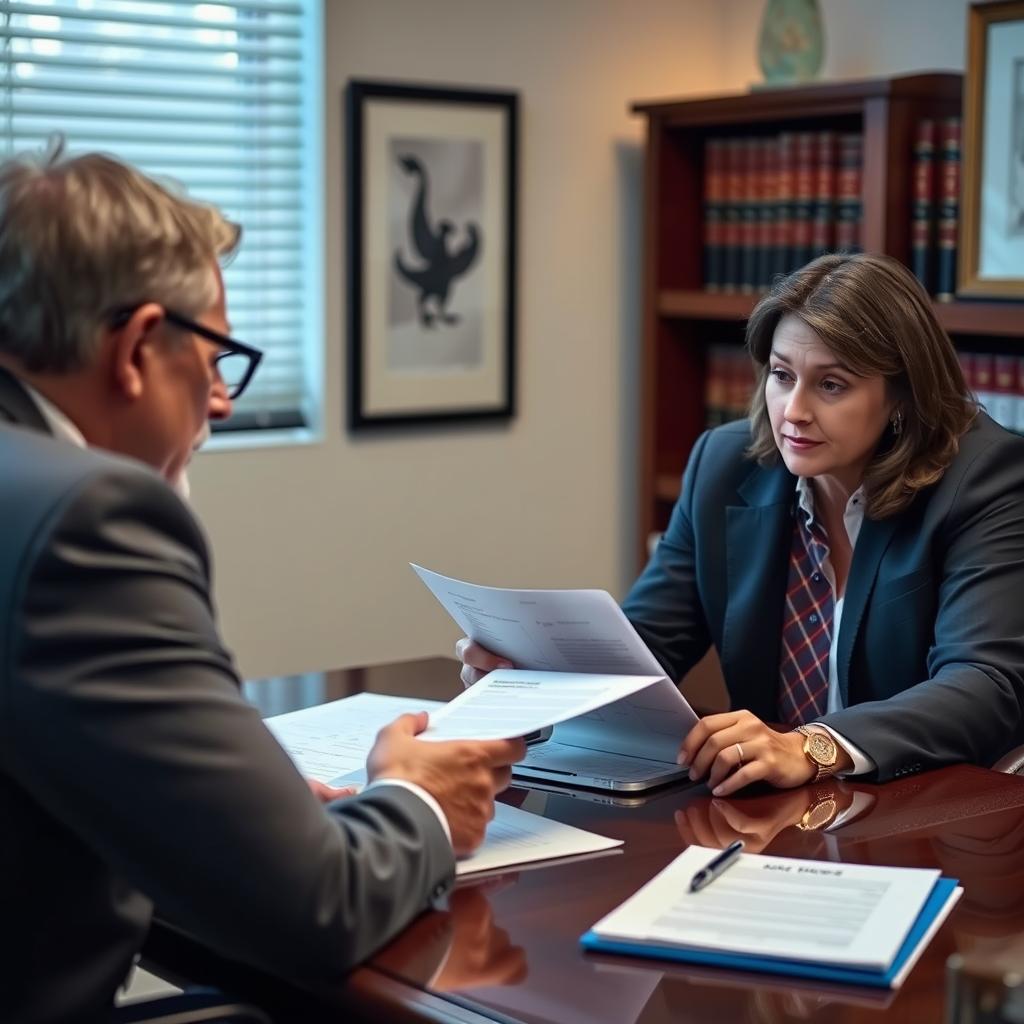
Perjury lawyer Louisa County, VA
A federal perjury charge can turn your life upside down. In Louisa County, Virginia, federal criminal matters are prosecuted in the United States District Court for the Western District of Virginia, where the U.S. Attorney’s Office pursues perjury cases under 18 U.S.C. § 1621 with significant resources and a conviction rate that consistently exceeds 90 percent. If you are under investigation, have been contacted by federal agents, or have already been indicted for perjury, securing experienced federal defense counsel at the earliest possible stage is critical.
Law Offices Of SRIS, P.C., founded in 1997, represents individuals facing federal criminal charges throughout Louisa County, including the communities of Louisa, Mineral, and Zion Crossroads. Mr. Sris and his Of Counsel understand how perjury investigations unfold—from grand jury subpoenas to witness interviews and trial—and work to protect your rights at every step. To discuss your situation and request a consultation, call (888) 437-7747.
What Federal Criminal Perjury Means in Louisa County, Virginia
Federal perjury is not a state misdemeanor; it is a felony prosecuted by the U.S. Attorney’s Office under 18 U.S.C. § 1621. The statute makes it a crime to knowingly make a material false statement under oath in a federal proceeding. Materiality is measured by whether the statement could have influenced the decision of the tribunal—the falsehood does not need to have actually changed the outcome of the proceeding to support a conviction. Each separate false statement can be charged as a distinct count, and a conviction may expose a person to imprisonment, substantial fines, and supervised release.
For residents of Louisa County, a perjury case is venued in the Charlottesville Division of the United States District Court for the Western District of Virginia. Federal agents from the FBI, IRS-Criminal Investigation, or other investigative bodies often handle the underlying inquiry. Unlike the state court located on West Main Street in Louisa, federal court operates under its own procedural rules—the Federal Rules of Criminal Procedure—and the sentencing framework is controlled by the United States Sentencing Guidelines, not by Virginia’s sentencing statutes. There is no parole in the federal system, making the stakes of a conviction substantially higher than many defendants initially realize.
How Mr. Sris and His Of Counsel Handle Federal Criminal Cases
Federal perjury cases present unique challenges: a defendant is often the last person to know an investigation is underway, and early statements made without counsel can themselves become the basis of a prosecution. Mr. Sris and his Of Counsel begin by assessing the status of any investigation—whether a grand jury subpoena has issued, whether a target letter has been received, or whether federal agents have already conducted interviews—and then develop a strategy to preserve the client’s position before charges are filed.
Once charges are brought, the procedural process in the Western District of Virginia moves through initial appearance, detention hearing, arraignment, discovery, pretrial motions, and, if necessary, trial. Throughout this process, counsel scrutinizes the government’s evidence for materiality challenges, examines whether the allegedly false statement was truly “material,” and explores whether any Miranda or Fifth Amendment issues exist. At the sentencing phase, the United States Sentencing Guidelines calculate an advisory range based on offense-level calculations and criminal history; Mr. Sris and his Of Counsel prepare sentencing presentations that highlight acceptance of responsibility, cooperation where appropriate, and any other mitigating factors that may influence the court’s discretionary decision under 18 U.S.C. § 3553(a).
About Mr. Sris and His Of Counsel Team
Mr. Sris is the Owner and Founder of Law Offices Of SRIS, P.C. A former prosecutor, he has practiced law since 1997 and is admitted in Virginia, Maryland, the District of Columbia, New Jersey, and New York. Mr. Sris testified before the Virginia House Courts of Justice Committee in support of 2019 HB 635 (chief patron Del. David Bulova). His firsthand understanding of how prosecutors build cases informs the defense strategies the firm deploys in federal court.
Mr. Sris is joined by experienced Of Counsel who contribute to the firm’s federal criminal defense work. The team operates from the firm’s Richmond location, which serves clients in Louisa County and across Central Virginia. The Richmond location is at 7400 Beaufont Springs Drive, Suite 300, Room 395, Richmond, VA 23225, and consultations are by appointment. To reach Mr. Sris and his Of Counsel, call (888) 437-7747.
Frequently Asked Questions
What is the difference between state and federal charges?
Federal charges are prosecuted by the U.S. Attorney in United States District Court, carry penalties set by federal statutes and the United States Sentencing Guidelines, and offer no parole. State charges, by contrast, proceed in Virginia General District or Circuit Courts under the Virginia Code. The prosecutorial resources, evidentiary rules, and sentencing structures are different. If you are facing a federal charge in Louisa County, you need counsel familiar with the federal criminal system, the practices of the U.S. Attorney’s Office for the Western District of Virginia, and the federal sentencing framework. To discuss your matter, call (888) 437-7747.
How do federal sentencing guidelines work in Louisa County, Virginia?
Federal sentencing in the United States District Court for the Western District of Virginia follows the United States Sentencing Guidelines—a points-based system that calculates a sentencing range using the offense level and the defendant’s criminal history category. Although the guidelines are advisory since the Supreme Court’s decision in United States v. Booker, district judges in the Western District give them substantial weight. Mandatory minimum statutes may override guidelines ranges in certain cases. A sentence can be reduced through acceptance of responsibility, substantial assistance under § 5K1.1, or eligibility for the safety valve. An experienced federal defense attorney can evaluate which departure or downward-variance arguments may be available.
Do I need a federal criminal defense lawyer in Louisa County, Virginia?
Yes—federal criminal cases in the Western District of Virginia are prosecuted by the U.S. Attorney’s Office using federal investigative resources, and defendants face sentencing under federal law where parole has been abolished. State-court experience does not translate directly to federal practice: the Federal Rules of Criminal Procedure, the Speedy Trial Act, and the United States Sentencing Guidelines all operate differently from Virginia’s procedures. Engaging counsel before indictment can materially affect the course of an investigation. Law Offices Of SRIS, P.C. represents individuals at every stage of federal proceedings; call (888) 437-7747 to request a consultation.
What should I do if I am facing perjury charges in Virginia?
If you are facing federal perjury charges in Virginia, contact a federal criminal defense attorney immediately and do not discuss the case with anyone other than your lawyer. Federal investigators and prosecutors may already have compiled a record of your prior statements. Preserve all documents, emails, and other records that may be relevant, but do not attempt to alter or destroy anything—obstruction charges can be added quickly. The statute of limitations and court deadlines operate under federal law, so prompt engagement with counsel is essential. You can reach Law Offices Of SRIS, P.C. at (888) 437-7747 to discuss your situation in confidence.
How does a Virginia lawyer defend against perjury charges?
Defense strategies for federal perjury charges may include challenging the materiality of the alleged false statement, contesting the government’s proof that the statement was knowingly made, examining whether the statement occurred in a federal “proceeding” as defined by 18 U.S.C. § 1621, and raising constitutional or evidentiary issues that weaken the prosecution’s case. In some instances, miscommunication, faulty recollection, or ambiguous phrasing can undermine the required showing of intent. Mr. Sris and his Of Counsel evaluate the specific facts, assess the government’s evidence, and explore pretrial motions, plea negotiations, or trial strategies based on the facts of the case. Prior results do not guarantee a similar outcome.
What is federal criminal court and how is it different in Virginia?
Federal criminal court in Virginia is a separate judicial system in which cases are filed in United States District Court, prosecuted by federal Assistant U.S. Attorneys, and governed by federal statutes and procedural rules distinct from Virginia’s state courts. In the Western District of Virginia, perjury cases may be heard in the Charlottesville Division. Compared to Virginia General District or Circuit Court, federal court has no general right to a preliminary hearing, uses a grand jury indictment process for felony charges, and applies the United States Sentencing Guidelines at sentencing. There is no parole in the federal system, and good-time credit is limited. For experienced federal defense representation, contact Law Offices Of SRIS, P.C. at (888) 437-7747.
Federal Criminal Lawyer in Fairfax County, VA • Federal Criminal Lawyer in Prince William County, VA • Federal Criminal Lawyer in Manassas (City), VA
Attorney advertising. Prior results do not guarantee a similar outcome. Results may vary.
Case results depend on a variety of factors unique to each case.